The PhD Who Turned Down Silicon Valley to Build China's Answer to Anthropic
Yang Zhilin's path from American academia to founding Moonshot AI illustrates the shifting gravity of AI talent and capital across the Pacific.
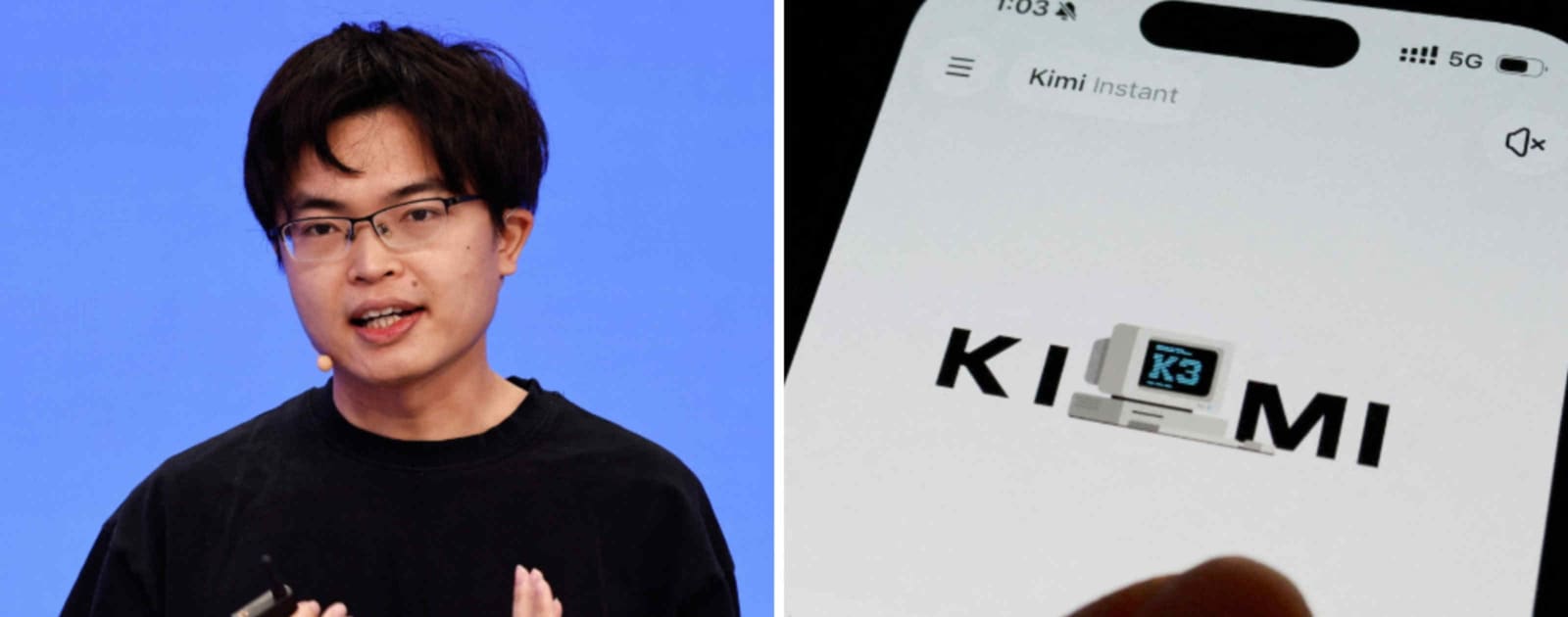
The Offer He Declined
Yang Zhilin graduated with a PhD from a top-tier American university with the kind of credentials that usually guarantee a fast track into Silicon Valley's elite AI labs. Apple wanted him. So did others. But the offers that would have made him part of the Bay Area's machine learning aristocracy went unanswered. Yang had already decided to return to China.
At DailyTechWire, we've tracked enough reverse brain drain stories to recognize the pattern: talented researchers trained in the U.S. system, armed with cutting-edge knowledge, choosing to build in Beijing, Hangzhou, or Shenzhen rather than Palo Alto or Seattle. Yang's decision fits that arc, but the outcome is what makes his story notable. The company he cofounded, Moonshot AI, has grown into a legitimate rival to Anthropic and OpenAI, two of the most closely watched AI labs in the world.
The shift is not just about one individual. It reflects a structural change in where AI innovation happens, who funds it, and which regulatory environments allow it to scale. For years, the U.S. dominated AI research and commercialization. That dominance is no longer a given.
Building Kimi in a Crowded Field
Moonshot AI's flagship product, Kimi, is a large language model that competes directly with Claude and GPT. The company has raised significant venture capital, attracted top-tier engineering talent, and carved out a user base in China's hyper-competitive consumer internet landscape. Kimi is not a niche tool or a research prototype. It is a product with traction, revenue ambitions, and geopolitical implications.
The technical challenge Yang and his team faced was steep. Training large models requires access to massive compute infrastructure, high-quality datasets, and engineers capable of optimizing inference at scale. In China, access to advanced GPUs has been constrained by U.S. export controls, forcing companies like Moonshot to optimize aggressively, use older hardware more efficiently, and in some cases develop custom chips or workarounds. That constraint has not stopped progress. In several cases, it has accelerated it.
Kimi's architecture and training methodology remain closely guarded, but the model's performance in benchmarks and real-world usage suggests it is not far behind Anthropic's Claude in reasoning tasks and context handling. The company has also moved quickly to productize, integrating Kimi into consumer apps, enterprise tools, and developer APIs. Speed to market, rather than pure research prestige, has been Moonshot's competitive edge.
The Talent Pipeline Reverses
Yang's trajectory is part of a broader talent migration that has unsettled U.S. policymakers and venture capitalists. For decades, the U.S. attracted the world's best AI researchers, who trained at Stanford, MIT, and Carnegie Mellon, then stayed to work at Google, Meta, or startups in the Bay Area. That pipeline is no longer one-way.
Chinese nationals who earned PhDs in the U.S. are increasingly returning home, drawn by funding, policy support, and the opportunity to build companies in a market of 1.4 billion people. The Chinese government has made AI a strategic priority, channeling capital into research institutes, subsidizing compute infrastructure, and creating regulatory sandboxes for experimentation. The environment is not without friction, particularly around content moderation and data sovereignty, but for ambitious founders, it offers resources and speed that are hard to match elsewhere.
The reverse flow has consequences. U.S. tech competitiveness depends not just on innovation, but on retaining the people who drive it. When researchers like Yang choose to leave, they take with them knowledge, networks, and momentum. The concern is not that one individual left. It is that the incentives that once kept top talent in the U.S. are weakening.
Geopolitics and the AI Arms Race
Moonshot's rise has not gone unnoticed in Washington. U.S. officials have floated the possibility of sanctions targeting Chinese AI startups, particularly those developing models that could be used for surveillance, disinformation, or military applications. Moonshot has been mentioned in those discussions, though no formal action has been taken.
The sanctions debate is fraught. On one hand, the U.S. wants to maintain its lead in AI and prevent adversaries from gaining capabilities that could threaten national security. On the other hand, overly broad restrictions risk accelerating decoupling, pushing Chinese companies to develop fully independent technology stacks that no longer rely on U.S. components or collaboration. That independence, once achieved, is difficult to reverse.
Moonshot's plans for a Hong Kong IPO, widely reported in the tech press, signal confidence in its growth trajectory and access to capital. A public listing would give the company additional resources to scale, hire, and compete globally. It would also make Moonshot a more visible target for regulatory scrutiny, both in China and abroad.
What This Means for the AI Landscape
Yang's story is not an anomaly. It is a data point in a larger pattern. The global AI landscape is fragmenting along geopolitical lines, with distinct ecosystems emerging in the U.S., China, and Europe. Each has its own strengths: the U.S. leads in foundational research and venture capital, China excels in deployment speed and market scale, and Europe is building a regulatory framework that prioritizes safety and transparency.
For companies and investors, the fragmentation creates both opportunity and risk. Models trained in one jurisdiction may not be deployable in another. Talent pools are less mobile. Supply chains for compute and chips are subject to export controls and political pressure. The open research culture that characterized the field a decade ago is eroding, replaced by secrecy, strategic competition, and national champions.
Moonshot AI is one of those champions. Yang Zhilin's decision to turn down Silicon Valley and build in China was personal, but its implications are structural. The next generation of AI breakthroughs will not come exclusively from the Bay Area. They will come from Beijing, from Seoul, from Bengaluru. The question is whether the global system can accommodate that shift without descending into zero-sum competition.