WeRide's Revenue Nearly Doubles as Robotaxi Fleet Scales Across Four Continents
The Guangzhou-based autonomous vehicle operator posted triple-digit quarterly growth while gross margins climbed above 37%, signaling operational maturity in a capital-intensive sector.
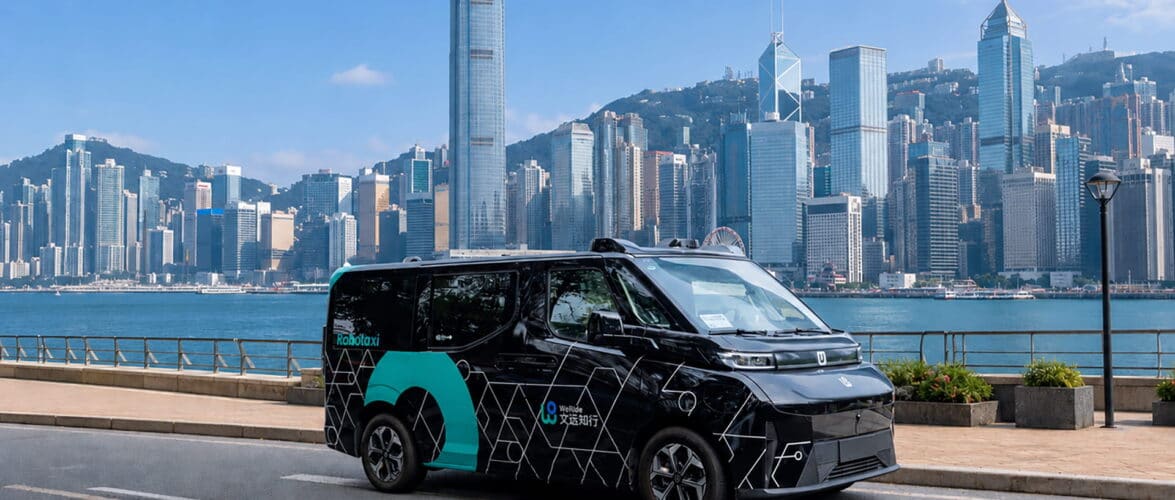
A Rare Inflection Point in Autonomous Operations
WeRide, the Nasdaq-listed autonomous vehicle company, delivered second-quarter revenue of RMB 231.7 million (USD 34.3 million), an 82% jump from the same period last year and a 103% increase from the prior quarter. For the first six months of 2026, total revenue climbed to RMB 345.9 million (USD 51.2 million), up 73% year-on-year, according to the company's August 12 financial release.
What stands out is not just the pace of top-line growth but the accompanying improvement in unit economics. Gross margin reached 37.5% in the second quarter, a 9.4 percentage-point expansion from Q2 2025. In an industry where hardware costs, sensor depreciation, and safety-driver burn rates have historically crushed profitability, crossing the one-third margin threshold suggests WeRide is beginning to extract leverage from its fleet operations.
At DailyTechWire, we've tracked dozens of robotaxi pilots across Shenzhen, Dubai, and Singapore over the past eighteen months. Most remain subscale, confined to geofenced loops with subsidized fares. WeRide's trajectory differs in two respects: geographic breadth and the dual-revenue model it has built around passenger rides and autonomous freight.
Two Engines, One Platform
WeRide operates what it calls a "dual-pillar" business. The first pillar is robotaxi services, now deployed in more than a dozen cities spanning China, the United Arab Emirates, Saudi Arabia, and Singapore. The second is autonomous logistics, including last-mile delivery vans, street sweepers, and cargo shuttles, which share the same sensor stack and localization software but serve commercial clients rather than retail passengers.
This architecture matters because it spreads R&D expense across multiple revenue streams and accelerates the data flywheel. Every kilometer driven by a delivery van in Riyadh or a street sweeper in Guangzhou feeds the same perception models that power the robotaxi fleet. The company does not break out revenue by segment, but the sequential acceleration from Q1 to Q2 suggests both pillars are scaling in parallel.
The logistics arm also benefits from a more forgiving regulatory environment. In markets where passenger-carrying autonomous vehicles face lengthy approval cycles, freight and municipal-service deployments can proceed faster, generating cash flow while the robotaxi permitting queue clears. WeRide has leaned into this asymmetry, securing contracts with logistics operators and municipal agencies in the Middle East, where smart-city spending remains robust despite broader macroeconomic headwinds.
Fleet Expansion and the Capital Question
Scaling autonomous operations is a capital allocation puzzle. Each vehicle carries sensor suites worth tens of thousands of dollars, compute modules that must be refreshed every eighteen to twenty-four months, and insurance premiums that remain elevated until actuarial tables catch up with safety data. The fact that WeRide's gross margin is expanding while revenue more than doubles suggests the company is either negotiating better hardware pricing, amortizing fixed costs over a larger fleet, or both.
The geographic spread is also deliberate. China remains the core market, but WeRide has moved aggressively into the Gulf Cooperation Council states, where government backing for autonomous mobility is explicit and road infrastructure is purpose-built. Saudi Arabia's NEOM project and Dubai's smart-city roadmap both include autonomous transit as a design parameter, not an afterthought. For WeRide, this translates into fewer legacy-infrastructure constraints and faster time-to-revenue.
Singapore, meanwhile, offers a different value proposition: a dense, high-income market with rigorous safety standards and a regulatory sandbox that allows iterative deployment. The city-state has become a proving ground for Asian AV players, and a successful Singapore operation carries reputational weight in other developed markets.
Margin Structure and the Path to Breakeven
Gross margin improvement is the metric to watch. At 37.5%, WeRide is now in the range where incremental fleet expansion can begin to fund itself, assuming the company can maintain pricing discipline and avoid a race-to-the-bottom fare war with competitors. The 9.4 percentage-point year-on-year gain implies that per-vehicle contribution margins are rising faster than aggregate revenue, a sign that utilization rates and route density are improving.
Operating leverage in autonomous fleets comes from three sources: higher utilization per vehicle, lower per-mile costs as software improves and hardware commoditizes, and the ability to remove safety drivers. WeRide has not disclosed the percentage of driverless miles in its fleet, but the margin trajectory suggests at least a portion of its operations are now running without human backup.
The next test is whether the company can sustain this margin profile as it enters more competitive or lower-density markets. Robotaxi economics in Guangzhou or Abu Dhabi, where the company has first-mover advantage and government support, may not translate directly to secondary cities or markets with entrenched ride-hailing incumbents.
Competitive Landscape and Strategic Positioning
WeRide is not operating in a vacuum. In China, Baidu's Apollo Go has logged millions of autonomous rides and is expanding its driverless service area in Wuhan and Chongqing. Pony.ai, another Guangzhou-based player, recently resumed its U.S. operations and is scaling in Beijing. Internationally, Waymo remains the gold standard for driverless deployment, while Cruise is rebuilding after a regulatory setback in San Francisco.
WeRide's differentiation lies in its multi-market, multi-use-case strategy. While Waymo and Cruise have concentrated on perfecting the passenger experience in a handful of U.S. cities, WeRide has chosen breadth over depth, betting that early presence in emerging markets will compound into network effects and data advantages. The logistics business also provides a hedge: if robotaxi adoption stalls due to regulatory or consumer-acceptance issues, the freight and municipal-service contracts can sustain cash flow.
The risk is that this breadth dilutes focus. Autonomous driving is a localization-heavy business; each new city requires fresh HD maps, edge-case tuning, and regulatory engagement. Expanding too fast can strain engineering resources and slow the iteration cycle that drives cost reduction.
What the Numbers Signal for 2027
The sequential revenue jump from Q1 to Q2, more than doubling in three months, is the most striking data point. It suggests WeRide is not just incrementally adding vehicles but unlocking new contracts or service areas that step-change the revenue base. Whether this pace is sustainable depends on the pipeline of city launches and fleet orders over the next two quarters.
If gross margin holds or continues to expand, WeRide will have demonstrated that autonomous mobility can be a viable business at commercial scale, not just a science project subsidized by venture capital. That would mark an inflection point for the entire sector, validating the thesis that AVs can compete on unit economics with human-driven alternatives in specific geographies and use cases.
For now, the company's trajectory offers a case study in how to navigate the valley of death between pilot and profitability: diversify revenue streams, prioritize markets with regulatory tailwinds, and extract every basis point of margin from the platform as fleet size grows. Whether that formula works at ten times the current scale remains the open question.