Waymo Wins Approval to Launch Robotaxis in Sacramento and San Diego
California regulators clear the autonomous driving firm to expand across 18 counties, adding two new metro areas and extending reach in LA and the Bay Area.
Regulatory Green Light for Multi-County Expansion
Waymo now holds authorization from the California Public Utilities Commission to operate commercial robotaxi service across 18 counties in northern and southern California. The approval opens Sacramento and San Diego to autonomous ride-hailing for the first time, while broadening coverage in existing markets around San Francisco and Los Angeles. Waymo announced the decision this week, marking a significant step in the company's strategy to scale beyond its initial urban cores.
The CPUC's decision follows a safety-plan filing Waymo submitted in January, which outlined protocols for the expanded territory the company first previewed late last year. Public records show the application drew feedback from regulators and was temporarily suspended at one stage, though Waymo's announcement suggests those concerns have been addressed. At DailyTechWire, we've tracked how California's review processes have become more rigorous since early incidents involving rival autonomous operators, a dynamic that appears to have shaped the timeline here.
Eighteen Counties, Gradual Rollout
The new authorization spans Alameda, Contra Costa, Marin, Napa, Sacramento, San Francisco, San Mateo, Santa Clara, Santa Cruz, Solano, Sonoma, and Yolo in the north, plus Los Angeles, Orange, Riverside, San Bernardino, San Diego, and Ventura in the south. Waymo emphasized that deployment will proceed incrementally, guided by its internal safety framework rather than a fixed timetable. That language signals the company intends to replicate the phased approach it used in Phoenix and parts of the Bay Area, where vehicle density and service hours expanded over months as operational data accumulated.
Sacramento represents a new kind of market for Waymo: a mid-sized state capital with less congestion than the Bay Area but a diverse mix of suburban arterials, downtown grids, and freeway interchanges. San Diego adds coastal topography and a sprawling metro footprint that extends into multiple municipalities. Both cities will test Waymo's ability to manage varied road environments without the density of demand that characterized its early San Francisco operations.
Fleet Composition and Hardware Strategy
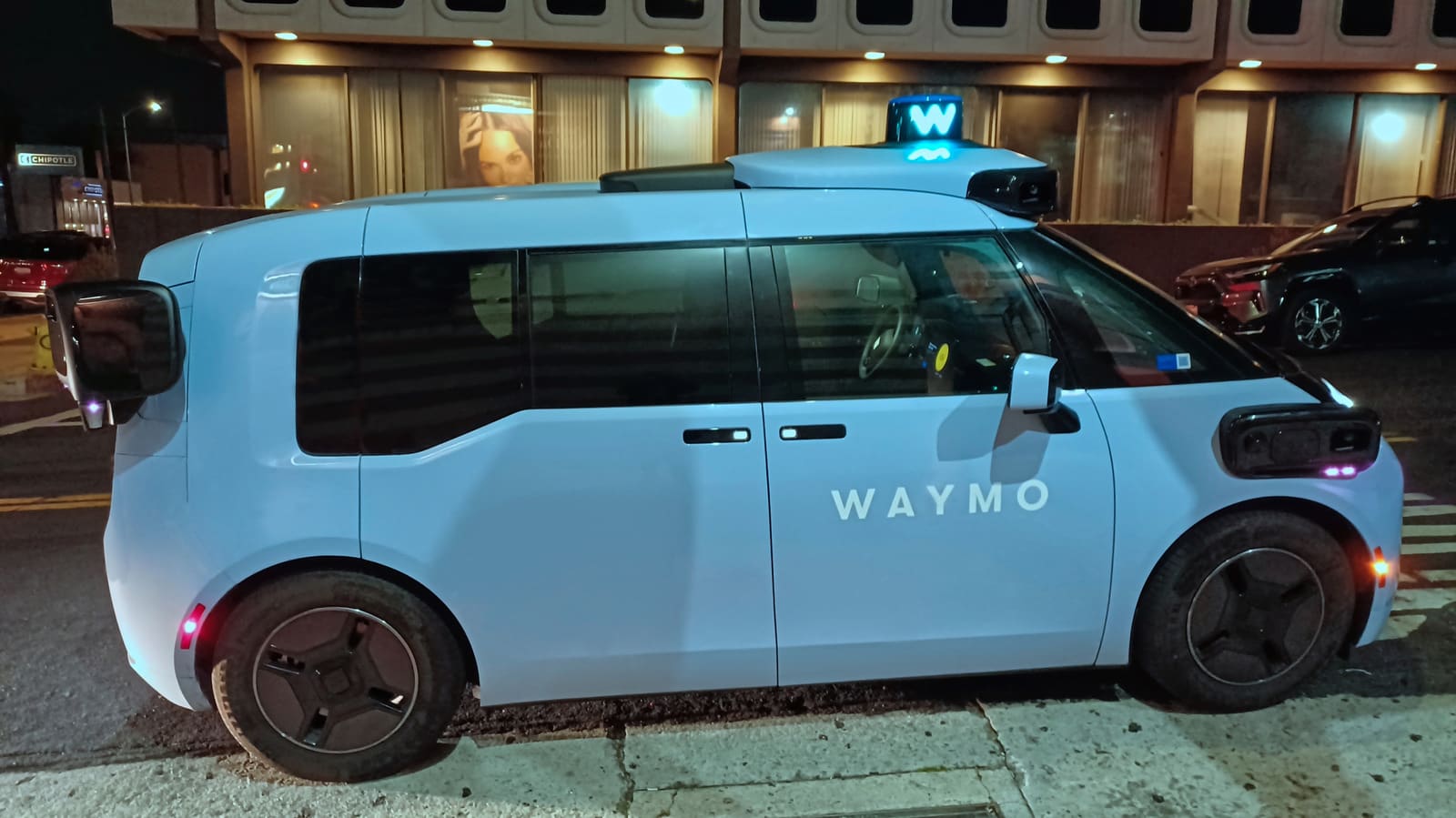
The approval covers two vehicle platforms. Waymo's existing Jaguar I-Pace electric SUVs, which have logged millions of autonomous miles across Phoenix, San Francisco, and Los Angeles, will continue to anchor the fleet. The company also secured clearance for its new Ojai robotaxi, a custom electric minivan developed in partnership with Zeekr, the Chinese automaker owned by Geely. The Ojai platform offers more interior space and a design optimized for ride-hailing rather than adapted from a consumer vehicle, a shift Waymo has described as central to improving unit economics and passenger experience.
Zeekr's involvement underscores the extent to which Chinese manufacturing capacity has become integral to Western autonomous-vehicle programs, even as export controls and supply-chain scrutiny intensify in other parts of the tech stack. Waymo has said the Ojai vehicles are assembled to its specifications, with sensor suites and compute hardware integrated during production rather than retrofitted. That approach reduces weight and improves sensor placement, but it also ties Waymo's scaling timeline to Zeekr's production ramp and any regulatory friction that might emerge around cross-border automotive partnerships.
Testing Beyond California
In parallel with the California expansion, Waymo disclosed in July that it would begin fully autonomous testing without safety drivers in San Diego, Denver, Tampa, and Las Vegas. Those trials are distinct from commercial service but serve as precursors to future launch decisions. Denver and Tampa represent climate and infrastructure conditions Waymo has not yet operated in at scale: snow, ice, and summer thunderstorms in Colorado; humidity, frequent rain, and a car-dependent sprawl in Florida. Las Vegas adds the complexity of tourist-heavy traffic patterns and a high volume of pedestrian crossings in dense entertainment districts.
The multi-city testing strategy reflects a broader industry shift. Operators are moving away from the single-city, multi-year incubation model that defined the 2010s and toward faster geographic diversification. The rationale is partly competitive, as rivals including Cruise, Zoox, and a cohort of Chinese firms push their own expansions. But it also reflects investor pressure to demonstrate that autonomous technology can generalize across geographies without requiring bespoke tuning for each new market.
Competitive Dynamics and Market Timing
Waymo's expansion comes as the competitive landscape in the US remains fluid. Cruise, General Motors' autonomous unit, paused operations in late 2023 after a pedestrian-dragging incident in San Francisco and has only recently resumed limited testing. That slowdown handed Waymo a window to consolidate its lead in California, where it now operates the largest commercial robotaxi fleet by a significant margin. Zoox, Amazon's self-driving subsidiary, has been testing in Las Vegas and the Bay Area but has yet to open a fare-paying service to the general public.
Outside the US, the pace is faster. Chinese operators including Baidu's Apollo Go and Pony.ai have deployed thousands of robotaxis across Beijing, Shenzhen, Guangzhou, and other tier-one cities, often with municipal support and lighter regulatory friction. Those programs benefit from dense urban populations and government policies that treat autonomous mobility as strategic infrastructure. Waymo's challenge is to prove that a safety-first, regulator-friendly approach can achieve comparable scale in a fragmented, litigious market like the United States.
What Ridership Data Reveals
Waymo disclosed earlier this year that it was completing more than 100,000 paid trips per week across its existing markets, a figure that represents steady growth but remains modest relative to the ambitions the company has articulated. For context, Uber completes roughly 25 million trips per day globally. Scaling to a meaningful share of urban mobility will require not just regulatory approvals but also vehicle supply, service reliability, and consumer adoption that extends beyond early-adopter cohorts.
The economics of robotaxi operations remain opaque. Waymo has not published unit costs or breakeven timelines, and the capital intensity of the model, fleet depreciation, insurance, remote operations centers, and ongoing software development, makes profitability a distant milestone. The addition of Sacramento and San Diego will generate new ridership data and help Waymo refine pricing, routing algorithms, and fleet-utilization models, but it also introduces operational overhead in markets where demand patterns are unproven.
Regulatory and Liability Questions Ahead
California's approval process has become more exacting since a series of incidents in 2023 and early 2024 involving blocked emergency vehicles, erratic stopping behavior, and collisions. The CPUC now requires more granular safety reporting and has shown willingness to suspend or revoke permits when operators fall short. Waymo's multi-month review for this expansion suggests regulators are applying heightened scrutiny, even to the industry's most experienced player.
Liability frameworks remain unsettled. When a robotaxi is involved in a collision, questions of fault, insurance claims, and legal responsibility can hinge on whether the vehicle was operating autonomously, whether a remote operator intervened, and what data the company provides to investigators. As Waymo's fleet grows and operates in more jurisdictions, the statistical likelihood of edge-case incidents rises, and with it the risk of litigation or regulatory backlash that could slow further expansion.
The path from 18 counties to statewide service, and eventually to a national footprint, will depend as much on Waymo's ability to manage those non-technical risks as on the performance of its autonomy stack. The company's cautious, incremental rollout strategy suggests it understands that the next phase of scaling is as much about earning public trust and regulatory confidence as it is about miles driven or sensor performance.