Waymo Routes Retired Robotaxi Batteries Into California and Texas Grid Storage
The Alphabet-owned autonomy firm's deal with B2U marks a rare public glimpse into end-of-life planning for commercial AV fleets—and underscores the growing convergence of mobility and energy infrastructure across North America.
A Fleet Reaches Its Second Act
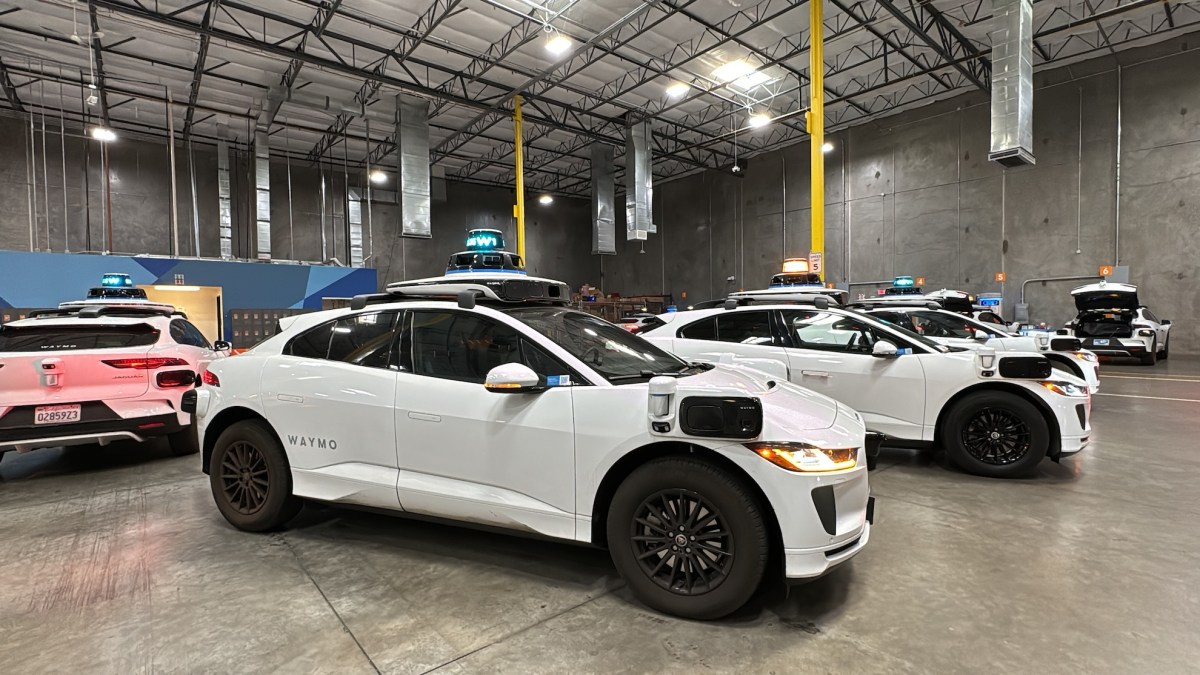
Waymo has committed the batteries retiring from its Jaguar I-Pace robotaxi fleet to stationary energy-storage projects in California and Texas, the company disclosed this week. The partnership with California-based B2U Storage Solutions will deploy what Waymo described as "hundreds of megawatts of storage capacity," though neither party offered a timeline or named specific grid operators involved. At DailyTechWire, we've tracked the slow emergence of second-life battery economics in Asia and Europe; Waymo's announcement is among the first to articulate a post-service pathway for a commercial autonomous-vehicle fleet at scale in North America.
The move matters because it addresses a question that has lingered since the first robotaxi permits were issued: what happens when thousands of purpose-built electric vehicles—operated twenty-four hours a day in dense urban corridors—exhaust their primary-use battery cycles? Waymo's fleet today numbers in the low thousands, nearly all of them Jaguar I-Pace crossovers cycled through Phoenix, San Francisco, Los Angeles, and Austin. A small number of Zeekr-built vans have begun testing in recent months, but the I-Pace remains the backbone. Those vehicles rack up mileage and charge cycles far faster than consumer EVs, compressing a decade of consumer wear into two or three years of commercial service. The batteries that emerge still hold 70 to 80 percent of original capacity—enough to be uneconomical for a robotaxi but entirely viable for less weight-sensitive, less time-critical grid applications.
Why Stationary Storage Appeals to Fleet Operators
Stationary storage has become the default destination for retired EV packs in markets where regulatory frameworks reward grid-balancing services. In South Korea and Japan, utilities pay premiums for fast-response capacity that can absorb surplus solar generation at midday or discharge during evening peaks. California's grid, strained by renewable curtailment and wildfire-season demand spikes, offers similar arbitrage opportunities. Texas, with its deregulated wholesale market, allows storage operators to capture price swings that can exceed $9,000 per megawatt-hour during scarcity events.
B2U's model—repurposing rather than recycling—sidesteps the energy-intensive hydrometallurgical and pyrometallurgical processes that dominate end-of-life battery treatment. Instead, packs are disassembled to the module level, tested for remaining capacity and internal resistance, then repackaged into containerized systems that plug directly into substation infrastructure. The economics hinge on two variables: the residual value captured by avoiding virgin-cell purchases, and the operational lifespan of the repurposed modules before they must be sent to a recycler. In pilot projects we've examined across Guangdong and Bavaria, second-life systems have achieved five to eight years of grid service, with capacity fade rates of 2 to 3 percent annually—acceptable for applications where energy density is not the binding constraint.
Waymo's choice of B2U over larger, better-capitalized rivals is notable. Redwood Materials—founded by former Tesla chief technology officer JB Straubel and backed in part by Alphabet, Waymo's parent—recently launched its own second-life storage division. That Waymo opted for a smaller, California-focused partner suggests either a desire to maintain strategic flexibility or a recognition that Redwood's recycling-first business model may not align with Waymo's timeline for battery retirement. B2U has concentrated its efforts on California utility contracts and has deployed several dozen megawatt-hours of storage using packs from Nissan Leafs and other early-generation EVs. The Waymo deal represents an order-of-magnitude scaling of that pipeline.
The Broader Convergence of Mobility and Energy
The announcement arrives as autonomy operators worldwide confront the operational realities of electrified fleets. In China, Baidu's Apollo Go and Pony.ai have begun piloting battery-swap stations to reduce vehicle downtime, but neither has disclosed a post-service battery strategy. In Europe, where extended producer responsibility regulations will soon require automakers to account for end-of-life battery disposition, several OEMs have signed memoranda of understanding with utilities, though few have moved beyond pilot scale. Waymo's deal is among the first in North America to commit a specific, revenue-generating fleet to a named storage partner.
The regional dimension is significant. California and Texas together account for more than half of U.S. utility-scale battery installations, and both states have regulatory mechanisms that allow third-party storage operators to bid capacity into ancillary-services markets. California's Self-Generation Incentive Program and Texas's performance-based wholesale market create revenue streams that can, in favorable scenarios, recover the cost of repurposing and installation within three to four years. Whether Waymo or B2U will own the storage assets, or whether they will operate under a revenue-share arrangement, remains undisclosed.
The scale Waymo cited—hundreds of megawatts—implies thousands of battery packs over the life of the partnership. A single Jaguar I-Pace carries a 90-kilowatt-hour pack; deploying 100 megawatts of capacity would require roughly 1,100 packs, assuming no derating for safety margin or integration losses. If Waymo retires vehicles on a three-year cycle, the company would need to be operating a fleet of at least 3,000 to 4,000 vehicles to supply that volume sustainably. Current public disclosures suggest Waymo is approaching that threshold, though the company does not release precise fleet counts.
Risks and Open Questions
Two uncertainties loom. First, the regulatory treatment of second-life batteries remains fragmented. California and Texas both allow repurposed packs to qualify for grid-interconnection contracts, but safety certification requirements—particularly around thermal runaway and fire suppression—vary by jurisdiction and are still being codified. A high-profile incident involving a repurposed pack could trigger a regulatory tightening that would strand capital or force costly retrofits.
Second, the economics depend on stable or rising capacity payments from grid operators. If new lithium-iron-phosphate chemistries continue to fall in cost—as they have in China, where LFP cells now trade below $60 per kilowatt-hour—the value proposition for repurposed packs erodes. Second-life storage competes not only with new batteries but also with long-duration technologies such as iron-air and sodium-ion, both of which are entering commercial deployment at price points that challenge the assumption that repurposing will always be cheaper than virgin manufacturing.
Waymo's partnership with B2U offers a template, but it is not yet a playbook. The deal demonstrates that a commercial AV operator can close the loop on battery lifecycle in a way that generates ancillary revenue and satisfies environmental stakeholders. Whether the model proves replicable at the scale autonomy proponents envision—tens of thousands of vehicles per metro area—will depend on grid capacity, regulatory clarity, and the trajectory of new-cell costs. For now, the partnership is a signal that the autonomy industry is beginning to account for the downstream consequences of electrification, even as the upstream challenges of scaling robotaxi service remain unresolved.
What It Means for the Region
At DailyTechWire, we've observed that Asia-Pacific markets—particularly South Korea, Japan, and parts of China—have moved faster than North America in integrating second-life batteries into grid infrastructure, in part because utilities there face acute land constraints and high costs for new generation. Waymo's announcement suggests that North American operators are now catching up, driven less by regulatory mandate than by the recognition that battery disposal represents both a cost center and a missed revenue opportunity. The hundreds of megawatts Waymo and B2U plan to deploy would rank among the largest second-life storage commitments globally, rivaling projects we've tracked in Jeju and Shenzhen.
The deal also raises a broader question: as autonomy fleets scale, will they become de facto participants in energy markets, with their retired batteries serving as distributed storage assets that smooth renewable intermittency? If so, the line between mobility operator and grid services provider begins to blur—a convergence that could reshape both industries in ways neither has fully anticipated. Whether Waymo's peers follow suit, or whether this remains an outlier driven by Alphabet's dual interests in autonomy and sustainability, will become clearer as more fleets reach retirement age over the next two to three years.


