Waymo's New Human-Behavior Model Raises the Bar for AV Safety Claims
The Alphabet subsidiary is betting 'active inference' can more accurately reconstruct what human drivers would do in crash scenarios—and wants academics to validate it.
The New Baseline
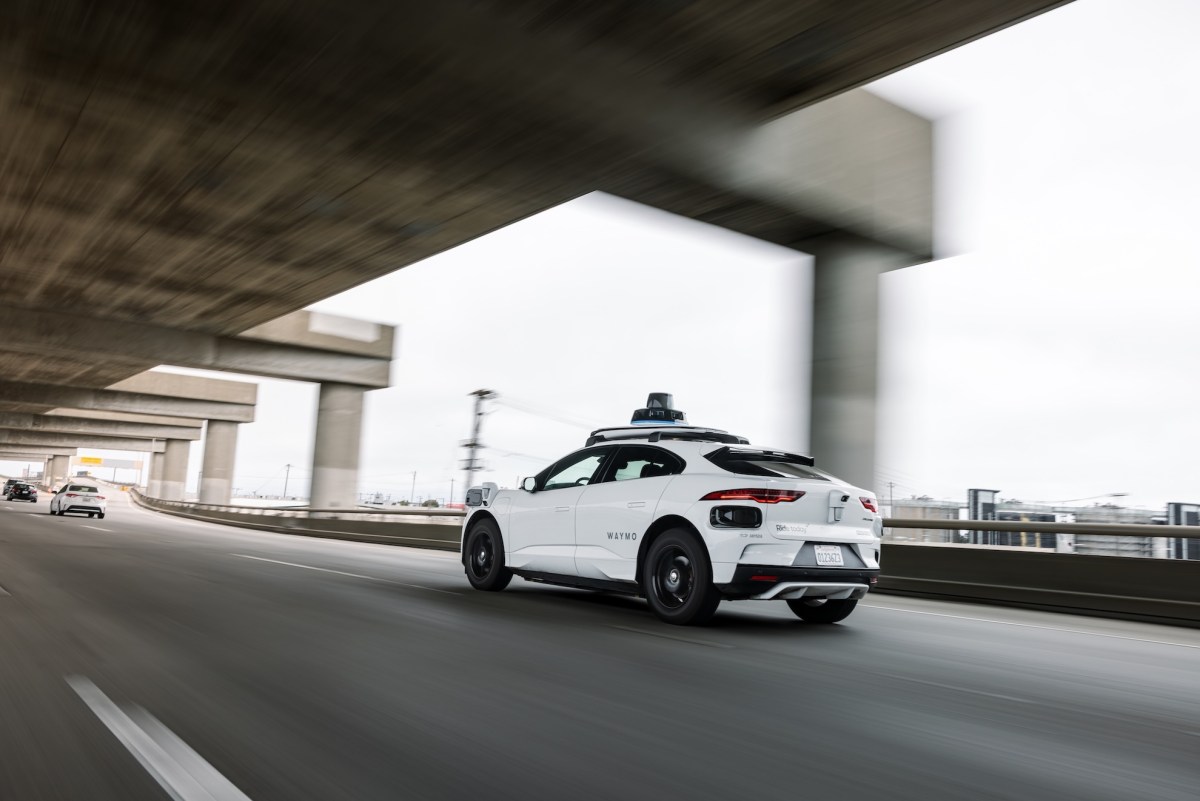
Waymo now claims it can predict what a competent human driver would have done in a crash—not just in the final split second, but across the entire lead-up to impact. The Alphabet-owned robotaxi operator introduced its Reference Driver model this week, a computational framework that simulates human anticipation, surprise, and steering corrections in traffic conflicts. Built on active inference theory—the notion that drivers constantly imagine plausible futures and act to reach the safest one—the model marks a departure from the reactive, last-moment collision proxies the autonomous vehicle industry has relied on for years. At DailyTechWire, we've tracked the proliferation of AV benchmarks across the region, from Pony.ai's trials in Guangzhou to Cruise's permit battles in Seoul. The Reference Driver arrives as Waymo expands beyond San Francisco and Phoenix into higher-density Asian corridors where regulatory scrutiny is tightening and public tolerance for ambiguity around safety metrics is low.
The technical advance matters because every crash involving a robotaxi triggers the same question: would a human have done better? Until now, AV companies have answered with models that replay only the final maneuver—braking distance, reaction time—without accounting for the cognitive surprise or decision cascade that precedes evasive action. Waymo developed the Reference Driver in partnership with TU Delft, publishing the methodology in Nature Communications and releasing the research code under an academic, non-commercial license. The company says the model can handle thousands of scenarios in virtual environments, enabling faster iteration than physical or even conventional simulation-based testing.
Why Active Inference Changes the Equation
Active inference is a branch of computational neuroscience that treats perception and action as a unified loop: an agent constantly updates its beliefs about the world and selects actions that minimize surprise. Applied to driving, this means the model doesn't just react to a pedestrian stepping into the road—it anticipates pedestrian trajectories, adjusts speed preemptively, and modulates steering to keep the scenario within expected bounds. Waymo's earlier models, like those used across the industry, focused on matching human reaction times once a conflict was imminent. The Reference Driver instead reconstructs the driver's internal state—surprise level, confidence in predictions—and outputs behavior that reflects how a careful, competent human would have managed uncertainty in the seconds before a crash.
The practical consequence is that Waymo can now claim its robotaxis outperform humans not only in final-moment braking but in threat anticipation and smooth deceleration. This matters in liability disputes, regulatory filings, and public perception. In January, a Waymo vehicle struck a child near a Santa Monica school, decelerating from 17 miles per hour to 6 miles per hour at impact. The company stated that its previous model estimated an attentive human would have made contact at approximately 14 miles per hour. The crash remains under investigation by the National Highway Traffic Safety Administration and the National Transportation Safety Board, but the incident underscored the stakes of having a defensible human-baseline model. If the Reference Driver had been operational, Waymo's safety narrative might have carried more weight with regulators and parents.
Across Asia, where AV pilots are accelerating in Seoul, Singapore, and Shenzhen, the question of human-equivalence benchmarks is even more acute. Regulators in those markets have been reluctant to grant wide-scale permits without transparent, reproducible safety metrics. A model that can simulate nuanced human decision-making—and be validated by third-party researchers—could become a de facto standard if it proves robust. Waymo's decision to open-source the research code signals confidence that external scrutiny will strengthen, not undermine, the framework. It also invites collaboration from universities and research labs that have struggled to access proprietary AV data.
Scaling Beyond Collision Avoidance
Waymo says the Reference Driver is adaptable to a wider range of road-user behaviors, not just crash scenarios. That includes modeling how human drivers navigate construction zones, respond to emergency vehicles, or yield at unmarked intersections—situations where rule-based systems often falter. The model's ability to process thousands of scenarios in parallel means it can be integrated into continuous training loops, where each real-world edge case feeds back into simulation and refines the AV's policy. This is critical as Waymo moves into Tokyo, where pedestrian density and mixed-use streets create far more ambiguous interactions than the grid layouts of Phoenix.
The challenge is validation. Active inference models are only as good as the data used to calibrate them, and human driving behavior varies widely by geography, road design, and cultural norms. A competent driver in Seoul may exhibit different risk tolerance and lane discipline than one in Los Angeles. Waymo has not disclosed how it plans to localize the Reference Driver for Asian markets, nor whether it will incorporate region-specific naturalistic driving data. If the model is trained predominantly on U.S. crash databases, its applicability to Seoul or Singapore could be limited—undermining the very claim to human-equivalence that regulators demand.
Another open question is how the model handles rare but high-consequence scenarios: a child darting from behind a parked car, a motorcycle filtering through traffic. Active inference excels at reasoning under uncertainty, but it requires rich priors—statistical beliefs about how pedestrians or motorcyclists behave. If those priors are weak or biased, the model may underestimate surprise and produce overconfident predictions. Waymo's release of the research code will allow independent labs to probe these edge cases, but the company retains control over the training data and the production version of the model that runs in its vehicles.
Regulatory and Competitive Implications
The timing of the Reference Driver's debut is not coincidental. Waymo is expanding paid robotaxi service in Los Angeles and has signaled interest in Tokyo and Seoul. Both cities have congestion, pedestrian complexity, and political sensitivity around AV safety. A model that can demonstrate, in granular detail, that a robotaxi would have avoided a collision or minimized harm better than a human driver gives Waymo a stronger hand in permit negotiations. It also sets a high bar for competitors—Cruise, Pony.ai, Baidu Apollo—who will face pressure to match or exceed Waymo's transparency.
In China, where Baidu and Pony.ai are logging millions of autonomous miles, the regulatory framework already requires AV operators to submit detailed safety case documentation. If Waymo's Reference Driver gains traction as an industry benchmark, Chinese regulators may push domestic operators to adopt similar active-inference models or develop their own. That could accelerate a bifurcation in AV safety standards—one rooted in Western academic frameworks, another in Chinese data ecosystems and driving norms. For multinational AV developers hoping to operate across both markets, reconciling those standards will be a nontrivial engineering and policy challenge.
The open-source release also introduces a new dynamic: academic researchers can now scrutinize Waymo's methodology and propose refinements. If the model proves robust under peer review, it could be adopted by insurance companies, certification bodies, and other AV operators. If researchers identify flaws—overfitting to specific crash types, insufficient handling of rare events—Waymo will face public pressure to revise the model. Either outcome advances the state of the art, but the latter could expose vulnerabilities in Waymo's safety claims at a moment when the company is courting institutional investors and municipal partners.
Why It Matters for Asia's AV Race
The Reference Driver is a bid for scientific legitimacy in a field where most safety claims rest on proprietary black boxes. By grounding its model in active inference and opening the research code, Waymo is inviting the academic community to validate—or challenge—its methodology. That transparency is rare in the AV industry, and it could shift the terms of debate from miles driven to the quality of the counterfactual: what would a human have done, and how do we know?
For Asia's robotaxi ecosystem, the stakes are immediate. Seoul is evaluating whether to expand AV permits beyond limited pilots. Singapore is weighing how to integrate autonomous shuttles into its mass transit network. Tokyo is preparing for a post-Olympics push on mobility innovation. In each case, regulators want evidence that AVs are not just different from human drivers—they are measurably safer. The Reference Driver offers a framework for that comparison, but only if it can be localized to reflect Asian driving conditions and cultural norms. Waymo has yet to demonstrate that capability, and competitors in the region have every incentive to develop their own models rather than adopt a U.S.-centric standard.
The larger question is whether active inference itself is the right paradigm. Some researchers argue that human drivers are not rational Bayesian agents minimizing surprise—they are distracted, inconsistent, and prone to overconfidence. Modeling an idealized "careful and competent" driver may set a benchmark that no real human meets, making it easier for AVs to claim superiority. If regulators adopt the Reference Driver without interrogating its assumptions, they risk codifying a standard that favors AVs by design. That's a policy choice, not a technical inevitability, and it will play out differently in Washington, Brussels, Beijing, and Seoul.
The Validation Challenge Ahead
Waymo's decision to release the research code is a calculated gamble. If external researchers validate the Reference Driver, it becomes a credible industry standard and a competitive moat. If they find systematic biases or failure modes, Waymo's safety narrative—and its expansion plans—could stall. The company is betting that transparency will strengthen its position, but that bet assumes the model holds up under scrutiny. Given the stakes in Los Angeles, Tokyo, and beyond, that scrutiny will be intense.
The Reference Driver also raises a meta-question: who gets to define what a competent human driver looks like? Waymo's model is trained on crash databases and naturalistic driving studies, but those datasets are skewed toward certain geographies, demographics, and road types. A competent driver in rural Montana behaves differently from one in downtown Mumbai. By anchoring the model in active inference—a theory of optimal decision-making—Waymo is implicitly claiming that there is a universal standard of careful driving. That claim will be tested as the company moves into markets where driving norms diverge sharply from Silicon Valley's assumptions.
At DailyTechWire, we've followed the evolution of AV benchmarks from simple disengagement rates to complex scenario-based evaluations. The Reference Driver represents the next step: a model that attempts to capture not just what humans do, but what they think and feel in the moments before a crash. Whether that model survives contact with real-world complexity—and whether it can be adapted to the diversity of Asia's roads—remains an open question. The answer will shape the pace and geography of robotaxi deployment for the next decade.


