Waymo's California Data Reveals Robotaxis Mirror Ride-Hailing's Traffic Impact
A decade after DARPA's desert trials, the autonomous vehicle industry's $100 billion bet confronts an inconvenient truth: removing the driver doesn't remove the congestion.
The Promise That Didn't Scale
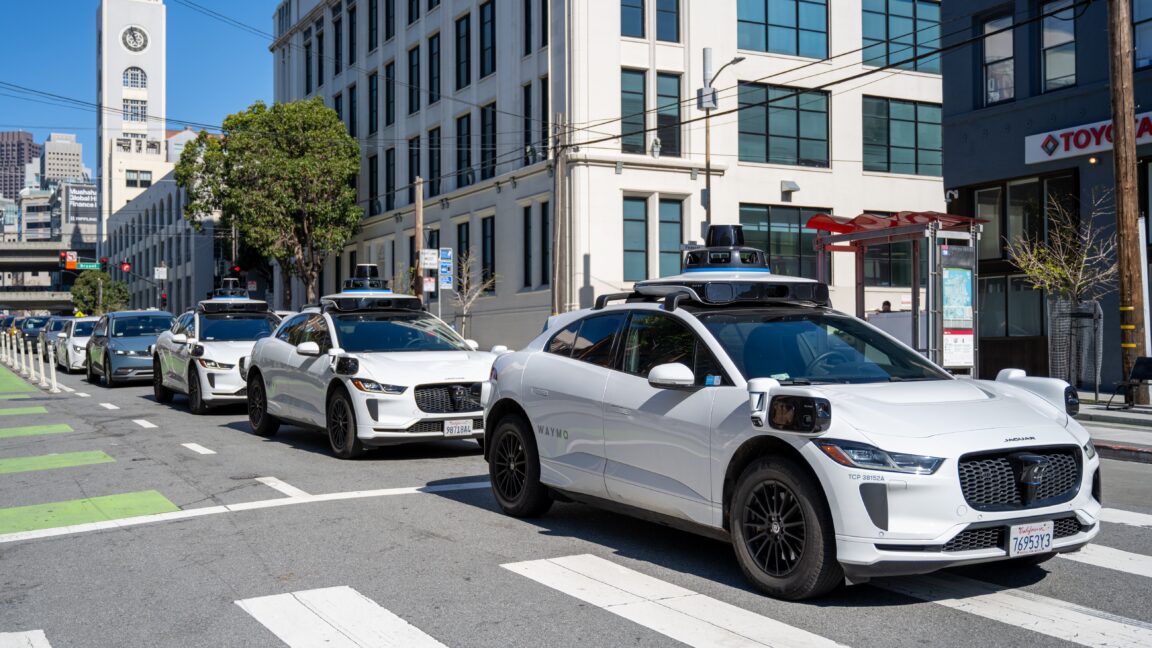
Waymo's commercial robotaxi fleet in California now logs tens of thousands of trips per week across San Francisco and parts of Los Angeles. Yet data submitted to the California Public Utilities Commission reveals an outcome the autonomous vehicle industry has rarely discussed in earnings calls or policy briefs: the cars generate traffic volumes per passenger-mile that closely track conventional ride-hailing services. The finding undermines a narrative that has animated $100 billion in global AV investment—that driverless technology would inherently reduce urban congestion by optimizing routing, eliminating cruising for parking, and enabling higher vehicle utilization.
At DailyTechWire, we've tracked the divergence between AV deployment timelines and the infrastructure assumptions baked into those projections. What the California filings suggest is that the congestion problem was never primarily about driver inefficiency. It was about induced demand—and no amount of LiDAR or neural-net path planning changes that economic reality.
What the CPUC Data Shows
Waymo's quarterly reports to California regulators include aggregate trip counts, vehicle-miles traveled, and passenger occupancy rates. When normalized for passenger throughput, the figures align closely with data Uber and Lyft have disclosed in their own CPUC filings. Average occupancy hovers near 1.2 passengers per trip—identical to the ride-hailing baseline. Vehicle-miles per completed ride show marginal variance, typically within 5–8 percent, a gap attributable to Waymo's slightly longer repositioning distances between drop-off and the next pickup.
The implication: removing the human driver does not, by itself, alter the fundamental geometry of one-passenger, one-destination trips. Waymo's fleet still deadheads between fares, still responds to peak-hour demand surges in the same corridors, and still competes for the same curb space during evening rush in the Mission District or near LAX.
Critics of ride-hailing have long argued that services like Uber increased traffic in cities like San Francisco by 13–15 percent during their growth phase, according to transportation research from UC Davis and the San Francisco County Transportation Authority. If robotaxis replicate that trip profile—and the CPUC data suggests they do—then the net effect on congestion is neutral at best, potentially additive in markets where robotaxi adoption outpaces public transit ridership.
The Induced Demand Trap
The congestion thesis for AVs rested on two assumptions: first, that autonomous fleets would operate as shared vehicles, pooling passengers headed in similar directions; second, that eliminating parking search time would reduce unnecessary miles. Neither has materialized at scale. Waymo offers a pooling option in its app, but adoption remains below 10 percent of rides, mirroring Uber's experience with UberPool before the service was largely discontinued. Passengers prioritize privacy and time predictability over marginal cost savings—a preference that holds regardless of who (or what) is driving.
Meanwhile, the efficiency gain from skipping parking is offset by repositioning behavior. A Waymo vehicle completing a drop-off in Soma doesn't vanish—it either stays in motion to reach the next fare or idles in a geofenced staging area, often along the same arterial roads that human-driven Ubers occupy. The California data shows repositioning and staging account for 28–32 percent of total fleet mileage, a figure comparable to Lyft's disclosed "P3" (between-trip) driving.
What changes, then, is not aggregate vehicle activity but the distribution of that activity across time and operators. If robotaxis achieve the cost structure their backers project—Waymo's leadership has suggested per-mile costs could eventually drop below $1—they risk triggering a rebound effect: cheaper rides generate more trips, pulling passengers away from buses, bikes, and walking. Transportation economists call this induced demand, and it's the same mechanism that causes highway expansions to fill with traffic within months of opening.
Regional Implications: Asia's Denser Math
The California findings carry particular weight in Asia, where AV pilots are underway in Singapore, Shenzhen, Seoul, and Tokyo. Unlike the sprawling, car-dependent geography of Phoenix or Los Angeles—where Waymo has logged its highest mileage—Asian cities operate under constraints of density, mixed traffic, and established public transit ridership. A robotaxi that replicates ride-hailing's trip profile in these environments doesn't just add vehicles; it competes for lane space with buses carrying 40–60 passengers, scooters, and delivery vans.
Singapore's Land Transport Authority has already capped ride-hailing vehicle growth and imposed congestion pricing in the central business district. If AVs are subject to the same per-trip externalities—road wear, curb occupancy, intersection delay—then regulators may extend those caps to driverless fleets, limiting the addressable market for operators like Waymo, Cruise (which paused operations after safety incidents), and China's Baidu Apollo.
In Shenzhen, where Baidu's Apollo Go has deployed several hundred robotaxis, early municipal data shows similar occupancy and deadhead patterns. The company has not released granular trip logs, but transport officials noted in a February policy memo that AV fleets were generating "comparable road utilization" to existing taxi and ride-hailing services. If that holds, the congestion benefit evaporates—and with it, a key policy justification for subsidizing AV infrastructure.
Why This Matters for the $100 Billion Bet
The autonomous vehicle industry has raised at least $100 billion globally, according to tracking by PitchBook and Bloomberg, with Waymo alone securing over $10 billion across multiple funding rounds led by Alphabet, external investors, and strategic partners. Much of that capital was premised on a future in which AVs not only replaced human drivers but also improved urban mobility at the system level—less congestion, fewer crashes, lower emissions per passenger-mile.
The California data challenges the congestion pillar of that thesis. If robotaxis deliver safety gains (Waymo's insurance data shows 76 percent fewer bodily injury claims per million miles compared to human drivers) but replicate ride-hailing's traffic profile, then the value proposition narrows. Investors pricing in a mobility transformation may need to recalibrate toward a more modest outcome: AVs as a sustaining innovation in for-hire transportation, not a disruptive force that reshapes how cities move.
That recalibration has downstream effects. Municipal governments evaluating whether to permit AV expansion—or invest in dedicated pick-up/drop-off zones, sensor-friendly lane markings, and 5G infrastructure—will weigh costs against benefits. If the congestion case weakens, the political coalition supporting AV deployment shrinks to those who prioritize safety or operational efficiency for fleet operators. Public transit advocates, meanwhile, gain leverage to argue that the same infrastructure dollars would yield higher passenger throughput if directed toward bus rapid transit or metro expansions.
The Unanswered Variables
The CPUC data covers a snapshot: Waymo's operations in California through early 2026, a period when the fleet was still scaling and ride volume was concentrated in a few neighborhoods. Three variables could alter the traffic calculus as deployment matures.
First, if Waymo or competitors achieve true Level 5 autonomy—operation in all weather, all road types, without geofencing—then repositioning efficiency might improve as vehicles no longer avoid certain zones. Second, if shared rides gain adoption through pricing incentives or app design changes, average occupancy could rise toward 1.8–2.0 passengers per trip, meaningfully reducing vehicle-miles per passenger. Third, if AVs integrate with public transit as first-mile/last-mile connectors rather than substitutes, the net effect on congestion could turn positive.
None of those shifts is guaranteed. Shared-ride adoption has plateaued globally despite years of operator nudges. Level 5 autonomy remains elusive—Waymo still restricts service during heavy rain and has had well-documented issues with construction zones and emergency vehicles. And transit integration requires coordination between private AV operators and public agencies, a governance challenge that has stalled in most U.S. cities.
What the Industry Isn't Saying
At industry conferences and in regulatory filings, AV companies continue to emphasize safety, cost reduction, and accessibility. Congestion is mentioned less frequently now than it was in the 2015–2019 hype cycle, when executives routinely claimed autonomous fleets would cut urban traffic by 30–40 percent. That messaging shift predates the California data but aligns with its implications: the companies have quietly downgraded the congestion promise.
The pivot is rational. Safety is measurable, legible to regulators, and—based on Waymo's insurance data—a genuine advantage. Cost reduction, if achieved, creates a defensible business model even in a traffic-neutral scenario. But the retreat from the congestion narrative leaves a gap in the policy justification for public support. If AVs don't reduce traffic, should cities prioritize their deployment over alternatives that do—like protected bike lanes, bus-only corridors, or congestion pricing that applies equally to all vehicles?
The California data doesn't answer that question. It does, however, force the question to be asked—and answered with data rather than assumption. For an industry built on the premise that technology can solve coordination problems humans couldn't, that's an uncomfortable but necessary reckoning.


