Uber Wants Every Robotaxi to Share Its App - and Waymo Won't Play Along
A Washington, D.C. autonomy bill has exposed the ride-hailing giant's plan to mandate hybrid human-robot networks, putting its largest AV partner on the opposite side of the table.
A Bill That Became a Battlefield
Washington, D.C. is poised to permit commercial driverless operations for the first time, and the legislative debate has become a proxy war between two mobility giants with overlapping interests and diverging visions. Uber is lobbying for rules that would compel autonomous vehicle operators to run on multi-modal platforms that also dispatch human drivers. Waymo, which provides more than half a million robotaxi rides weekly across eleven U.S. cities, is backing a framework that allows AV developers to operate their own fleets and apps without platform mandates.
The confrontation centers on a bill introduced by Councilmember Charles Allen in May that would update the district's 2012 Autonomous Vehicle Act. If passed, it would authorize the District Department of Transportation to issue permits for driverless testing and commercial deployment, ending the current requirement for human safety operators. Uber's head of U.S. policy, Javi Correoso, argued at a May council roundtable that robotaxis create congestion, displace roughly four human drivers per vehicle, and lack the ability to assist elderly or disabled passengers. He called for a regulatory requirement that consumers be offered both human and autonomous rides through a single app.
Waymo disputes the premise. A company representative told DailyTechWire that Waymo does not support efforts to restrict AVs to specific network types and would welcome clarifications allowing different operating models to coexist. The clash will play out in a day-long council hearing scheduled for Monday, where more than a dozen industry groups, labor unions, disability advocates, and automakers - including Tesla and Lyft - are slated to testify.
The Proposed Framework
Allen's bill would require AV operators to hold at least five million dollars in liability insurance and report crash data within eight or seventy-two hours, depending on whether the vehicle is part of a commercial fleet or a privately owned car. It would also impose a fifteen-cent-per-mile tax on robotaxi operators, with half of the revenue directed to public transit and the remainder earmarked for education and workforce programs targeting rideshare and taxi drivers at risk of displacement.
That tax rate has drawn criticism from robotaxi proponents, who argue it is prohibitively high and could slow deployment. Labor unions, accessibility groups, and an anti-robotaxi coalition called the Coalition for Accountability and Road Safety have also weighed in. Public records show the coalition is registered to an employee of Pitta Bishop & Del Giorno, a New York lobbying firm with ties to labor unions and the New York Black Car Operators' Injury Compensation Fund. The coalition has launched canvassing and social media campaigns opposing the bill, though its funding sources remain undisclosed.
The stakes extend beyond the district. At DailyTechWire, we've tracked similar debates in New Jersey and California, where state legislators are drafting or revising AV statutes. Uber has signaled it intends to advocate for hybrid network requirements in those jurisdictions as well, making Washington a test case for a national strategy.
Uber's Hybrid Network Doctrine
Uber's position crystallized in a white paper published in May and amplified in a June letter to the D.C. Council. The company envisions a single transportation network in which consumers hailing a ride might be matched with either a human driver or an autonomous vehicle, depending on trip characteristics and availability. Uber spokesperson Noah Edwardsen characterized the D.C. bill as effectively banning hybrid networks, a claim Waymo contests.
The doctrine marks a departure from Uber's earlier anti-regulatory posture. The company's early years were defined by a willingness to exploit legal gray areas and resist union-backed labor protections, including California's AB 5, which sought to reclassify gig workers as employees. Uber, Lyft, and others spent more than two hundred million dollars on Proposition 22, a 2020 ballot measure that preserved contractor classification while granting limited benefits. That initiative was upheld by the California Supreme Court and became a template for compromise between platform companies and labor interests.
Chief Operating Officer Andrew Macdonald acknowledged the shift in a May LinkedIn post accompanying the white paper. He wrote that Uber's grow-at-all-costs approach had led to regulatory battles and a corporate crisis that eroded trust, and that the experience had changed the company. Today, he said, Uber partners with cities rather than confronting them.
Sources familiar with Uber's policy evolution told DailyTechWire that the company learned it must account for human workers and the unions that represent them if it wants to maintain a central role in the robotaxi transition. The hybrid network proposal is Uber's answer: a framework that allows autonomous and human labor to coexist on the same platform, easing displacement concerns while preserving Uber's position as the dominant aggregator.
The Waymo Dilemma
If Uber's hybrid mandate is adopted in D.C. or elsewhere, AV developers face a binary choice. They can integrate their fleets into ride-hailing apps controlled by platform companies, ceding margin and customer data, or they can employ human drivers alongside the robotaxis they have spent years and hundreds of millions of dollars developing. Neither option aligns with the capital-intensive, vertically integrated model most AV operators have pursued.
Waymo's relationship with Uber has been fractious. In 2017, Waymo sued Uber over allegations that former Google engineer Anthony Levandowski had downloaded trade secrets before joining Uber's in-house AV program. The trial, which featured testimony about "laser is the sauce" and other technical details, ended after five days when Uber agreed to settle. Six years later, with Uber's AV unit sold to Aurora, the two companies announced a partnership to put Waymo vehicles on Uber's app in Phoenix. That arrangement, described by insiders as a limited pilot, ended quietly in May.
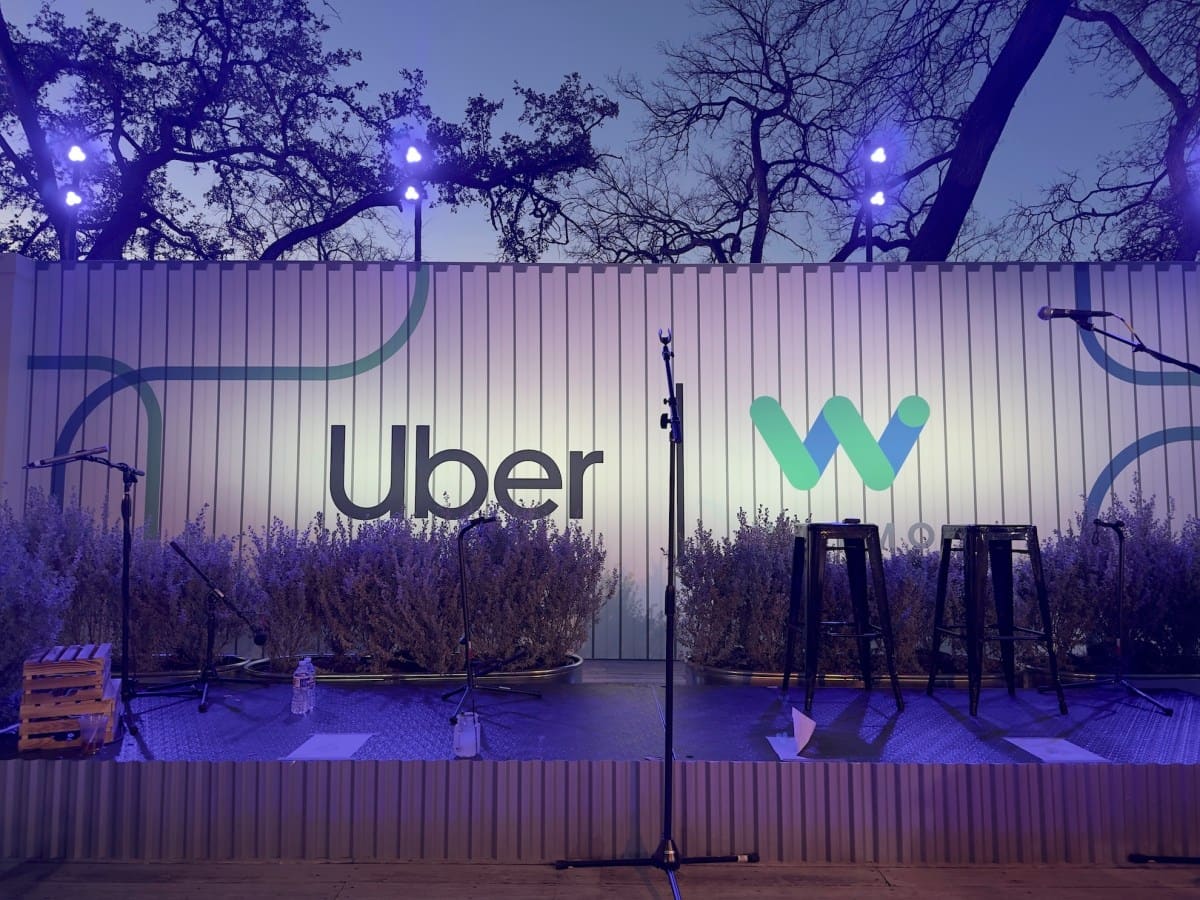
The partnership appeared to deepen in March 2025, when executives from both companies celebrated a joint launch at a private event in Austin. But the D.C. lobbying fight has exposed the fragility of that alignment. Uber's push for platform mandates threatens Waymo's ability to operate standalone fleets and apps, while Waymo's support for permissive deployment rules undermines Uber's argument that regulation should protect human drivers and prevent monopolies.
Greg Rogers, founder of the nonprofit think tank The Innovation Majority, called Uber's strategy an exercise in regulatory capture. He argued that mobility is already a marketplace in which consumers choose among buses, bikes, rideshare, and walking, and that forcing certain business models does not improve welfare or safety. Rogers, who is scheduled to testify Monday, said the hybrid mandate risks entrenching incumbents and imposing rent-seeking on new entrants.
A National Template
The D.C. bill is not expected to pass immediately. Multiple parties told DailyTechWire they hope legislation is approved before the end of the year and before Mayor Muriel Bowser leaves office in January, but the timeline remains uncertain. What is clear is that the arguments being rehearsed in Washington will reverberate across state capitals and city councils where AV laws are being drafted or revised.
Uber is building infrastructure to support its hybrid vision. The company has launched AV Labs, a new business unit designed to collect and share real-world driving data with AV developers. It is hiring dozens of engineers for the division and has announced partnerships or investments with more than thirty autonomous vehicle companies globally. The strategy is to embed Uber at the center of the AV ecosystem, both as a data provider and as the platform through which robotaxis reach consumers.
Waymo, meanwhile, is expanding its own footprint. The company operates in eleven cities and is adding new markets at a pace that outstrips any competitor. It has deployed its own app in every market and has resisted exclusive partnerships that would limit its ability to control customer relationships and pricing.
The collision in D.C. is a preview of a larger contest over how autonomous vehicles will be integrated into urban transportation systems. Uber is betting that policymakers will prioritize labor protections and platform neutrality, even if that means constraining how AV developers bring their technology to market. Waymo is betting that cities will choose permissive frameworks that allow multiple operating models to compete, trusting that consumers and markets will sort out the winners.
Both companies have significant leverage. Uber's network effects and relationships with local governments give it influence over regulatory debates. Waymo's technical lead and scale give it the credibility to argue that robotaxis can operate safely and efficiently without platform intermediaries. The outcome in Washington may determine which vision prevails, and whether the robotaxi future looks more like a walled garden or an open field.