Thailand Attracts $43.6 Billion in Investment Applications as Data Center Demand Surges
First-half investment applications climbed 37% year-on-year, driven by digital infrastructure build-out, though questions remain about broader economic impact
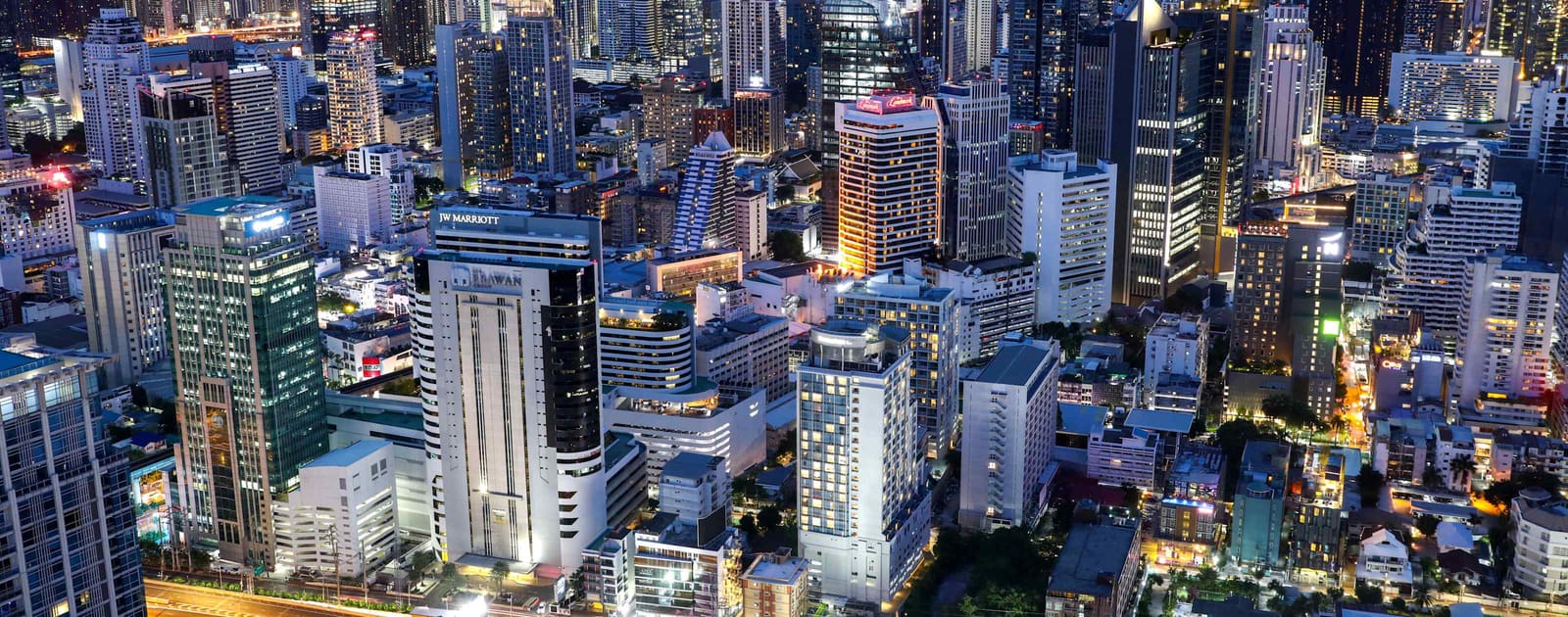
Capital Flows Shift to Digital Infrastructure
Thailand logged $43.6 billion in investment applications during the first half of 2026, a 37% increase compared to the same period in 2025, according to official data released in late July. The digital sector accounted for a substantial share of that inflow, reflecting the accelerating build-out of data center and cloud infrastructure across Southeast Asia.
At DailyTechWire, we've tracked similar patterns in Vietnam, Indonesia, and Malaysia over the past eighteen months. What distinguishes Thailand's recent surge is the speed at which hyperscale operators and regional cloud providers are committing capital to Bangkok and surrounding provinces. The Kingdom's stable power grid, relatively low land costs, and government incentives for digital investment have positioned it as a viable alternative to Singapore, which faces land and energy constraints.
The data center expansion is directly tied to inference workloads and training capacity for large language models. Operators need low-latency connectivity to serve users in mainland Southeast Asia, and Thailand's geographic position offers fiber routes to China, India, and the rest of ASEAN. Several multinational operators have announced or begun construction on facilities exceeding 50 megawatts of IT load, a scale that was uncommon in the region outside Singapore just three years ago.
Concentration Risk and Economic Multipliers
While the headline figure signals confidence in Thailand's investment climate, analysts have raised questions about the economic multipliers these projects generate. Data centers are capital-intensive but employ relatively few workers once operational. A typical 100-megawatt facility might require fewer than 150 permanent staff, most of them specialized technicians and engineers.
The construction phase creates temporary demand for contractors, electricians, and mechanical engineers, but those jobs dissipate once the facility goes live. Unlike manufacturing plants that hire thousands of assembly-line workers or automotive factories that seed supplier ecosystems, data centers contribute primarily through electricity consumption and land-lease revenue. For a government aiming to create middle-class employment, the calculus is more complex than the raw investment total suggests.
Thailand's Board of Investment has offered tax holidays and import-duty exemptions to attract digital infrastructure projects, a policy mirrored across the region. The risk is that these incentives erode fiscal revenue without commensurate job creation or technology transfer. At DailyTechWire, we've observed similar debates in Jakarta and Kuala Lumpur, where policymakers weigh immediate capital inflows against long-term industrial policy goals.
Power Demand and Grid Stability
Data centers are among the most energy-intensive commercial facilities. A single large-scale campus can consume as much electricity as a mid-sized city. Thailand's power generation mix relies heavily on natural gas, supplemented by coal, hydroelectric imports from Laos, and a growing but still modest share of solar. The Electricity Generating Authority of Thailand has signaled capacity expansions, but the timeline for new baseload plants stretches into the early 2030s.
If data center demand grows faster than generation capacity, Thailand could face the kind of grid stress that has prompted Singapore to pause new data center permits and forced Indonesian operators to invest in captive power plants. The government has encouraged co-location of renewable energy with data centers, but solar and wind require battery storage or grid balancing to support 24/7 workloads, adding cost and complexity.
Energy pricing will also come under scrutiny. Industrial electricity rates in Thailand are competitive by regional standards, but sustained demand from data centers could push wholesale prices higher, affecting manufacturing exporters that depend on stable, low-cost power. Balancing the needs of digital infrastructure with traditional industry is an emerging policy challenge across ASEAN.
Regional Competition and the Singapore Spillover
Thailand's investment uptick reflects a broader reallocation of data center capital in Southeast Asia. Singapore's moratorium on new facilities, announced several years ago and periodically reviewed, has redirected investment to neighboring markets. Malaysia, particularly Johor, has captured a significant share, benefiting from proximity to Singapore and access to the same subsea cable systems.
Thailand offers a different value proposition: a larger domestic market, a central location for serving the Mekong subregion, and established industrial zones with existing infrastructure. The government has also been more aggressive in courting hyperscalers, offering streamlined permitting and direct engagement with the Board of Investment.
Indonesia remains the region's largest economy and digital consumer base, but permitting delays, complex regulatory requirements, and concerns about political stability have slowed some projects. Vietnam has attracted interest for manufacturing-adjacent data centers supporting electronics assembly and export logistics, but its power grid and real estate markets are less mature than Thailand's.
The competition is not zero-sum. Aggregate demand for compute capacity in Asia is growing fast enough to support multiple hubs. The question is which markets can maintain competitiveness as energy costs rise and as operators demand not just incentives but also regulatory predictability and skilled labor.
What This Means for Thailand's Digital Ambitions
Thailand's government has articulated a vision of becoming a regional digital hub, a goal shared by nearly every ASEAN member. The investment figures suggest progress, but execution will determine whether the capital translates into sustained economic upgrading. Data centers alone do not create a digital economy. They are foundational infrastructure, necessary but not sufficient.
The real test will be whether Thailand can attract the adjacent ecosystem: cloud software developers, AI application startups, research labs, and enterprise customers that generate higher-value activity. That requires not just reliable power and land, but also talent pipelines, intellectual property protections, and access to venture capital.
Several Thai universities have launched AI research programs, and the government has funded initiatives to train data scientists and machine learning engineers. But the region's talent war is intensifying. Singapore, despite its high costs, remains the preferred base for AI labs because of its legal framework, English-language environment, and concentration of technical talent. Thailand will need to differentiate on more than cost to capture that segment.
For now, the investment surge is a vote of confidence in Thailand's infrastructure and policy environment. Whether it becomes a foundation for broader digital transformation, or simply a cluster of power-hungry server farms, will depend on decisions made over the next few years.