Tesla Pushes Volume Production of Cybercab, Semi and Megapack Past 2026
Spending triples as the automaker burns cash to pivot from electric vehicles into AI and robotics, while net income slides and free cash flow turns negative.
The Timeline Shift
Tesla has quietly backed away from its earlier commitment to bring three major products to volume production this year. The Cybercab robotaxi, the Semi commercial truck, and the Megapack 3 energy-storage unit will all miss the 2026 ramp the company outlined as recently as January, according to Tesla's second-quarter shareholder update released mid-week.
The automaker also scrubbed language about its Optimus humanoid robot reaching volume production, a conspicuous edit that signals internal recalibration on what was once positioned as a cornerstone of the company's transformation. Tesla attributed the Cybercab and Semi delays to battery supply constraints, specifically around its 4680 cell, which the company is working to scale. No explanation was given for the Megapack postponement.
At DailyTechWire, we've tracked Tesla's product roadmap shifts over the past eighteen months, and this marks the most significant retreat yet from the aggressive timelines the company set after declaring its pivot toward AI and robotics in mid-2025.
Manufacturing Reality Sets In
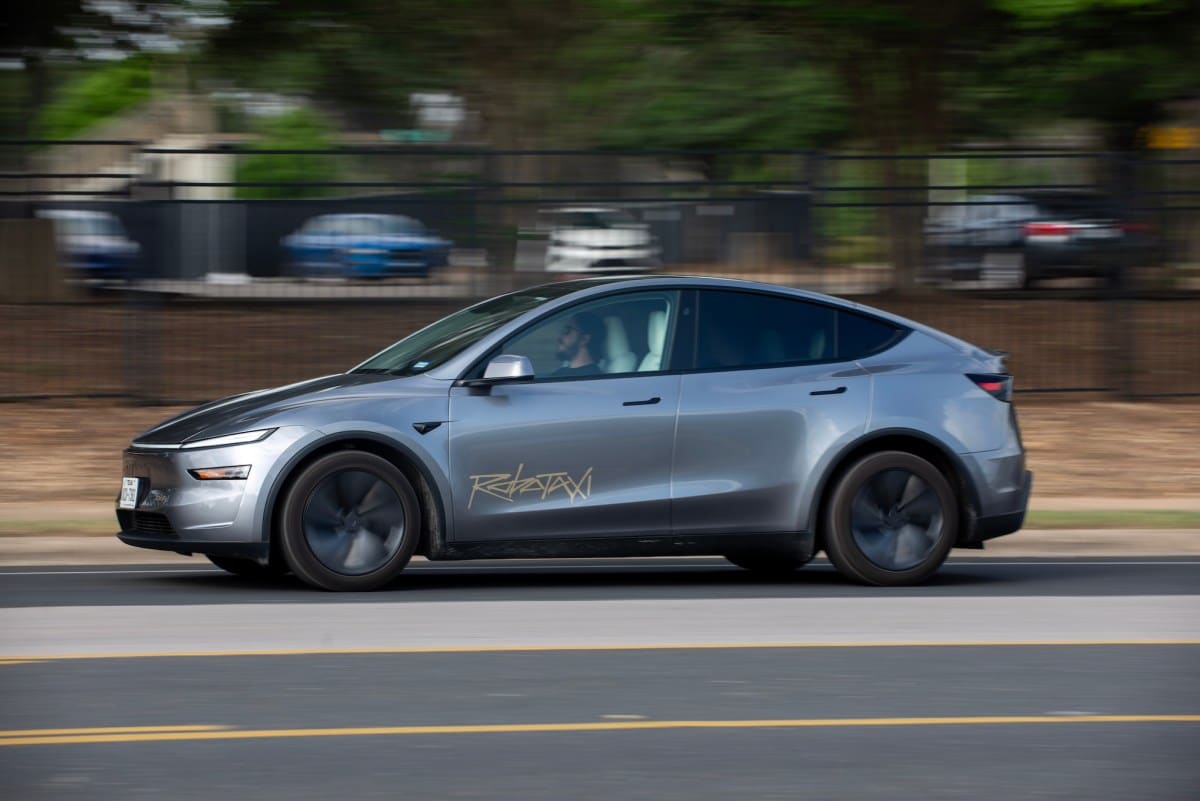
Production of the first Cybercabs began earlier this year at Tesla's Austin facility, but the company acknowledged that manufacturing lines for both the Semi and Optimus remain under construction. During the earnings call, Elon Musk described Optimus as "the hardest product to scale manufacturing that we've ever made at Tesla, because everything on the robot is new."
That admission is telling. Tesla built its reputation on manufacturing efficiency with the Model 3 and Model Y, both of which shared significant platform and component heritage. Optimus, by contrast, represents an entirely new category with no existing supply chain, no proven assembly process, and no customer feedback loop to guide iteration.
The company ended production of its Model S sedan and Model X SUV at the Fremont plant this spring to make room for Optimus assembly, a move that underscores the strategic weight Tesla is placing on robotics. Yet the timeline ambiguity suggests the transition is proving more complex than anticipated.
The Cash Burn Accelerates
Tesla's second-quarter financials reveal the cost of this pivot. Capital expenditure is projected to reach $25 billion for the full year, roughly triple the company's historical annual rate. Free cash flow swung to negative $1 billion in the quarter, a sharp reversal from the $1.44 billion positive figure posted in the first quarter and $146 million in the same period last year.
Net income fell 5% year-over-year to $1.1 billion, while operating expenses surged 47% to $4.3 billion. Operating income dropped 57% to $398 million, squeezed by higher R&D spend, facility buildouts, and the operational drag of ramping new products without corresponding revenue.
Revenue, however, provided some cushion. Tesla reported $28.2 billion for the quarter, up 26% from $22.5 billion in the second quarter of 2025. Automotive revenue climbed to $20.5 billion, driven by deliveries exceeding 480,000 vehicles, the strongest quarterly performance since late last year. The company cited record sales in South Korea, Australia, Japan, Taiwan, Thailand, and several smaller markets.
Energy storage and solar revenue rose 13% to $3.1 billion, a rare bright spot in an otherwise capital-intensive quarter. Subscriptions to Tesla's Full Self-Driving (Supervised) system also grew, reaching 1.48 million, a 56% increase year-over-year. That recurring revenue stream remains critical as Tesla works to justify the software's $12,000 price tag and eventual role in a robotaxi fleet.
The AI and Robotics Bet
A year ago, Tesla framed the second quarter of 2025 as the beginning of its evolution from an automaker into an AI and robotics company. That narrative continues to shape capital allocation, product strategy, and investor expectations, but the execution gap is widening.
Tesla is expanding its Robotaxi service to additional cities, though vehicle availability remains limited. The company is also pushing to refine Full Self-Driving to a point where human oversight becomes optional, a technical and regulatory hurdle that has proven elusive despite years of data collection and neural network training.
The Optimus robot, meanwhile, occupies an uncertain middle ground. Tesla has demonstrated prototypes capable of basic tasks, but the leap from demonstration to volume manufacturing, and then to a viable business model, remains unproven. The company has not disclosed pricing, target customers, or expected unit economics for Optimus, leaving investors to extrapolate from Musk's public statements about eventual demand in the millions of units.
The decision to delay volume production across multiple product lines suggests Tesla is prioritizing engineering integrity over schedule adherence, a shift from the company's historical tendency to set and defend aggressive timelines. Whether that discipline translates into better products or simply deferred revenue will become clearer over the next twelve months.
The Margin Question
Gross margins, a metric Tesla has long defended as central to its competitive position, are under pressure. The company did not break out detailed margin figures in its shareholder letter, but the combination of rising operating expenses, elevated capital spending, and softer operating income points to compression.
The automotive business, while growing in unit volume, is also contending with price competition in key markets, particularly China, where domestic EV makers continue to undercut Tesla on both price and feature set. The company's ability to maintain pricing power while ramping new products will determine whether the current spending surge translates into durable margin expansion or simply buys market share at diminishing returns.
Energy storage, by contrast, appears to be a margin-positive segment, though Tesla has historically declined to provide granular breakouts. The 13% revenue growth in that division, even as Megapack 3 volume production slips, suggests strong demand for the Megapack 2 and Powerwall units already in production.
What Comes Next
Tesla's CFO previously indicated that negative free cash flow would persist through the remainder of 2026, a forecast that now appears conservative given the production delays. The company will need to either tap capital markets, draw down cash reserves, or accelerate revenue growth in existing product lines to fund the buildout of its next-generation manufacturing capacity.
The strategic question is whether the market will continue to value Tesla as a future AI and robotics leader, or revert to valuing it as an automaker with high capital intensity and moderating growth. The company's valuation has historically embedded a significant premium based on long-term optionality, but that premium compresses when timelines extend and cash burn accelerates.
For now, Tesla is placing a large bet that its vertically integrated approach, from battery cells to software to manufacturing, will create defensible advantages in robotics and autonomous systems. The delays announced this quarter suggest that advantage is taking longer to materialize than the company anticipated, and the financial cost of that delay is rising.