SpaceXAI Launches Persistent AI Agents That Log Into Your Apps
Grok Bot positions itself as an autonomous teammate, signing into workplace tools to execute multi-step tasks without constant supervision.
The Shift Toward Persistent Agents
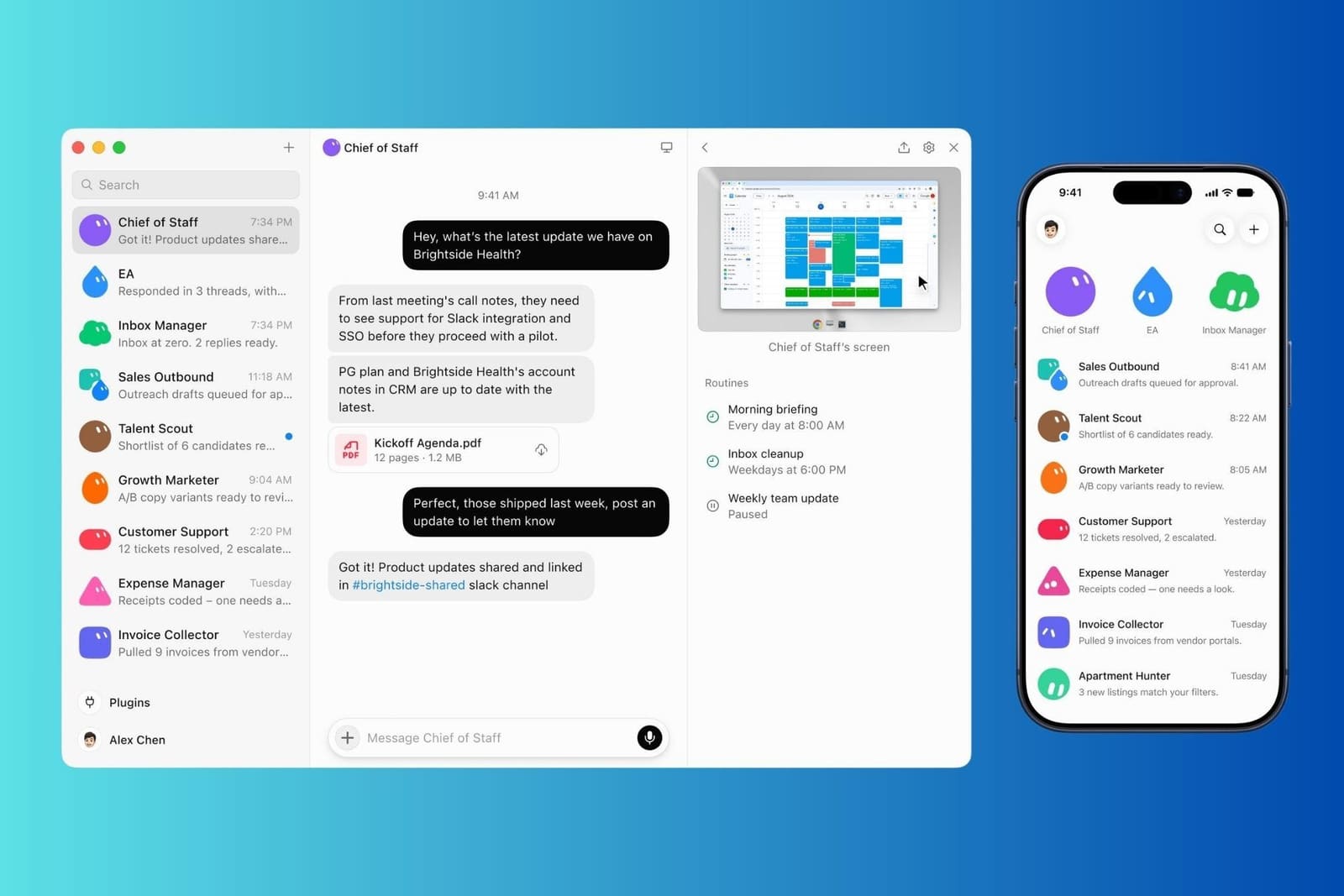
SpaceXAI has rolled out Grok Bot, a service that reframes AI assistants as persistent agents capable of working independently across your existing software stack. Rather than responding to individual prompts, these agents operate continuously in dedicated cloud environments, authenticating into applications and completing multi-step workflows before reporting back.
The launch represents SpaceXAI's entry into enterprise AI tooling, a space where competitors have already staked claims. OpenAI's ChatGPT Work, Anthropic's Claude Cowork, and Microsoft's suite of productivity agents have each defined different approaches to embedding AI into organizational workflows. SpaceXAI's angle centers on autonomy: Grok Bot is designed to take assignments and execute them with minimal human intervention, returning only when a decision point or approval gate requires input.
How Grok Bot Operates
According to SpaceXAI, Grok Bot functions within a shared cloud-based computing environment. Users assign tasks, and the agent navigates the necessary applications, whether that means pulling data from a CRM, drafting reports in a document editor, or coordinating updates across project management platforms. The system requires users to grant authentication credentials, allowing the agent to sign into services on their behalf.
This architectural choice distinguishes Grok Bot from conversational AI tools that rely on API integrations or browser extensions. By operating in a full compute environment, the agent can interact with web interfaces much like a human would, opening the door to compatibility with legacy systems or applications that lack robust API support. It also introduces a new layer of security considerations. Granting an AI agent persistent access to authenticated sessions means trusting the system with credentials, session tokens, and the ability to perform actions that carry real consequences.
The Trust Equation
The promise of autonomous agents hinges on delegation, but delegation at this scale requires users to accept a trade-off. Letting an AI sign into your accounts, move files, send messages, or update records introduces risk that extends beyond the occasional hallucination or misunderstood instruction. If an agent misinterprets a task, the downstream effects can cascade across interconnected systems before a human notices.
At DailyTechWire, we've tracked the evolution of AI agents from narrow chatbot interfaces to tools that claim operational agency. The common thread across every deployment has been the tension between autonomy and oversight. SpaceXAI's model leans heavily toward autonomy, betting that users will prioritize efficiency over granular control. Whether enterprises are ready to grant that level of access remains an open question, particularly in regulated industries where audit trails and compliance frameworks are non-negotiable.
Competitive Context in Enterprise AI
SpaceXAI's timing aligns with a broader push among AI labs to move beyond consumer-facing chatbots and into the enterprise back office. OpenAI's ChatGPT Work packages conversational AI with workspace integrations, positioning itself as a co-pilot for knowledge workers. Anthropic's Claude Cowork emphasizes safety and interpretability, appealing to organizations wary of deploying black-box systems in critical workflows. Microsoft has woven AI into its productivity suite, leveraging existing enterprise relationships and infrastructure.
Grok Bot's differentiator appears to be its operational model. Rather than augmenting human tasks, it aims to offload them entirely. This shifts the value proposition from productivity enhancement to headcount substitution, a framing that resonates in cost-conscious business environments but also raises questions about job displacement and the long-term implications of automating cognitive work.
The enterprise AI market is still in its formation phase, and no single approach has yet proven dominant. Each vendor is testing different assumptions about how organizations want to integrate AI: as a tool, as a collaborator, or as an independent operator. SpaceXAI's bet is on the latter.
Security and Governance Gaps
Persistent agents that authenticate into user accounts introduce attack surfaces that conventional AI tools do not. If an agent's credentials are compromised, an attacker gains access not just to a chatbot, but to a system with the ability to act across multiple platforms. Session hijacking, privilege escalation, and lateral movement all become concerns when an AI operates with the same permissions as a human employee.
SpaceXAI has not yet detailed the security architecture underpinning Grok Bot, including how credentials are stored, how sessions are isolated, or what logging and monitoring capabilities are available to administrators. These details will matter significantly to enterprise security teams evaluating the service. Organizations that have spent years hardening their identity and access management systems may be reluctant to introduce a new category of automated actor without clear visibility into its behavior.
Governance is another open question. When an AI agent performs an action, who is accountable? If Grok Bot deletes a file, approves a transaction, or sends a message that violates policy, the responsibility chain becomes murky. Traditional software operates under explicit user commands; autonomous agents blur that line. Legal and compliance teams will need frameworks to assign liability and ensure that automated actions align with organizational policies and regulatory requirements.
What Comes Next
The launch of Grok Bot signals that SpaceXAI is serious about competing in the enterprise AI space, but the service's success will depend on factors beyond technical capability. Trust, security, pricing, and integration depth all play critical roles in enterprise adoption. Early adopters will likely be organizations already comfortable with high levels of automation and willing to experiment with new operational models.
For now, Grok Bot represents one more data point in the ongoing experiment to determine how much autonomy users are willing to grant AI systems. The question is not whether agents can perform tasks independently, but whether organizations are prepared to manage the risks that come with that independence. As AI labs race to define the future of work, the answers will emerge not from product announcements, but from the messy reality of deployment at scale.