Sila Secures $300 Million to Scale Silicon Anode Production in Washington
The battery materials company is betting on alternatives to Chinese graphite as global EV sales climb, despite headwinds in the U.S. market
Expansion Against the Grain
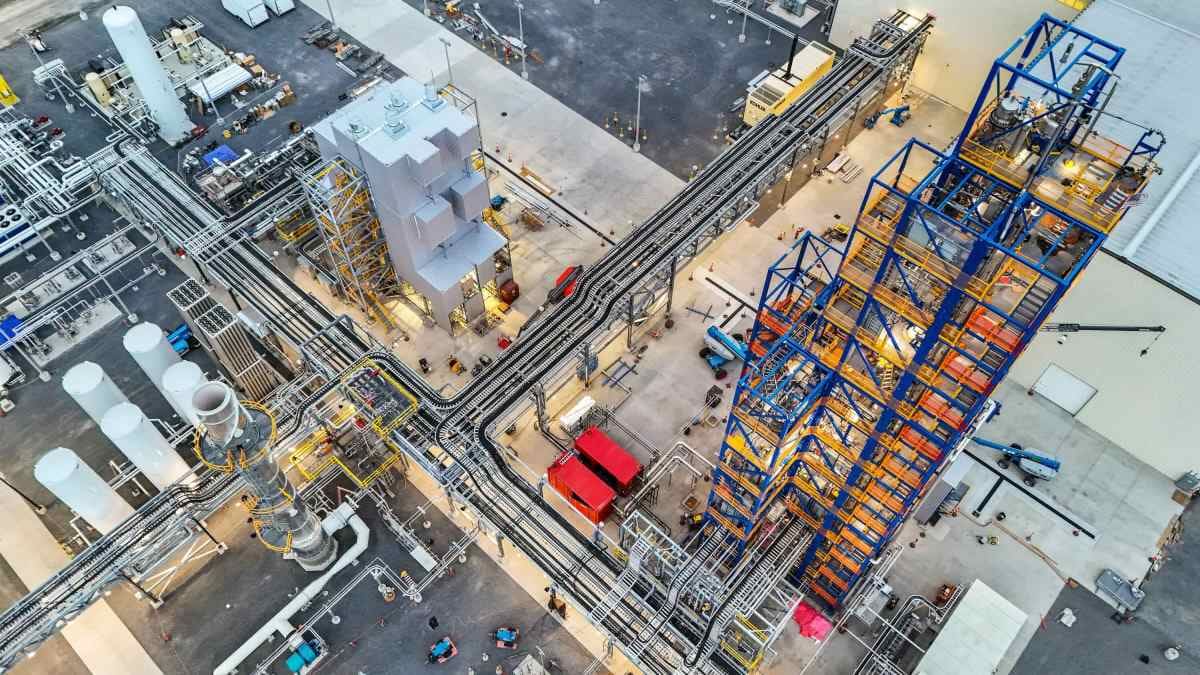
Sila announced Tuesday it has closed a $300 million financing round to expand its Moses Lake, Washington factory, positioning itself to produce enough silicon-carbon anode material for more than 100,000 electric vehicles annually. The move comes at a moment when the U.S. EV market has contracted under policy pressure, yet global electric vehicle adoption continues to accelerate.
The company began production at the facility last September with initial capacity of 2 gigawatt-hours. The new capital will push output into the tens of gigawatt-hours per year, according to Sila. Atreides Management and Sutter Hill Ventures led the round, with participation from 8VC, Bessemer Venture Partners, Matrix Partners, and funds advised by T. Rowe Price Associates.
At DailyTechWire, we've tracked how Washington state has become a focal point for battery supply chain investments, driven by access to low-cost hydropower and proximity to West Coast automakers. Sila's expansion underscores a broader shift: as trade tensions complicate access to Chinese-controlled materials, American startups are racing to localize production of battery components that have long been dominated by East Asian suppliers.
The Graphite Problem
Most lithium-ion batteries rely on graphite anodes. Chinese companies control roughly three-quarters of the global graphite supply chain, according to Benchmark Minerals Intelligence. That concentration has created supply risk for automakers in North America and Europe, especially as tariffs and export controls reshape cross-border trade in critical materials.
Sila's silicon-carbon composite offers a dual advantage. It sidesteps reliance on Chinese graphite, and it stores up to 40% more energy than conventional graphite anodes while enabling faster charging. The company has spent 15 years refining the material, led by founder and CEO Gene Berdichevsky, a former seventh employee at Tesla.
The startup has already secured supply agreements with Mercedes and Panasonic, alongside contracts with consumer electronics firms such as Whoop and manufacturers of drones and satellites. Those deals signal that Sila's technology has moved beyond lab-scale validation into commercial deployment, a milestone that has eluded many battery material ventures.
Market Dynamics and Policy Headwinds
U.S. electric vehicle sales have softened this year, falling relative to 2025 when demand spiked ahead of the expiration of federal tax credits. Policy shifts under the current administration have introduced uncertainty for buyers and automakers alike. Yet the global picture tells a different story. Benchmark Minerals Intelligence reports that worldwide EV sales are up 27% year over year, driven by momentum in Europe and Asia.
That divergence matters for companies like Sila. While the U.S. market stumbles, international automakers continue to invest in next-generation battery technology. The company's ability to serve both domestic and export customers insulates it from localized downturns and positions it to capture growth wherever it materializes.
Energy storage systems represent another expanding market for lithium-ion batteries. Grid-scale installations have surged as electricity demand grows, particularly from AI data centers that require backup power and load management. These facilities increasingly deploy battery packs to smooth peak demand, provide emergency reserves, and enable round-the-clock use of intermittent renewable energy. For Sila, that means potential revenue streams beyond automotive applications, diversifying risk as the energy storage sector scales.
Capital and Competition
Sila has now raised approximately $1.6 billion across all funding rounds, according to PitchBook. That capital intensity reflects the cost of building battery material factories, which require specialized equipment, clean-room environments, and lengthy commissioning periods. Few startups have successfully navigated the valley between pilot production and gigawatt-hour scale manufacturing.
The competitive landscape is evolving. Established chemical companies in Japan and South Korea are developing their own silicon anode formulations, while Chinese battery giants continue to refine graphite chemistry and explore silicon blends. Sila's head start in commercial production and its existing customer relationships provide a buffer, but maintaining that lead will require continuous iteration on both material performance and manufacturing cost.
The Moses Lake site benefits from Washington's low electricity costs, a critical advantage given the energy-intensive nature of anode material processing. The facility also sits within a region that has attracted investments from other battery supply chain players, creating a nascent cluster that could generate shared logistics infrastructure and a specialized labor pool.
The Road to Volume
Scaling from 2 gigawatt-hours to tens of gigawatt-hours is not merely an exercise in replication. Battery material production is notoriously sensitive to process variation. Maintaining consistent quality as throughput increases demands rigorous process control, supplier management, and quality assurance protocols. Sila will need to demonstrate that its expanded lines can deliver material that meets automotive-grade specifications at volume.
The company's experience supplying consumer electronics and aerospace customers provides some confidence. These sectors demand high reliability and have lower tolerance for defects than many industrial applications. If Sila can replicate that performance discipline at automotive scale, it will strengthen its competitive position.
The funding also arrives as automakers reassess their battery roadmaps. Solid-state batteries, which promise higher energy density and improved safety, remain years away from mass production. In the interim, incremental improvements to lithium-ion chemistry, including advanced anode materials like Sila's, offer a pragmatic path to extend range and reduce charging times without waiting for breakthrough technologies.
What Comes Next
Sila's expansion is a test case for whether U.S.-based battery material startups can compete on cost and scale with incumbents in Asia. Success will depend not only on material performance but on the company's ability to manage capital efficiently, ramp production without quality slip, and navigate a policy environment that remains in flux.
For the broader battery supply chain, Sila's trajectory offers a signal. Investors are willing to back capital-intensive manufacturing plays in critical materials, particularly when those plays address geopolitical supply risks and offer technical differentiation. The next 18 months will reveal whether that confidence is warranted, as the expanded Moses Lake facility comes online and Sila moves from startup to scaled supplier.