Seattle Votes to Halt Large AI Data Centers for One Year Amid Power Grid Concerns
City council unanimously backs moratorium on facilities drawing 20+ megavolt-amperes, citing electricity demand that could reach a third of Seattle's current load.
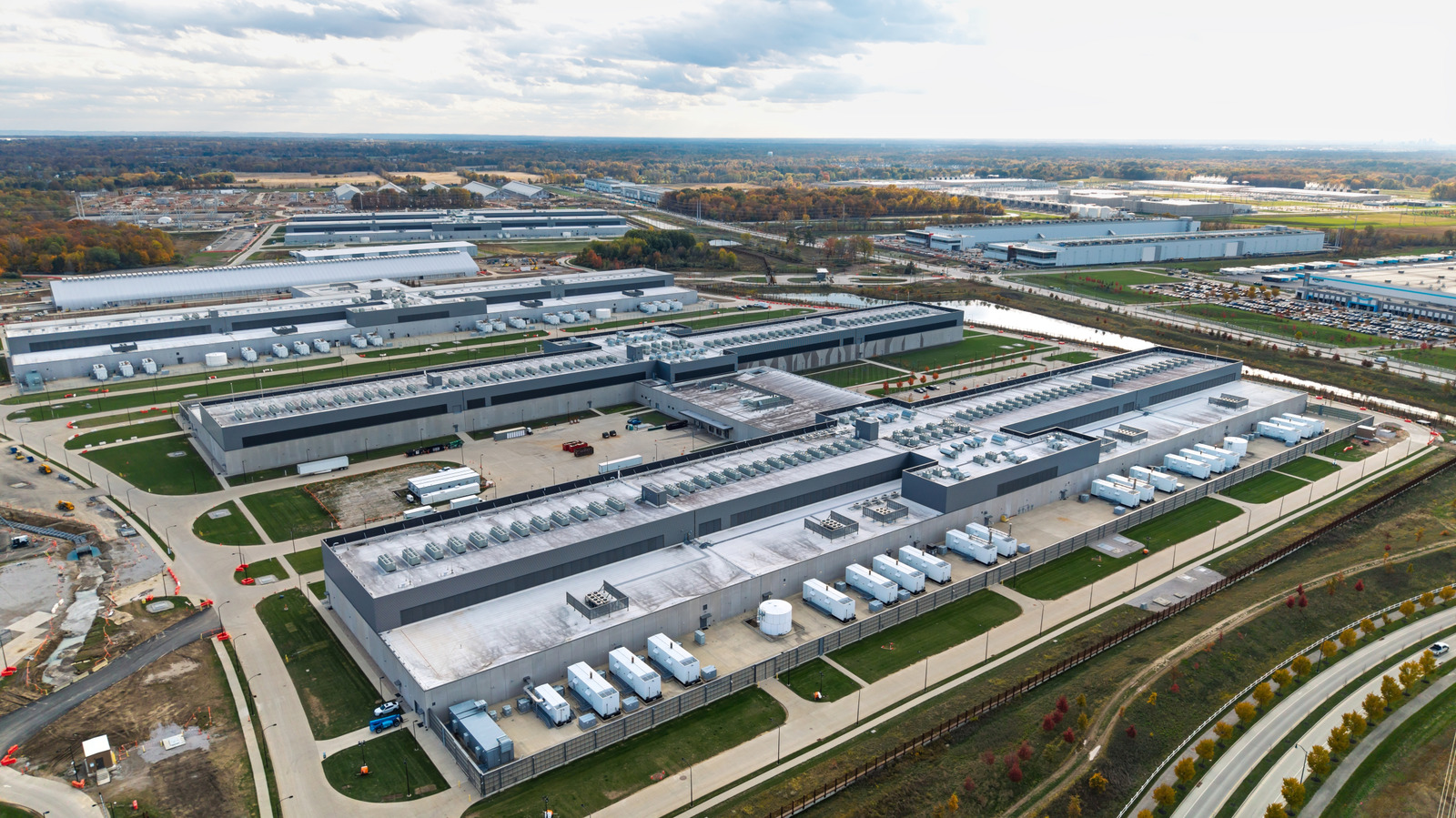
Seattle Moves to Pause Data Center Expansion
Seattle's city council voted unanimously this week to impose a twelve-month freeze on new large-scale AI data centers, targeting facilities that consume more than 20 megavolt-amperes—enough electricity to power several thousand homes. Mayor Katie Wilson is expected to sign the measure imminently, making Seattle the latest Pacific Northwest municipality to pump the brakes on infrastructure projects that threaten to overwhelm local power grids and water supplies.
The decision comes after city officials disclosed that five proposed hyperscale projects could collectively consume up to one-third of Seattle's current electricity demand. At DailyTechWire, we've tracked similar moratoriums spreading across North America—Denver, New Orleans, and Minneapolis have all enacted temporary or permanent bans—but Seattle's action carries particular weight given its proximity to Microsoft's Redmond campus and Amazon's downtown headquarters. While neither tech giant operates data centers within city limits, the council's move signals a broader reckoning with the infrastructure costs of AI expansion in regions that have long served as centers of cloud computing innovation.
Why Power and Water Became Flash Points
The moratorium applies specifically to facilities drawing more than 20 megavolt-amperes, a threshold chosen to capture hyperscale AI training and inference workloads while exempting smaller colocation and enterprise data halls. Council testimony revealed that residents raised concerns not only about electricity consumption but also about cooling-water usage and acoustic pollution from industrial HVAC systems—issues that have become endemic to large-scale AI infrastructure.
Seattle sits at the confluence of two infrastructure realities: abundant hydroelectric power from the Columbia River basin and a legacy electrical grid designed for residential and light commercial loads, not the sustained baseload demands of GPU clusters running 24/7. The city's utilities have historically enjoyed some of the lowest electricity rates in the United States, but adding megawatt-scale AI workloads would require either costly grid reinforcement or capacity reallocation from existing users. One council-approved provision mandates a comprehensive study of AI data centers' impacts on electricity and water usage, utility rates, land use, local employment, and public health—data that will inform permanent regulatory frameworks once the moratorium expires.
An amendment introduced during the final vote distinguished "traditional" colocation data centers from AI "hyperscale" facilities, reflecting technical nuances that have often been lost in earlier municipal debates. Traditional data centers typically serve distributed enterprise workloads with moderate power density; hyperscale AI facilities, by contrast, pack thousands of GPUs into tight clusters, generating heat and power demands that can exceed 100 kilowatts per rack—an order of magnitude higher than conventional deployments.
Regional Implications for Cloud and AI Buildout
Seattle's action arrives at a pivotal moment for the broader Cascadia tech corridor. Microsoft has invested heavily in AI infrastructure across Washington State, while Amazon Web Services continues to expand its regional footprint to support machine learning services. Neither company operates hyperscale training facilities within Seattle proper, but the moratorium sends a clear signal that municipal governments are no longer willing to absorb infrastructure externalities without regulatory guardrails.
More than fifty people testified at the most recent council session, including members of Amazon Employees for Climate Justice, who called for renewable energy mandates and labor protections in any future data center regulations. The employee group urged lawmakers to prevent the industry from building out compute capacity faster than regulators can establish oversight—a dynamic that has characterized AI infrastructure expansion globally. Their testimony underscores a tension familiar across Asia's tech hubs: balancing economic competitiveness with environmental sustainability and community welfare.
The moratorium can be extended for an additional six months if the city's impact study warrants further deliberation. That timeline places Seattle on a collision course with the second half of 2026, when several AI labs and cloud providers have publicly targeted capacity milestones for next-generation model training. If other West Coast cities follow Seattle's lead, developers may be forced to shift new projects to less regulated jurisdictions—potentially accelerating buildout in rural counties with weaker land-use controls or in states offering more aggressive tax incentives.
What This Means for Asia-Pacific Infrastructure Strategy
Seattle's moratorium offers a preview of regulatory friction that may soon surface in Asia's fast-growing AI corridors. Cities like Singapore, Seoul, and Bangalore have welcomed hyperscale data center investments as anchors of digital economy strategy, but each faces constraints—land scarcity, water availability, renewable energy transition timelines—that mirror Seattle's dilemma. Singapore's government has already paused new data center approvals pending energy efficiency reviews; South Korea's industrial electricity tariffs remain politically sensitive; India's tier-two cities are courting hyperscale projects but lack transmission infrastructure to support them at scale.
The Pacific Northwest has historically served as a testing ground for tech policy that later migrates to Asia-Pacific markets, from cloud sovereignty frameworks to content moderation standards. If Seattle's moratorium proves durable and other U.S. cities adopt similar measures, Asian regulators may face pressure to implement comparable guardrails—particularly in jurisdictions where public opposition to infrastructure projects can mobilize quickly. The risk for developers is that a patchwork of municipal bans could fragment the buildout of AI infrastructure, raising latency and compliance costs while slowing the deployment of models that require co-located compute and data.
At the same time, Seattle's approach—combining a temporary pause with a mandated impact study—offers a middle path between outright prohibition and laissez-faire expansion. If the city's research yields actionable data on energy efficiency, water recycling, and community benefit agreements, it could provide a template for other municipalities seeking to balance growth with sustainability. The outcome will hinge on whether Seattle's year-long freeze generates genuine policy innovation or simply delays inevitable conflicts over infrastructure siting and resource allocation.
The Broader Debate Over AI Infrastructure Governance
Seattle's vote reflects a wider reckoning with the physical footprint of AI systems that has largely escaped public scrutiny until recently. Training a single large language model can consume megawatt-hours of electricity and millions of liters of water for cooling; inference workloads, though less intensive per query, aggregate into substantial baseline demand when deployed at cloud scale. These externalities have historically been absorbed by utilities and municipalities with little input from residents, but the rapid acceleration of AI development has compressed infrastructure timelines to the point where conflicts are unavoidable.
The moratorium also highlights a disconnect between the geographic distribution of AI innovation and the infrastructure required to support it. While model development remains concentrated in a handful of coastal tech hubs, the data centers that train and serve those models are increasingly sited in rural or exurban locations where land and power are cheaper. Seattle's decision to block new facilities within city limits may simply push developers farther afield, exporting environmental and social costs to communities with less political leverage—a dynamic already visible in parts of the U.S. Southwest and rural Asia.
Whether Seattle's moratorium marks the beginning of a sustained regulatory pushback or a temporary speed bump will depend on how the city uses its year-long pause. If the mandated impact study produces rigorous data and the council translates that research into enforceable standards—covering renewable energy sourcing, water recycling, noise abatement, and labor protections—Seattle could set a precedent for responsible AI infrastructure governance. If the moratorium simply delays projects without yielding meaningful policy frameworks, it risks becoming a cautionary tale of regulatory paralysis in the face of rapid technological change.
An Unresolved Question for Cloud Expansion
The Seattle moratorium leaves unresolved a fundamental question for the AI industry: who bears the cost of infrastructure expansion, and who decides when that cost is too high? Tech companies have historically relied on municipalities to provide subsidized electricity, water, and tax incentives in exchange for job creation and economic development. But as AI workloads push infrastructure to its limits, that implicit bargain is fraying. Seattle's decision to hit pause reflects a growing conviction among local governments that they need better tools to evaluate and mitigate the externalities of hyperscale computing—tools that, at present, barely exist.
For developers and cloud providers, the moratorium introduces a new variable into site selection calculus: regulatory risk at the municipal level. If other cities adopt similar measures, the geography of AI infrastructure could shift in unexpected ways, favoring jurisdictions willing to absorb externalities in exchange for short-term economic gains. That outcome would not only fragment the buildout of AI capacity but also deepen existing inequalities between communities that can afford to say no to data centers and those that cannot. How Seattle navigates its year-long pause may offer early signals of whether democratic governance can keep pace with the infrastructure demands of artificial intelligence.


