Samsung Asks $1,200 for a Cover-Screen Upgrade on the Galaxy Z Flip 8
The compact foldable adds AI-driven Flex Window features and a faster chip but keeps last year's cameras and battery, while raising the price by $100.
A Familiar Silhouette, Now Thinner
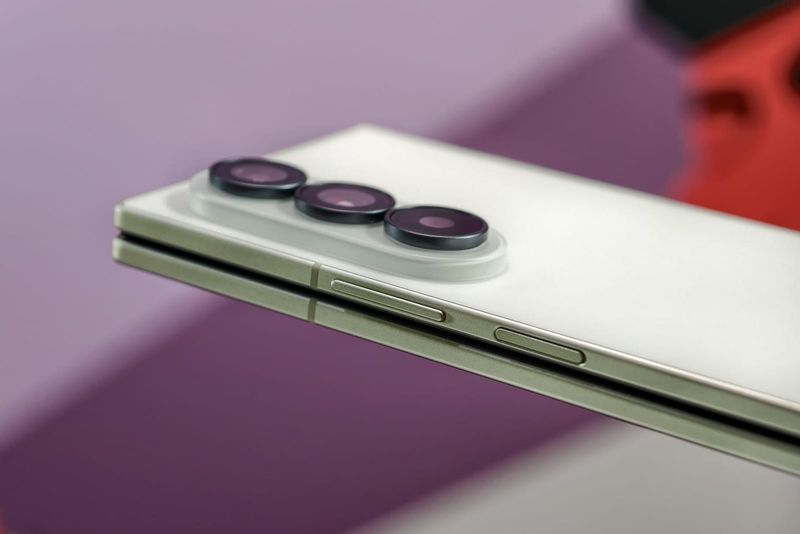
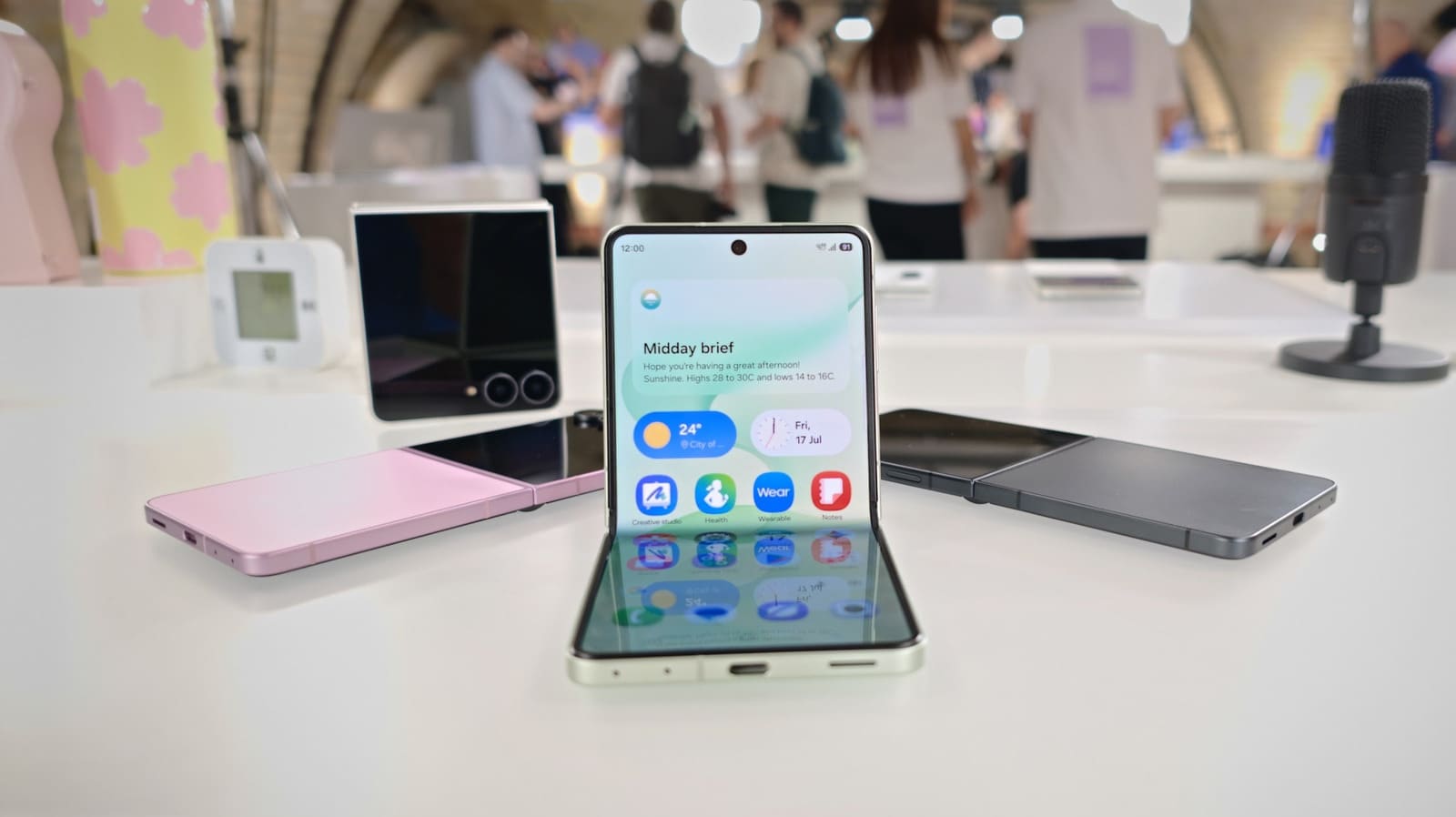
Samsung's latest clamshell foldable landed at Galaxy Unpacked 2026 with a message that will sound familiar to anyone tracking the company's hardware cadence: refinement over reinvention. The Galaxy Z Flip 8 shaves millimeters off its predecessor's waistline and adds intelligence to its outer display, but the core proposition remains unchanged. At 180 grams and 13.1 mm when closed, it's marginally lighter and more pocketable than the previous generation. Unfolded, it stretches to 166.9 x 75.4 x 6.1 mm, dimensions that place it squarely in standard smartphone territory.
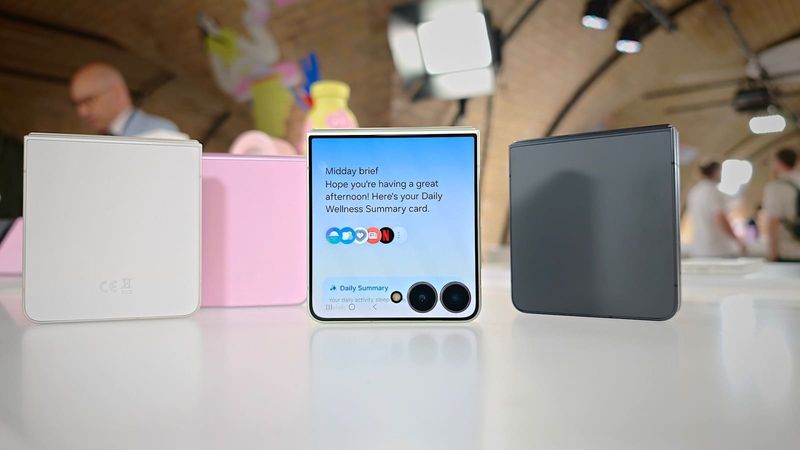
The industrial design carries over almost wholesale. Both the 6.9-inch internal AMOLED panel with 120Hz adaptive refresh and the 4.1-inch Flex Window on the exterior retain their resolutions and aspect ratios. Samsung calls the outer panel a "cover display," but at 948 x 1,048 pixels and now supporting up to 120Hz, it's more capable than many budget phones' primary screens. The question is whether software can justify that hardware investment.
Intelligence Moves to the Outer Shell
Samsung's pitch centers on what it calls Now Brief, a feature that surfaces contextual information on the Flex Window without requiring users to unfold the device. The company describes it as delivering "next steps and timely insights," language that suggests calendar reminders, commute alerts, and other glanceable data. The implementation leans on Gemini Intelligence, Google's AI framework, which Samsung has woven into automation triggers accessible via side-key press or voice command.
At DailyTechWire, we've tracked the slow migration of AI inference from cloud to edge across Android devices, and the Z Flip 8 represents another incremental step. The Flex Window now hosts apps directly, a shift from the widget-centric approach of earlier models. Whether this translates to meaningful productivity gains or simply more notifications on yet another surface remains to be tested in daily use. The risk is that a 4.1-inch display becomes a second lock screen to swipe through rather than a genuine shortcut.
The automation layer is intriguing. Samsung claims users can chain actions through Gemini without opening the phone, a capability that could streamline workflows like setting reminders while checking transit times. But the natural-language interface will need to be both fast and accurate to compete with simply flipping the device open, where a full keyboard and larger canvas await.
Processor Leap, Camera Stagnation
Under the hood, the Z Flip 8 runs Qualcomm's Snapdragon 8 Elite Gen 5 for Galaxy, the chipset that also powers its larger siblings in the new lineup. According to Qualcomm, the 8 Elite Gen 5 delivers efficiency gains in the range of 20 to 30 percent over the prior generation, which should translate to better thermal management and longer battery life under sustained loads. Samsung has not disclosed RAM or storage configurations beyond confirming multiple tiers will be available.
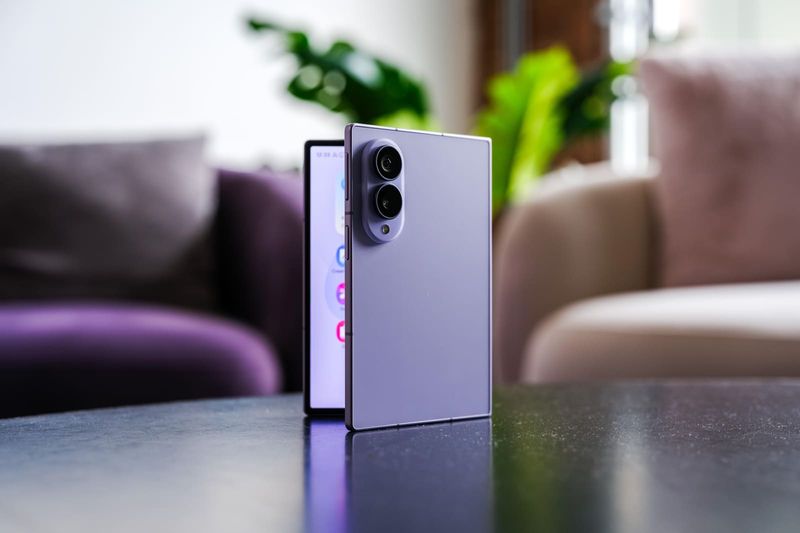
The camera array, however, is a point of contention. Samsung retained the 50MP f/1.8 main sensor, 12MP ultrawide, and 10MP selfie camera from the previous model. For a device launching in mid-2026, this is conservative to the point of disappointing. Competitors in the foldable space have begun experimenting with larger sensors and computational photography pipelines that leverage on-device AI for night mode and subject tracking. Samsung's decision to stand pat suggests either supply-chain constraints or a calculation that the Z Flip's audience prioritizes form factor over imaging prowess.
Video capabilities do see one addition: a horizontal lock mode that stabilizes the horizon during recording, a feature borrowed from action-camera design. Combined with the existing Camcorder Grip mode, which lets users shoot horizontally while holding the lower half of the folded phone, the Z Flip 8 positions itself as a vlogging tool. But without improvements to low-light performance or dynamic range, it's unclear how much appeal this holds beyond casual social media capture.
Battery and Charging: No Movement
The 4,300 mAh dual-battery configuration returns unchanged, as do the 25W wired and 15W wireless charging speeds. This is where the efficiency promises of the 8 Elite Gen 5 will be put to the test. If the new silicon can extend screen-on time by even 15 to 20 percent, Samsung can argue that a capacity bump was unnecessary. If not, the Z Flip 8 will continue to be a device that requires midday top-ups for heavy users.
Charging speeds lag behind several Chinese OEMs that now ship phones with 65W or faster wired charging. Samsung's rationale has historically centered on battery longevity, the trade-off being slower fill times in exchange for more charge cycles before degradation. For a foldable, where battery replacement is more complex and costly than in a traditional slab phone, that's a defensible choice. But it does mean the Z Flip 8 remains a device you'll want to charge overnight rather than topping up in 20 minutes before heading out.
The $100 Question
Samsung set the starting price at $1,200, a $100 increase over the previous model. That premium buys a thinner chassis, a more capable cover display, and a faster processor. It does not buy better cameras, a larger battery, or faster charging. The pricing signals confidence that the foldable category has matured beyond early-adopter territory and can sustain year-over-year increases similar to flagship slabs.
Yet the competitive landscape is shifting. Foldables from Oppo, Vivo, and Motorola have begun appearing in more markets, often at lower price points and with feature sets that match or exceed Samsung's offerings in specific areas. The Z Flip 8's wager is that software integration, particularly around AI-driven automation and the Now Brief interface, will create enough differentiation to justify the premium. Whether that wager pays off depends on execution quality that can only be assessed after sustained real-world use.
Preorders opened immediately following the Unpacked event, with units scheduled to ship starting August 7. Samsung is offering trade-in incentives and bundled accessory deals through its direct channel, a strategy aimed at softening the sticker shock for existing Galaxy users considering an upgrade.
A Calculated Iteration
The Galaxy Z Flip 8 is a device built on the assumption that the foldable form factor has crossed into mainstream viability and no longer requires dramatic year-over-year leaps to attract buyers. Samsung's focus on the cover display and AI integration reflects a bet that convenience and intelligence, rather than raw specs, will drive the next phase of adoption. The camera and battery decisions suggest the company sees no urgent competitive pressure in those areas, at least not within the clamshell foldable segment.
For buyers weighing an upgrade from the Z Flip 7, the calculus is straightforward: $100 buys you a faster chip, a smarter outer screen, and a slightly sleeker profile. Whether that's worth the cost depends on how much value you place on interacting with your phone without opening it. For those entering the foldable category for the first time, the Z Flip 8 remains the most compact option in Samsung's lineup, a device that prioritizes portability and novelty over the productivity focus of its larger Fold siblings.
The real test will come in daily use, where the Now Brief interface and Gemini automation either prove genuinely useful or fade into the background as features that sounded better in a keynote than they feel in practice. Samsung has built a solid foundation; the question is whether the software experience can justify asking buyers to pay more for what is, in most measurable ways, a modest refresh.