Rivian Files Suit to Recover Tens of Millions From Unconstitutional Tariff Regime
The EV maker wants certainty it will be repaid for Trump-era import taxes as it races toward profitability with its R2 SUV
The Refund Battlefield
Rivian filed suit Thursday against the US government in the Court of International Trade, demanding a full refund of tariffs it paid under the Trump administration's 2025 "Liberation Day" import taxes, which the Supreme Court subsequently ruled unconstitutional. The automaker expects to recover tens of millions of dollars, according to statements made by CFO Claire McDonough in April.
The lawsuit names the US government, Customs and Border Protection, and CBP Commissioner Rodney Scott as defendants. Rivian argues that despite the high court's invalidation of the tariff regime, importers have no automatic guarantee of repayment, and the company wants legal certainty it will receive the correct amount.
At DailyTechWire, we've tracked the fallout from the Liberation Day tariffs across sectors, but the EV industry's exposure has been particularly acute. Rivian's legal action places it among dozens of companies now navigating a refund process that has proven slower and more complex than many anticipated.
Why Rivian Needs the Money Now
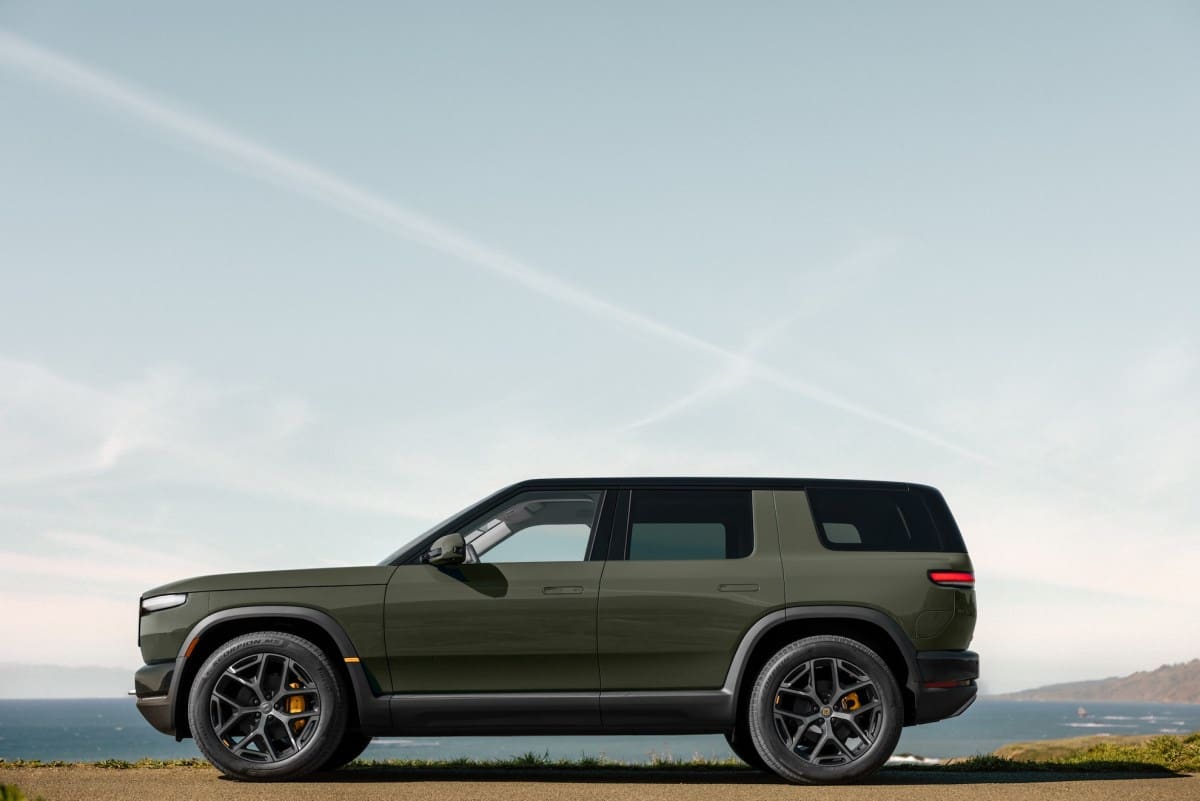
The timing of the suit is no accident. Rivian is in the middle of launching the R2, its first mass-market SUV and the vehicle the company is betting will finally push it into the black. The automaker expects to ship between 20,000 and 25,000 R2 units by year-end, a volume that represents a significant step up from its premium R1 line.
Yet profitability remains elusive. Rivian now projects it may not reach sustained positive cash flow until 2028, in part because it is pouring capital into autonomous vehicle development. To bridge the gap, the company recently raised approximately $1.3 billion through a share sale, underscoring the cash pressure it faces as it scales production and invests in next-generation technology.
CEO RJ Scaringe told investors last year that the tariffs initially threatened to add a couple of thousand dollars to the cost of each vehicle. By the end of 2025, Rivian had managed to mitigate the impact to the low hundreds of dollars per unit through supply-chain adjustments and component sourcing shifts. Even so, the company warned in a regulatory filing earlier this year that retaliatory trade measures and supply-chain disruptions continued to pose risks to its ability to secure raw materials and components at viable prices.
A $121 Billion Backlog
Customs and Border Protection collected the tariffs on behalf of the Trump administration, which had invoked the International Emergency Economic Powers Act to justify the levies. In a statement, CBP said that over $121 billion in potential and certified refunds have been accepted for processing, though the agency declined to comment on Rivian's case specifically.
Analysis from the Cato Institute earlier this month found that $71 billion had actually been paid out, suggesting that friction in the refund process has created significant obstacles for importers. The gap between accepted claims and disbursed funds points to bureaucratic delays and documentation requirements that have left companies waiting months for reimbursement.
Rivian's complaint emphasizes this uncertainty. The automaker argues that without a court order, there is no enforceable mechanism to ensure it receives the full amount owed, with interest. The lawsuit asks the trade court to declare the tariffs contrary to law, issue a refund with interest, and cover associated legal costs.
Trade Policy as Product Risk
For Rivian and other hardware-intensive startups, trade policy has become a first-order product risk. The company's regulatory disclosures make clear that tariff exposure is not a one-time event but an ongoing variable that affects everything from bill-of-materials cost to customer willingness to pay.
The R2 is designed to compete in the $45,000 to $60,000 price band, a segment where a few thousand dollars in incremental cost can determine whether a vehicle is competitive or sidelined. Rivian's ability to hold pricing while absorbing tariff costs, supply-chain rerouting expenses, and inflation in battery and semiconductor inputs will be a key test of its operational maturity.
The company's push into autonomy adds another layer of complexity. Developing self-driving technology requires sustained capital deployment over multiple years, with no guarantee of near-term revenue. That makes cash management and the timing of external funding rounds critical. A tens-of-millions-dollar refund, while modest relative to Rivian's overall capital needs, would provide useful breathing room as the company navigates the next two years of cash burn.
What Comes Next
The Court of International Trade will now decide whether to expedite Rivian's claim or fold it into the broader wave of tariff refund litigation working its way through the system. Given the volume of cases and the complexity of the underlying trade-law questions, a resolution could take months or longer.
In the meantime, Rivian's legal strategy reflects a broader shift among hardware companies operating in volatile trade environments. Rather than waiting for administrative processes to play out, companies are increasingly turning to litigation to force clarity and speed up repayment. The approach carries risk, including the possibility of protracted legal battles and strained relationships with regulatory agencies. But for a capital-intensive startup racing toward profitability, the cost of waiting may be higher than the cost of suing.