Qiming Venture Logs Nine Portfolio Exits in Eight Months as China Brake Tech Firm Surges
Nasn Intelligent Tech's 90% debut pop underscores investor appetite for autonomous driving infrastructure - and the pressure on Chinese VCs to deliver liquidity in a tight market.
A Sprint Start to the Exit Calendar
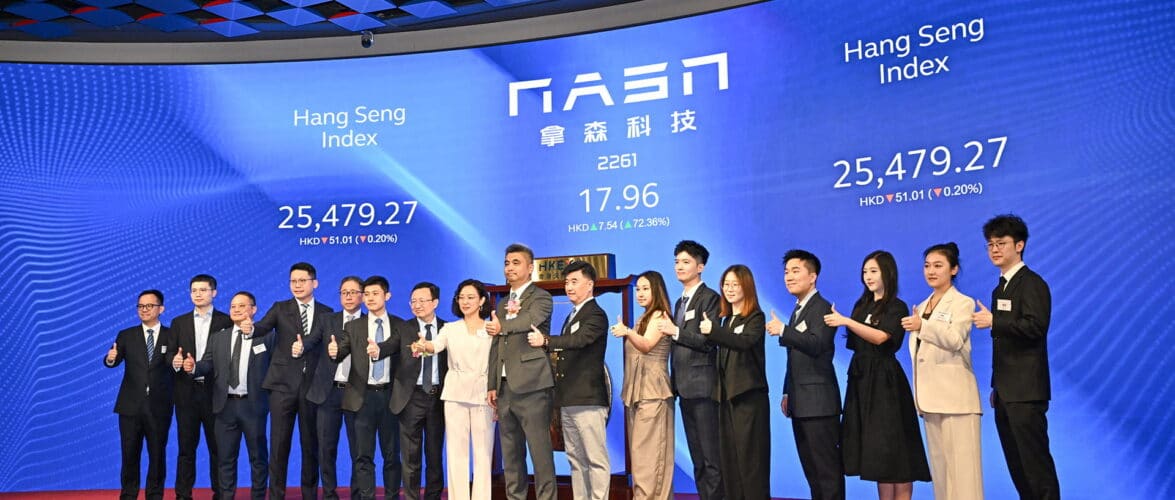
Qiming Venture Partners has notched nine portfolio company listings in the first eight months of 2026, a pace that stands out even among the region's most active venture firms. The latest came on August 7, when Nasn Intelligent Tech began trading on the Hong Kong Stock Exchange Main Board. Shares opened sharply higher, climbing more than 90 percent at their peak and pushing the company's market capitalization toward HKD 11.8 billion. That valuation, roughly USD 1.5 billion at current exchange rates, reflects both the scarcity of brake-by-wire specialists and the premium investors are willing to pay for exposure to China's autonomous-vehicle stack.
At DailyTechWire, we have tracked Qiming's portfolio through cycles of regulatory tightening and reopening, and the firm's exit velocity this year suggests two things: a backlog of mature companies that delayed listings during the 2023-2025 lull, and a window that venture-backed boards believe will not stay open indefinitely. Nasn was the second IPO in a single week for Qiming, a clustering that hints at coordinated timing rather than coincidence.
Brake-by-Wire as a Sovereignty Play
Nasn was founded in 2016 with a specific mandate - reduce reliance on foreign suppliers for one of the most safety-critical components in a vehicle. Brake-by-wire systems replace traditional hydraulic linkages with electronic actuators, enabling faster response times and tighter integration with advanced driver-assistance systems. The technology is essential for Level 3 and higher autonomy, where the vehicle must execute emergency maneuvers without driver input.
China's push for self-reliance in automotive semiconductors and control systems has created a tailwind for domestic players. Nasn has pursued a full-stack approach, designing both the electromechanical hardware and the software that interprets sensor data and modulates braking force. That vertical integration appeals to automakers wary of single points of failure in their supply chains, especially as export controls on high-performance chips and ADAS components tighten.
The company's customer base spans both traditional OEMs and electric-vehicle startups, a diversification that insulates it from the volatility of any single segment. By the time Nasn filed for its Hong Kong listing, it had moved beyond pilot programs and was shipping production volumes, a milestone that venture investors use as a de-risking signal.
Why the Market Paid a Premium
A 90 percent intraday gain is unusual even in a buoyant IPO market. Several factors converged. First, the float was relatively small, amplifying price moves when retail and institutional buyers competed for shares. Second, Nasn's revenue growth in the quarters leading up to the listing exceeded the guidance embedded in its prospectus, a detail that leaked through industry channels and fueled pre-market demand. Third, the brake-by-wire category remains under-supplied; only a handful of Chinese firms have reached commercial scale, and none of Nasn's domestic peers had listed in Hong Kong in the preceding twelve months.
The debut also benefited from a broader thaw in Hong Kong's new-economy listings. After two years of muted activity, the exchange has seen a pickup in tech and deep-tech offerings, driven in part by Beijing's encouragement of onshore and near-shore capital formation. Investors who sat out earlier vintages are rotating back in, and companies with credible technology narratives are capturing disproportionate attention.
Qiming's Portfolio Strategy in Focus
Qiming Venture Partners, which has operated out of Shanghai and Hong Kong since 2006, has built a reputation for early bets on industrial automation, life sciences, and enterprise software. The firm's nine exits so far this year span sectors, but a common thread is operational maturity: most had reached sustained profitability or demonstrated a clear path to it before filing. That discipline reflects lessons learned during the 2021-2022 IPO boom, when several high-profile debuts stumbled because revenue quality did not match the hype.
The clustering of exits also speaks to the firm's influence with portfolio companies. Venture boards typically coordinate listing windows to avoid cannibalizing investor attention, and the fact that Qiming could bring two companies public in the same week suggests strong alignment with management teams and underwriters. It also raises the question of whether the firm is front-loading exits to take advantage of favorable conditions before macro headwinds - rising U.S. interest rates, uneven Chinese consumption data - reassert themselves.
The Supply-Chain Sovereignty Theme
Nasn's success is part of a broader pattern. Over the past eighteen months, Chinese companies focused on import substitution in semiconductors, sensors, and control systems have attracted capital and achieved exits at valuations that would have seemed optimistic a few years ago. The logic is straightforward: as long as export controls and geopolitical friction persist, domestic alternatives will command strategic premiums, even if their technology lags best-in-class Western or Japanese equivalents by a generation.
Brake-by-wire is a particularly acute case. The technology was pioneered in Europe and Japan, and until recently most Chinese automakers sourced from Bosch, Continental, or Hitachi. Nasn and its peers have compressed a decade of R&D into five years, aided by government subsidies, access to high-volume EV production lines for testing, and a regulatory environment that prioritizes localization over incremental safety margins.
The trade-off is real. Some engineers we have spoken with note that early brake-by-wire systems from domestic suppliers exhibit higher latency and less refined pedal feel than incumbent solutions. But automakers are willing to accept those compromises in exchange for supply security and price negotiability, especially for mass-market models where differentiation hinges on cost rather than performance.
What This Means for Venture Returns
For Qiming, Nasn represents a win on multiple dimensions. The firm invested during Nasn's Series B round in 2018, when the company was still in the prototype phase and brake-by-wire was considered a niche bet. By holding through the COVID-19 disruption and the 2023 IPO drought, Qiming was able to exit at a valuation that likely delivered a mid-teens multiple on invested capital, a strong outcome in an environment where many venture portfolios are marked down.
The rapid succession of exits also positions the firm to raise its next fund from a position of strength. Limited partners in Asia have grown more selective, favoring managers who can demonstrate liquidity and disciplined deployment. Nine IPOs in eight months provides tangible evidence of both.
Yet the pace also carries risk. If market sentiment turns - whether because of a correction in Hong Kong tech stocks or a slowdown in Chinese auto sales - the companies that listed later in the year may struggle to sustain their debut valuations. Qiming's later-stage peers will be watching closely to see whether the firm can maintain exit momentum or whether it has simply harvested the best opportunities in a narrow window.
Headwinds Ahead for Brake-by-Wire
Nasn's post-IPO performance will hinge on its ability to defend margins as competition intensifies. At least three other Chinese brake-by-wire startups are in late-stage funding rounds and are expected to list within the next twelve months. As supply increases, automakers will regain bargaining power, and the strategic premium that Nasn enjoys today may erode.
There is also the question of technology leapfrogging. Several Western and Japanese suppliers are developing steer-by-wire and integrated chassis-control systems that bundle braking, steering, and suspension into a single domain controller. If those architectures gain traction, point solutions like Nasn's brake-by-wire modules could become commoditized or bypassed entirely. The company will need to invest heavily in R&D to stay relevant, and that will pressure the margins that public-market investors are valuing today.
Regulatory scrutiny is another variable. China's auto-safety regulator has begun drafting standards for by-wire systems, and the final rules could impose testing and certification requirements that favor incumbents with deeper validation resources. Nasn's full-stack approach gives it some flexibility, but smaller competitors may struggle to comply, potentially triggering consolidation that reshapes the competitive landscape.
The Broader Venture Exit Environment
Nasn's debut is a data point in a larger story about Asia's venture ecosystem. After two years of anemic exit activity, 2026 has brought a modest recovery, concentrated in Hong Kong, Seoul, and Singapore. The companies getting out tend to share certain traits: exposure to supply-chain resilience themes, revenue models tied to hardware or infrastructure rather than consumer discretionary spending, and credible paths to profitability within twelve months of listing.
What remains scarce are exits for consumer internet and fintech companies, categories that dominated venture fundraising in the late 2010s. Regulatory overhang in China and valuation compression globally have left many of those portfolios stranded. Qiming's pivot toward deep tech and industrial automation, visible in its recent exits, reflects a broader reallocation of capital within the region's venture community.
For founders, the lesson is clear: the window for exits is open but selective. Companies that can articulate a strategic rationale - whether sovereignty, cost reduction, or infrastructure enablement - are finding receptive audiences. Those relying on growth narratives alone are facing longer hold periods and down rounds.