Pentagon Moves to Block Humanoid Robots From Chinese Suppliers
New defence bill provision would prohibit the US military from acquiring autonomous systems built by manufacturers in China, marking the latest expansion of technology restrictions between Washington and Beijing.
A New Category in the Restriction Playbook
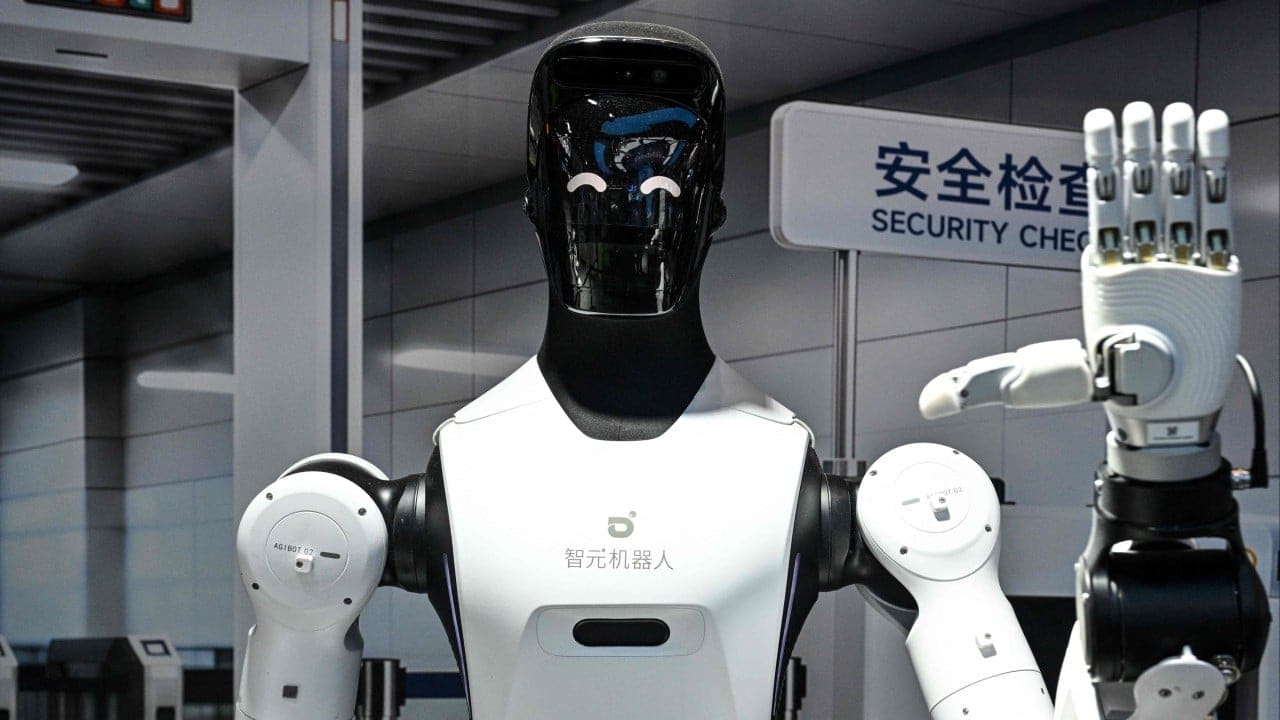
The list of Chinese technology deemed too risky for American military use just gained a new member. Lawmakers in Washington have embedded language in this year's defence policy framework that would prevent the Pentagon from purchasing or operating humanoid robots manufactured by companies based in China. The provision sits inside the National Defence Authorisation Act that cleared the House of Representatives in late July, a sweeping annual bill that sets spending priorities and operational boundaries for the US military.
Section 163 of the draft legislation targets autonomous systems broadly, citing national security and data privacy as the driving rationale. At DailyTechWire, we've tracked the steady march of export controls, entity-list designations, and procurement bans over the past four years. Semiconductors, telecommunications infrastructure, surveillance cameras, and battery technology have all landed in the crosshairs. Humanoid robots represent the frontier where hardware autonomy, sensor fusion, and edge inference converge, and that convergence has Washington's attention.
Why Humanoid Systems Draw Scrutiny
Humanoid robots occupy an unusual position in the technology stack. Unlike stationary industrial arms or wheeled logistics platforms, bipedal machines carry dense sensor arrays, onboard compute modules, and real-time decision engines that navigate unstructured environments. Military interest spans logistics support in austere locations, reconnaissance in contested zones, and tasks where human exposure carries unacceptable risk.
The concern articulated by defence policymakers hinges on two threads. First, any autonomous platform operating inside secure facilities or alongside sensitive operations generates vast streams of telemetry: video feeds, LIDAR scans, motion patterns, facility layouts, and network handshakes. If that data flows back to servers controlled by a foreign government or subject to intelligence-sharing mandates, the operational security perimeter dissolves. Second, supply chain integrity remains opaque. Circuit boards, firmware, and training datasets embedded in these systems are difficult to audit at scale, creating vectors for remote manipulation or pre-positioned backdoors.
China's robotics sector has moved quickly over the past eighteen months. Companies in Shenzhen, Hangzhou, and Shanghai have demonstrated humanoid prototypes with sub-ten-millisecond latency in dynamic balancing, modular joint architectures that lower unit costs, and edge inference pipelines fine-tuned on proprietary motion datasets. Some of these firms have publicly courted international buyers, including government and defence logistics contractors. The legislative response in Washington reflects a judgment that the risk-reward calculus no longer favors open procurement.
The Broader Arc of Technology Decoupling
This humanoid robot restriction does not arrive in isolation. Over the past three years, the US has rolled out controls on advanced semiconductor manufacturing equipment, restricted access to high-bandwidth memory chips used in AI training, and imposed guardrails on American venture capital flowing into Chinese AI and quantum startups. The Department of Commerce has added dozens of entities to export blacklists, and the Treasury has finalized outbound investment screening rules that took effect earlier this year.
What distinguishes the current moment is the shift from component-level restrictions to system-level prohibitions. Earlier measures focused on chokepoints like lithography tools or GPU architecture. The NDAA provision on humanoid robots signals a willingness to preemptively block entire product categories before they achieve significant market penetration in sensitive applications. That approach carries trade-offs. It may accelerate diversification of supply chains and spur domestic or allied production, but it also fragments global standards and raises procurement costs for systems still early in their adoption curve.
Allied Coordination and the Asia Supply Chain
Washington's move will reverberate across allied defence procurement offices in Seoul, Tokyo, Canberra, and Brussels. Several NATO members and Indo-Pacific partners have initiated their own reviews of autonomous platform sourcing. South Korea's defense ministry has been evaluating logistics robots for forward operating bases, while Japan's Self-Defense Forces have piloted unmanned ground vehicles in disaster response scenarios. Both governments face pressure to harmonize procurement rules with US restrictions to maintain interoperability and intelligence-sharing arrangements.
For robotics manufacturers in those allied markets, the policy landscape creates both opportunity and complexity. Firms in South Korea and Japan that produce humanoid or semi-autonomous systems may find accelerated interest from US and allied buyers seeking alternatives to Chinese suppliers. Yet those same companies often source sub-assemblies like actuators, sensors, and battery packs from regional supply chains that include Chinese vendors. Compliance will require granular bills of material and, in some cases, redesigns to swap out components flagged under new restrictions.
Southeast Asian production hubs are watching closely. Vietnam and Thailand have attracted investment in electronics assembly and light manufacturing, but neither has deep expertise in the precision mechanics and real-time control systems that underpin humanoid robotics. If demand for non-Chinese autonomous platforms rises sharply, the question becomes whether regional suppliers can scale quickly enough or whether production consolidates in higher-cost geographies with established capabilities.
Technical and Operational Implications
Humanoid robots remain expensive and technically demanding. Bipedal locomotion requires sophisticated inverse kinematics, continuous sensor fusion, and fault-tolerant actuators. Most current-generation platforms cost between 150,000 and 400,000 dollars per unit, and operational endurance rarely exceeds four hours on a single charge under load. The Pentagon's interest is less about deploying thousands of units today and more about establishing procurement frameworks and testing protocols for systems expected to mature over the next five to seven years.
The restriction will likely push US defense contractors and research labs toward partnerships with domestic robotics startups and university spin-outs. Boston Dynamics, Agility Robotics, and a handful of smaller firms have demonstrated bipedal and quadrupedal platforms, though none have yet reached the price-performance benchmarks that Chinese competitors claim in marketing materials. Increased defense funding could accelerate development timelines, but it also risks creating a bifurcated market where military-grade systems and commercial humanoid robots evolve along separate trajectories with limited technology transfer.
Data sovereignty emerges as a parallel challenge. Even if a humanoid robot is assembled in the United States, the training datasets that power its motion planning and object recognition models may include data collected overseas or processed on foreign cloud infrastructure. The Pentagon will need to define acceptable provenance standards for both hardware and the machine learning pipelines that animate it. That standard-setting process is likely to spill into civilian procurement as well, particularly for critical infrastructure operators and large logistics firms wary of regulatory risk.
What Comes Next
The NDAA still requires Senate passage and presidential signature, a process expected to conclude before the fiscal year rolls over in October. The Senate's version of the bill includes similar language on autonomous systems, though the precise scope and definitions may shift during conference negotiations. Assuming the provision survives, the Department of Defense will publish implementation guidance, including lists of proscribed manufacturers, certification procedures for alternative suppliers, and waiver processes for legacy contracts.
Industry observers expect the restriction to accelerate venture investment in US-based robotics, particularly firms focused on modular, software-defined platforms that can integrate components from vetted supply chains. It may also spur consolidation, as smaller startups seek acquisition by defense primes with the resources to navigate compliance overhead. On the Chinese side, manufacturers will likely pivot toward commercial markets in Southeast Asia, the Middle East, and Latin America, where procurement rules remain less restrictive and price sensitivity favors their cost structures.
The humanoid robot ban is a datapoint in a broader realignment. Washington's approach to technology competition has moved from tariff skirmishes and narrow export controls to systemic efforts to reshape supply chains, investment flows, and standards-setting bodies. For companies operating across both ecosystems, the cost of maintaining dual compliance frameworks is rising, and the window for hedging strategies is narrowing. The next twelve months will clarify whether allied governments follow Washington's lead in lockstep or carve out their own risk-tolerance thresholds, and that divergence, or lack thereof, will shape the robotics market for the rest of the decade.