Ollama Reaches 8.9 Million Monthly Users as Open-Weight Models Move From Labs to Production
The Docker Desktop alumni behind the three-year-old developer tool have closed a $65 million Series B as enterprises shift inference workloads to local and open models.
From Desktop Containers to Desktop Models
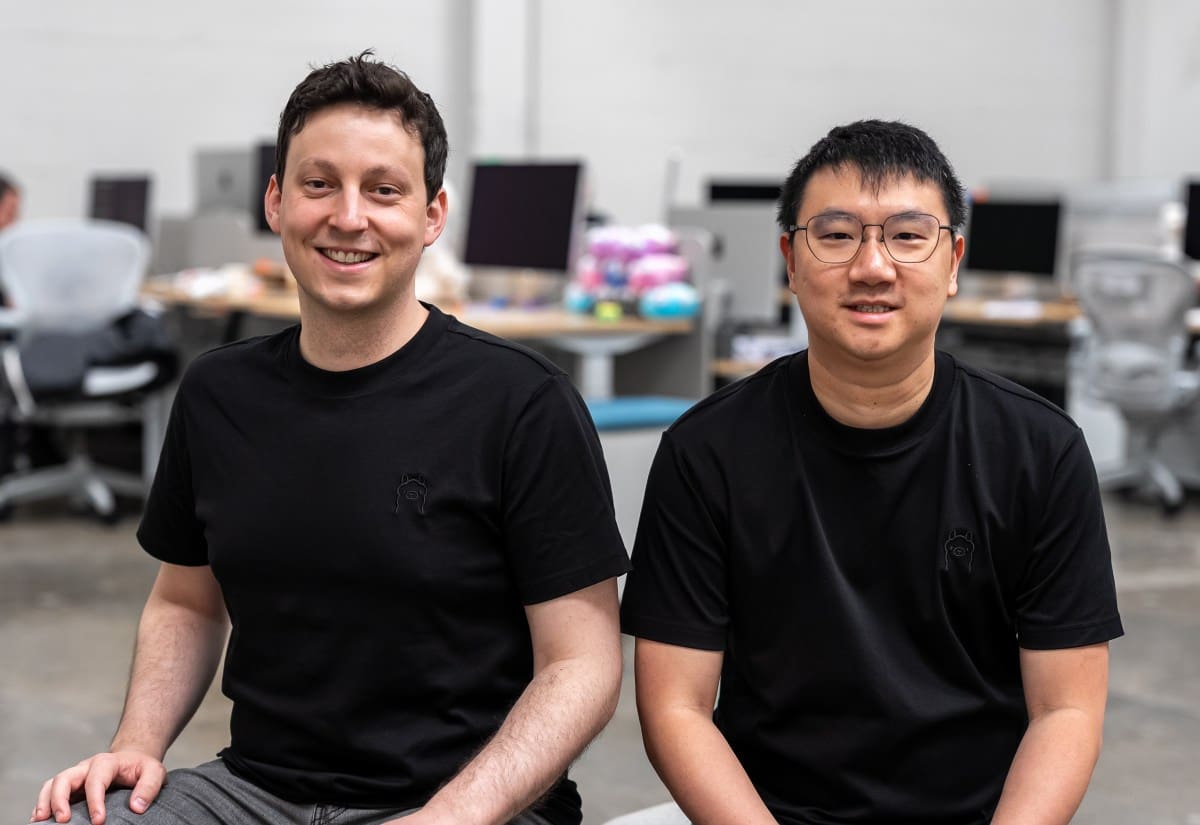
Jeff Morgan and Michael Chiang have built two developer platforms that solved the same problem in different eras: making powerful infrastructure trivially easy to run on a laptop. Their first act, Kitematic, was acquired by Docker and became the foundation of Docker Desktop. Now, three years into their second venture, Ollama has crossed 8.9 million monthly active developers with just 14 employees.
Theory Ventures led the company's $65 million Series B, according to Morgan. Benchmark's Peter Fenton, who backed the earlier $15 million Series A, remains on the board. The total raised now stands at $88 million.
The premise is straightforward: open-weight models were emerging in 2023, but they were packaged for researchers, not production engineers. Installation required navigating dependency chains, hardware configuration, and model-specific quirks. Ollama abstracted all of it. Developers could pull and run models in minutes, the same way Docker let them spin up containers without wrestling with OS-level differences.
The tool's GitHub repository has accumulated 176,000 stars and nearly 17,000 forks. It sits inside 85% of the Fortune 500, Morgan says, though he declined to share revenue or valuation figures.
The Business Model Crystallized in January
For much of its existence, Ollama was a beloved open-source project with an unclear monetization path. That changed around January, when larger open models began handling agentic tasks reliably. Coding assistants proliferated. The performance gap between closed and open models narrowed for many practical workloads.
Morgan points to that moment as the inflection point. "Open models can get real work done," he said. Companies with mounting inference bills started evaluating whether they needed to route every request through Anthropic or OpenAI, or whether they could reserve those services for edge cases and run the bulk of tasks on open alternatives.
Ollama's cloud service emerged as a natural extension. State-of-the-art open models often exceed the memory capacity of consumer hardware. The company began hosting larger models on what it calls "neocloud," offering subscription tiers from free to $100 per month. Usage is metered by GPU time, not token volume, a pricing structure that appeals to teams running long-context or batch inference jobs.
The Inference Cost Equation
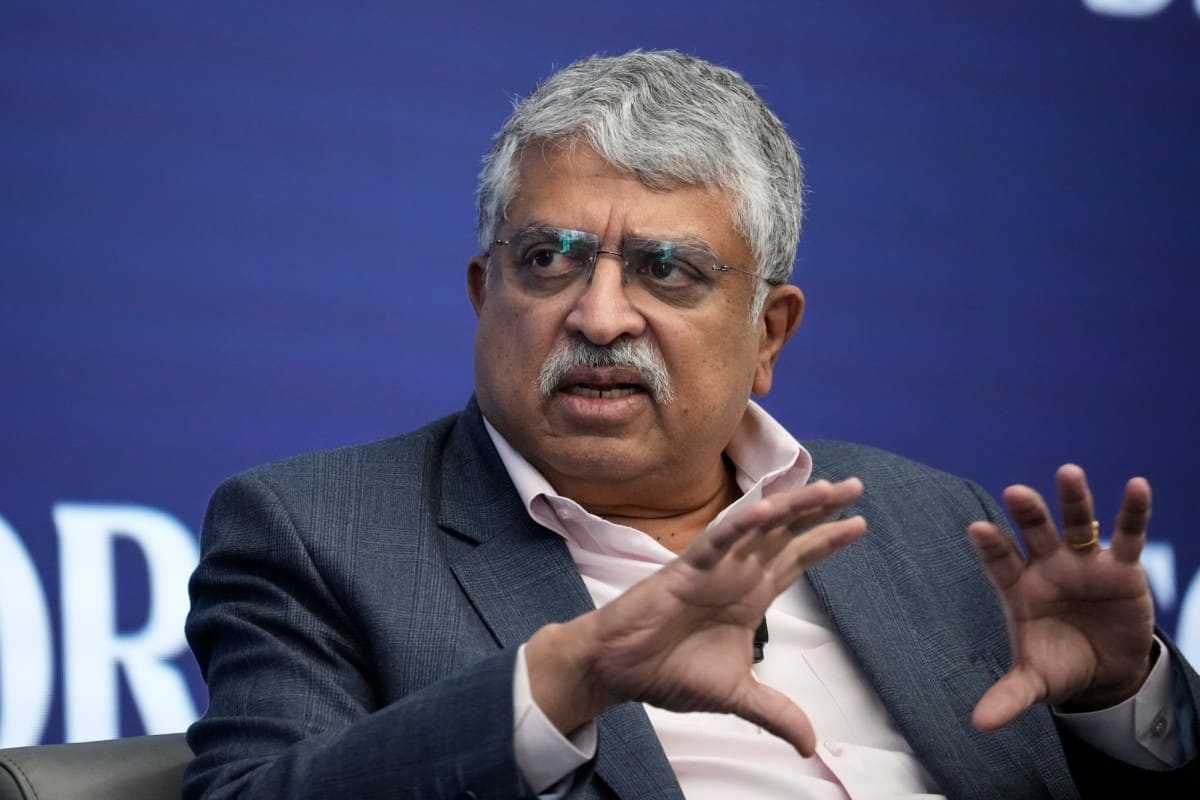
Fenton frames the shift in existential terms. Every company with high inference expenses now has a "vital existential project" to migrate workloads to open-weight models, he argues. The debate over open versus closed models, in his view, misses the point. It's not binary. Enterprises will use both, but the economic pressure to offload routine tasks to cheaper alternatives is mounting.
At DailyTechWire, we've tracked this pattern across the region. Startups in Seoul, Singapore, and Bengaluru that scaled quickly on closed APIs are now hiring inference optimization teams. The calculus is simple: if an open model delivers 80% of the quality at 10% of the cost, the margin math forces a migration strategy.
Ollama is far from alone. A cohort of open-source inference tooling has attracted venture capital in the past 18 months. Inferact, which maintains vLLM, and RadixArk, which develops SGLang, have both raised rounds. Smaller model-building startups like Arcee are training custom open weights from scratch. The funding rounds we've followed across the region suggest that the infrastructure layer beneath open models is becoming a distinct category, separate from the model labs themselves.
The Enshittification Debate
Not every user celebrated when Ollama launched its cloud service. Roughly a year ago, blog posts and forum threads accused the company of "enshittification," the term for when free developer tools degrade in pursuit of revenue. Critics worried that cloud hosting would drain attention from the core open-source project.
Morgan rejects the framing. The desktop tool remains free and unchanged, he says. The cloud service targets a different problem: models too large to fit on local machines. "We said, 'Hey, let's help find the compute for that,'" he explained.
Fenton echoes the point. "Nothing has changed for the core product that's free on the desktop. There's zero change to the premise that this is the place you can discover and run local models."
The tension is familiar to anyone who has watched open-source projects commercialize. The sustainability question looms over every popular repository. Maintainers burn out, security patches lag, and feature development stalls without funding. Ollama's bet is that a cloud service can subsidize continued development of the free tool without alienating the community that built its reputation.
The Docker Parallel Holds
The Docker Desktop analogy extends beyond the product. Docker also faced criticism when it tightened licensing terms for large enterprises. But the core insight, that developers wanted infrastructure complexity hidden behind a simple interface, proved durable. Containers became ubiquitous not because enterprises loved open-source philosophy, but because they solved a painful problem.
Ollama is making the same wager. Developers want to experiment with Llama 4, Mistral Large, or Qwen models without reading installation documentation. Enterprises want to run those models at scale without hiring a dedicated MLOps team. If the tool continues to serve both audiences, the business model becomes secondary to the utility.
The funding environment for AI infrastructure remains robust, even as application-layer startups face tougher scrutiny. Investors are hunting for picks-and-shovels plays, companies that capture value regardless of which model architecture or use case wins. Inference tooling fits that thesis cleanly.
What Comes Next
Morgan declined to outline specific product roadmap details, but the implied direction is clear. As open models improve, the gap between local and cloud workloads will shift. Models that required server-grade GPUs six months ago now run on high-end laptops. Models that run on laptops today may run on phones next year. Ollama's challenge is to remain relevant across that continuum.
The company's lean headcount, 14 people supporting nearly 9 million monthly users, suggests aggressive automation and a narrow product surface. That's both a strength and a risk. Competitors can move quickly if they identify a wedge. But it also means Ollama can iterate without the coordination overhead that bogs down larger teams.
The broader question is whether open models will continue closing the gap with frontier closed models, or whether capabilities will plateau. If open weights stall at a performance ceiling below GPT-5 or Claude Opus 5, the cost savings may not justify the quality trade-off for many use cases. If they keep pace, the inference economics tilt decisively in Ollama's favor.
For now, the funding gives the company runway to find out. Theory Ventures and Benchmark are betting that the Docker playbook, applied to AI, works twice.