NVIDIA Taps Home Networks to Distribute AI Workloads
The chipmaker's beta PAIR tool routes inference jobs across idle machines, aiming to ease GPU contention without requiring cloud infrastructure.
A Routing Layer for the Home Lab
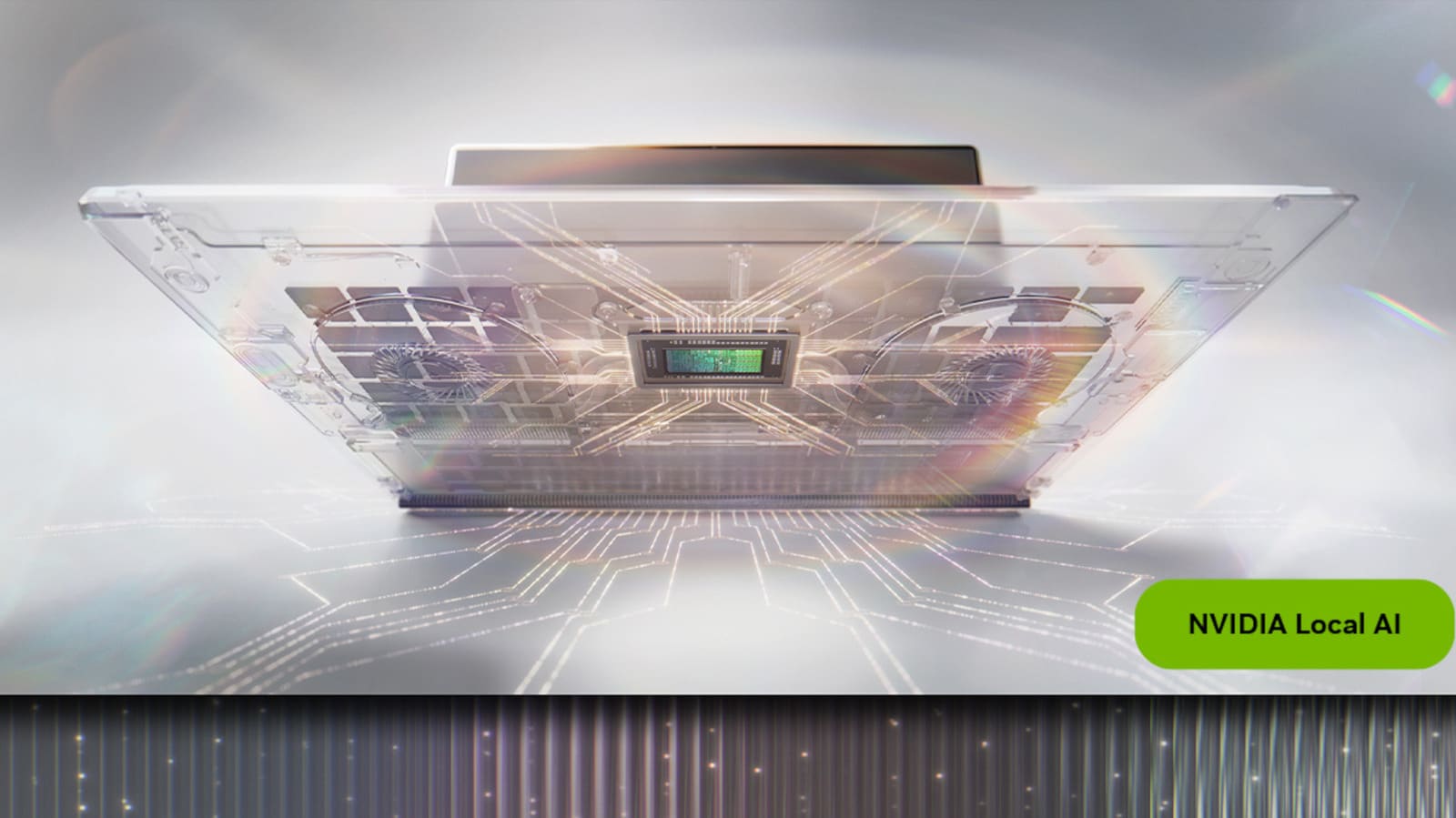
NVIDIA released a beta tool this week that treats spare PCs in a household or small office as a distributed inference cluster. Called Personal AI Router, the open-source utility scans a local network for idle machines and farms out AI subtasks to whichever system has free GPU cycles. The idea is straightforward: many homes own multiple computers that sit unused most of the day, and multi-agent AI workflows are already splitting complex requests into parallel jobs. PAIR simply matches one to the other.
The announcement comes as agent frameworks proliferate and inference loads climb. Developers building on LangGraph, AutoGPT, or similar orchestrators often hit bottlenecks when several subagents queue on a single GPU. NVIDIA's pitch is that routing those jobs to a second or third machine in the house sidesteps contention without pushing workloads to the cloud.
How the Routing Works
PAIR runs as a daemon on each participating machine, advertising available GPU memory and compute headroom. When an agent framework issues a batch of inference requests, the router evaluates which device can handle each subtask fastest and dispatches accordingly. The user on the primary machine continues working or gaming; background inference runs elsewhere on the network.
NVIDIA gave the example of an agent sorting an overflowing inbox and flagging urgent messages. The orchestrator spawns subagents to parse threads, classify senders, and surface action items. Without PAIR, all those inference calls would contend for the same GPU. With routing enabled, the work spreads across whatever hardware is online and idle.
The tool supports both graphical configuration and terminal-based setup. It runs on Windows, Linux, and macOS, and handles cross-platform routing, so a Windows gaming rig can offload to a Mac mini or a Linux workstation in the next room.
Hardware and Architecture Requirements
Compatibility starts at GeForce RTX 20 Series and extends through current RTX 40 Series consumer cards. On the professional side, NVIDIA RTX workstation GPUs built on Turing or later architectures are supported, as are DGX Spark systems. Apple silicon is included from M4 onward, which limits Mac participation to the latest generation but opens the door to inference on integrated GPU tiles.
The choice to make PAIR open source matters. Developers can inspect the routing logic, adapt it for non-NVIDIA accelerators, or integrate it into custom agent platforms. The code is available now under a permissive license, and NVIDIA has published reference implementations for common agent frameworks.
Why Local Routing Matters in an Edge-First Region
At DailyTechWire, we've tracked the steady migration of inference workloads from centralized clouds to devices closer to the user. Regulatory pressure in Seoul, Singapore, and Jakarta around data residency has accelerated that shift, and latency requirements for real-time agents make round-trips to distant data centers less practical. PAIR fits that pattern: it keeps data on-premises and uses hardware the user already owns.
The tool also reflects a broader bet that homes and small studios will run increasingly sophisticated agent workflows. If inbox triage, meeting summarization, and multi-step research tasks become routine, GPU utilization inside the home will climb. NVIDIA's data suggesting that more than half of U.S. households own two or more PCs hints at untapped capacity, but the same dynamic holds across affluent urban centers in Asia, where multi-device households are common and broadband infrastructure supports low-latency local networking.
Limitations and Open Questions
PAIR is in beta, and several practical constraints remain. Network discovery relies on mDNS or manual configuration, which can be fragile on segmented home networks or VLANs. Security is another consideration: the router must authenticate requests and verify that participating machines are trusted, especially if the network includes IoT devices or guest endpoints.
Inference workloads also vary widely in memory footprint and latency tolerance. PAIR's scheduler will need to account for model size, quantization level, and whether a subtask requires streaming output or can tolerate batch processing. The current release does not appear to include cost or power optimization, so a user with a high-wattage desktop and a low-power laptop may inadvertently route work to the less efficient machine.
Finally, the tool assumes that spare GPU capacity exists. In households where every machine is actively used, or where background tasks already consume GPU resources, PAIR's benefit shrinks. The routing layer adds overhead, and if no idle hardware is available, the tool simply becomes another dependency in the stack.
Broader Implications for Distributed Inference
NVIDIA's move into home-network orchestration is a signal about where the company sees inference growth. Data-center GPU sales remain the core business, but enabling distributed workloads on consumer and prosumer hardware expands the addressable market. If PAIR proves useful, it could pave the way for more sophisticated resource-sharing protocols, peer-to-peer inference markets, or neighborhood compute grids.
The open-source release also invites competition. AMD, Intel, and Qualcomm all have inference-capable hardware in the consumer channel, and PAIR's architecture is not inherently NVIDIA-only. Expect forks or alternative implementations that support a wider range of accelerators, particularly in regions where RTX penetration is lower and integrated or discrete GPUs from other vendors dominate.
For now, PAIR is a beta experiment. Its success will depend on whether agent frameworks adopt the routing API, whether users tolerate the setup complexity, and whether the performance gains justify running multiple machines. But as a proof of concept, it underscores a shift: AI inference is no longer confined to the cloud or the device in front of you. The network itself is becoming the compute fabric.