Nvidia Builds a Secondary Market for Used AI Chips
The company's $500 billion data center financing scheme doubles as a bet on aging GPU infrastructure and a defense against wrong-way risk.
A Guarantee That Cuts Both Ways
Nvidia has structured a financing vehicle with Apollo, BlackRock, Blackstone, Brookfield, Goldman Sachs, and KKR that could channel up to $500 billion into AI data center construction. The headline figure dominated early coverage, but the more consequential development lies in what Nvidia is promising behind the scenes: the company will backstop the residual value of its own silicon when GPUs serve as loan collateral.
Under the arrangement, Nvidia commits to covering up to 25 percent of any shortfall if a data center operator defaults and the lender liquidates chips that no longer command their book value. It is a partial insurance policy, designed to attract institutional capital that might otherwise balk at lending against depreciating hardware. At DailyTechWire, we have tracked collateral structures in the neocloud segment since CoreWeave pioneered the model in 2023, and this is the first time a chip vendor has formally guaranteed residual pricing at this scale.
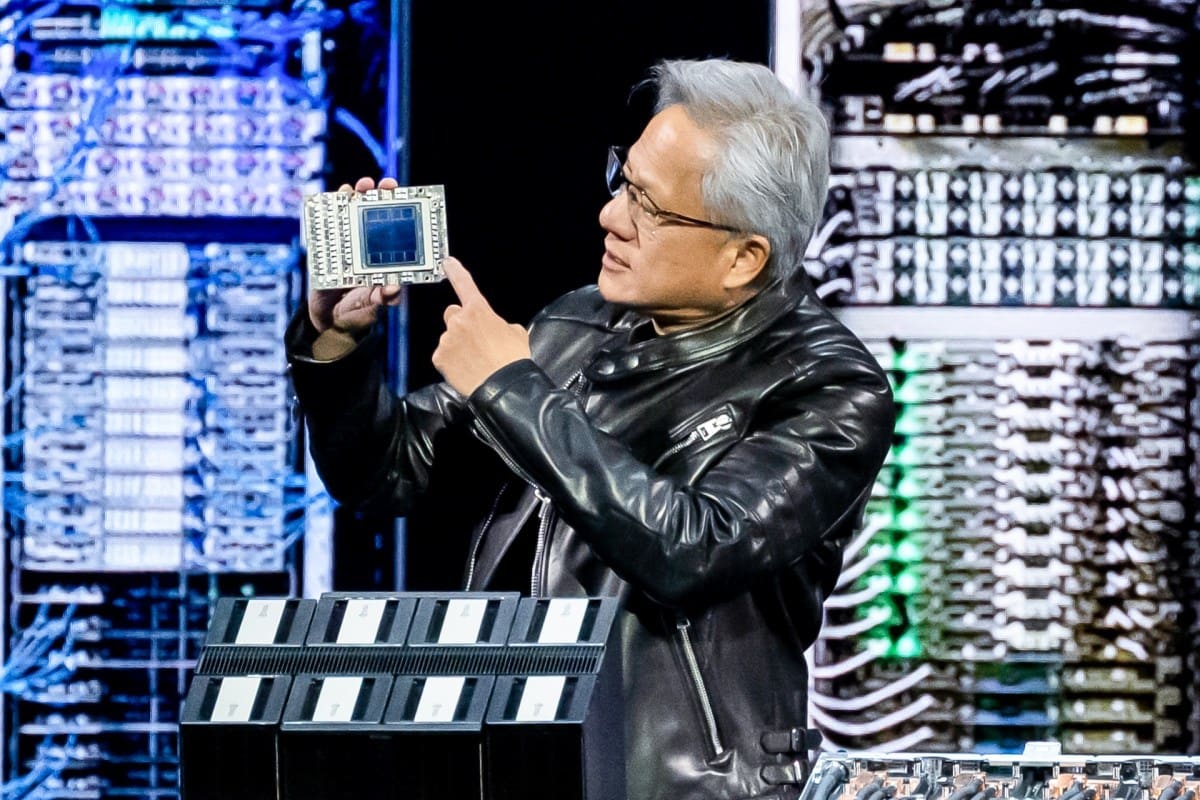
Jensen Huang took to social media and financial television to clarify the company's exposure after bond markets reacted. The core message: Nvidia is not repeating the Lucent playbook, where vendor financing ballooned into a balance-sheet catastrophe during the dotcom collapse. Instead, the chip maker is mobilizing outside capital and capping its own downside, a distinction that matters both legally and operationally.
Wrong-Way Risk and the Lucent Shadow
Financial analysts have noted that Nvidia's commitment creates what the industry calls wrong-way risk. The company's obligations grow precisely when demand weakens, a point at which its own revenues would likely be under pressure. If enterprises pull back on AI infrastructure spending and GPU prices fall, Nvidia will owe money to lenders at the same moment its top line contracts.
The Lucent comparison is not entirely unfair. Lucent Technologies extended billions in customer financing during the late 1990s telecommunications build-out, only to see defaults cascade when the bubble burst. Nvidia has already committed capital to frontier labs including OpenAI and Anthropic, as well as neoclouds such as CoreWeave, Nebius, Firmus, and Lambda. According to Bloomberg estimates, the company has been working on an additional $750 billion in circular deal structures over the summer.
Huang's public response emphasizes the structural differences. Nvidia is bringing in independent, long-term institutional investors rather than lending directly from its own balance sheet. The company shoulders a fraction of the risk, and only in the event of default and subsequent liquidation. That layering reduces Nvidia's gross exposure, though it does not eliminate the directional problem: weak demand undermines both the collateral and the guarantor simultaneously.
Hyperscaler Capacity Constraints
The new financing architecture arrives as traditional funding channels for data center expansion show signs of strain. Oracle has taken on significant debt, Google has issued new equity tranches, and Meta has burned through substantial cash reserves. Microsoft CEO Satya Nadella recently recommended "1873," a book about the financial engineering that preceded the Panic of 1873 and the collapse of the railroad boom, during an earnings call. The reference was not subtle.
Demand for AI compute has outpaced supply for the past two years, driving utilization rates above 90 percent at major cloud providers and justifying aggressive capital deployment. Yet the sustainability of that imbalance is now a live question. If enterprise adoption plateaus, or if algorithmic improvements reduce the compute intensity of inference workloads, the current generation of infrastructure could face rapid obsolescence. In that scenario, collateral values would deteriorate faster than depreciation schedules assume, and Nvidia's guarantees would be tested.
Building an Ecosystem for Aging Architecture
Beneath the financial maneuvering, Nvidia is attempting to establish a functioning secondary market for older GPU generations. Huang has described AI servers as "AI factories" and framed them as long-term investable infrastructure, comparable to railroads or airlines rather than rapidly depreciating personal computers. The analogy implies a stable residual value and a liquid market for capacity reassignment.
In public remarks, Huang argued that when customer needs shift, data center capacity can be redeployed to another operator, cloud provider, or enterprise. That flexibility depends on the existence of a broad ecosystem of potential buyers and users, which in turn supports residual value. Nvidia's guarantee is both a signal and a subsidy: it tells the market that the company expects its hardware to retain utility beyond the initial deployment cycle, and it provides financial cover while that expectation is validated or disproven.
For startups and enterprises, a mature secondary market could lower the cost of entry. Smaller AI labs and regional cloud providers might lease or purchase previous-generation hardware at a discount, accessing sufficient compute for fine-tuning, inference, or specialized workloads without paying premium prices for the latest architecture. That tiering could mirror the pattern already emerging in model selection, where organizations choose affordable open-weight models alongside frontier offerings based on task requirements and budget.
The Window and the Risk
Nvidia holds dominant market share in AI accelerators and sufficient leverage to shape the financing and resale infrastructure around its products. The current supply-demand imbalance gives the company a window to establish these mechanisms while customers are still willing to absorb risk and commit capital. If the secondary market takes root, Nvidia benefits from extended product life cycles, recurring revenue from software and support, and a broader base of users who remain within its ecosystem even as they step down from cutting-edge hardware.
The risk is that the window closes before the ecosystem matures. If a downturn arrives while the secondary market is still illiquid, collateral values could fall sharply, triggering Nvidia's guarantees at scale. The company would face simultaneous pressure from declining new sales and rising contingent liabilities, a combination that could force writedowns and erode investor confidence.
Nvidia's plan is both a financing innovation and a long-term infrastructure bet. It reflects confidence that AI workloads will remain compute-intensive and that the installed base of GPUs will retain economic utility as newer generations ship. It also reflects the reality that traditional funding sources are stretched, and that sustaining the current pace of data center construction requires new capital structures. Whether the secondary market Nvidia envisions will materialize, and whether it will do so quickly enough to validate the company's guarantees, will become clear over the next eighteen to twenty-four months.