Nexperia's China Arm Breaks Away, Targets Full Domestic Wafer Supply
The semiconductor unit is pursuing complete production independence from its Dutch parent after a year-long internal rift, signaling deeper fractures in global chip supply chains.
A Rare Public Split in Semiconductor Operations
The China operations of Nexperia announced this week they will transition their entire manufacturing line to domestic 12-inch silicon wafer foundries, a move framed as pursuit of "independent operations" but one that exposes nearly a year of internal friction with the Dutch parent company. At DailyTechWire, we've tracked dozens of localization initiatives across Asia's chip sector, but few have been accompanied by such explicit language about autonomy from headquarters.
The announcement came during a weekend press conference carrying the tagline "based in China, serve the world," a formulation that mirrors Beijing's dual-circulation policy rhetoric. Until now, the China unit had sourced wafers from Nexperia's European fabrication facilities. The shift to what executives termed "100 per cent domestic production" marks a structural decoupling within a single corporate entity, rather than between nations.
The Mechanics of Wafer Independence
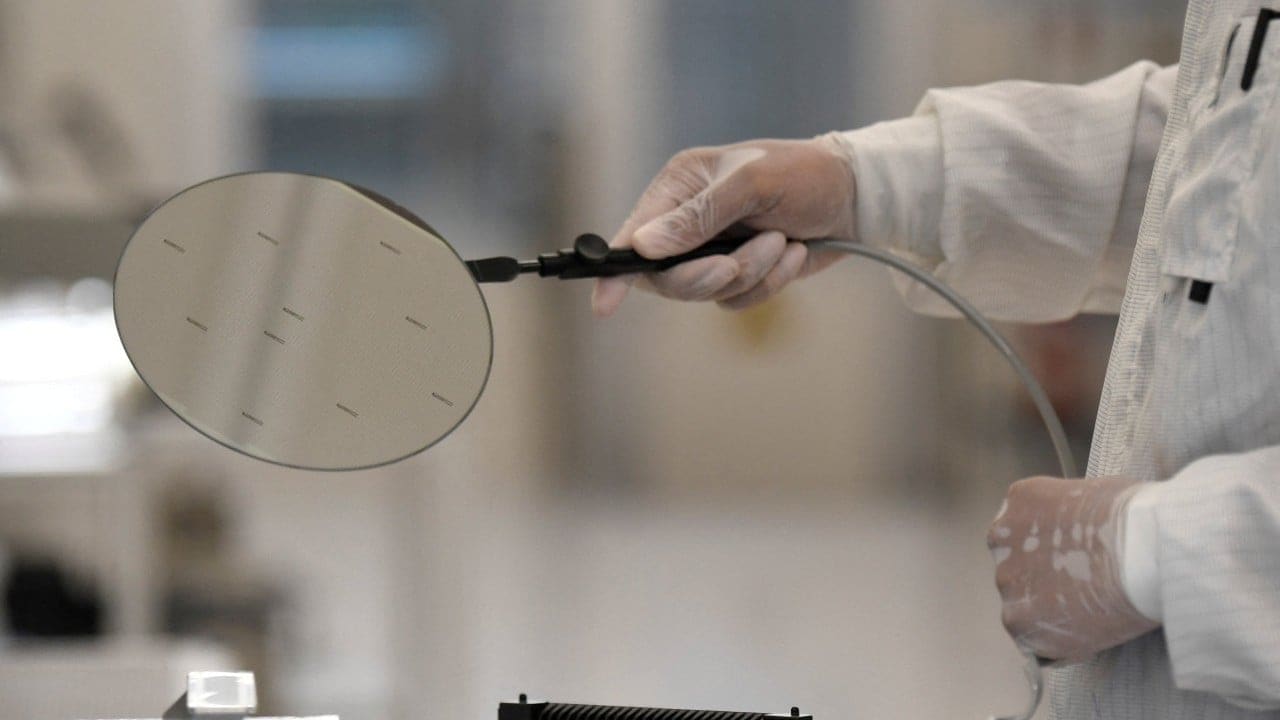
Twelve-inch wafers, the industry-standard substrate for modern power semiconductors and logic chips, represent a critical chokepoint in semiconductor manufacturing. Nexperia specializes in discrete components, MOSFETs, and power management chips used in automotive and industrial applications. Moving an established product line from one fab ecosystem to another requires requalifying every process step, from doping profiles to packaging, a timeline typically measured in quarters, not weeks.
China has invested heavily in expanding domestic wafer capacity over the past five years, though much of that capacity remains concentrated in trailing-edge nodes suitable for power devices and analog chips. According to industry data, mainland China now accounts for roughly one-quarter of global 12-inch wafer capacity, up from less than 15 per cent a half-decade ago. The Nexperia China unit's pivot taps into this expanded base, but also tests whether domestic fabs can meet the yield and consistency standards European automotive customers demand.
The company has not disclosed which foundry partners will handle production, though the limited number of domestic players with mature 12-inch lines narrows the field considerably. SMIC, Hua Hong, and a handful of regional fabs operate at the scale required. Yield ramp and customer requalification will determine whether the independence strategy holds or fractures under technical pressure.
Why the Rift Matters Now
The timing of the announcement is inseparable from broader export-control dynamics. Over the past three years, the Netherlands has tightened restrictions on advanced lithography equipment sales to China, aligning with US policy but creating friction for Dutch firms with Chinese operations. Nexperia itself was caught in a 2022 controversy when the UK government forced the sale of a Welsh semiconductor plant the company had acquired, citing national-security concerns over its ultimate ownership by China's Wingtech Technology.
That ownership structure, Wingtech holding Nexperia as a subsidiary, adds a layer of complexity. The current push for operational independence by the China unit could reflect both commercial logic and pressure from Beijing to insulate critical supply chains from geopolitical risk. It also raises questions about how parent-subsidiary relationships function when the subsidiary explicitly seeks to decouple from the parent's manufacturing infrastructure.
European headquarters has not issued a public response to the China unit's announcement, and the nature of the "dispute" referenced remains opaque. Internal disagreements over transfer pricing, technology access, or market allocation could all be factors. What is clear is that the China team felt compelled to make a public case for autonomy, a rare step in an industry where internal supply-chain arrangements are typically handled behind closed doors.
Implications for the Asia Semiconductor Landscape
The Nexperia case offers a microcosm of the forces reshaping chip supply chains across Asia. We've seen similar, if quieter, moves by other multinational semiconductor firms with Chinese operations: parallel product lines, regional IP firewalls, and dual-sourcing strategies that treat China operations as standalone entities. The difference here is the explicitness and the public framing around "100 per cent" domestic production.
For China's domestic fab ecosystem, landing a high-volume customer like Nexperia China validates years of capacity buildout and offers a reference design for other multinational units considering similar pivots. For Nexperia's European operations, it raises the question of whether the China unit will remain a subsidiary in anything but name, or whether this marks the beginning of a formal split.
Automotive customers, particularly in Europe, will watch yield and qualification timelines closely. Power semiconductors are not cutting-edge by node standards, but they are reliability-critical. Any hiccup in the transition could open the door for competitors, both Chinese and international, to capture share. The China unit's ability to maintain European customer relationships while sourcing entirely from domestic fabs will be the practical test of the independence strategy.
The Broader Decoupling Playbook
What we are witnessing is not a one-off anomaly but an emerging template: multinational firms with significant China operations facing pressure to localize supply chains to the point of operational separation. The semiconductor industry, with its long qualification cycles and deep capital investment, has been slower to fragment than consumer electronics or software. But when the fractures do appear, they are structural, not cosmetic.
The Nexperia China announcement is unlikely to be the last. As export controls tighten, ownership scrutiny intensifies, and Beijing pushes for supply-chain resilience, more multinational chip firms will face the choice between integrated global operations and regionally siloed units. The economics of scale that defined the industry for decades are giving way to the economics of risk mitigation.
Whether Nexperia's China unit can deliver on its "100 per cent domestic" pledge, maintain quality, and hold onto international customers will determine if this model is viable or cautionary. For now, the public break with European headquarters is a signal: in semiconductors, as in much else, the center is not holding.