NEC Launches an All-Agent Department Where No Humans Work
The Japanese tech conglomerate is testing a radical organizational model: AI bots managing AI bots, with people relegated to oversight roles.
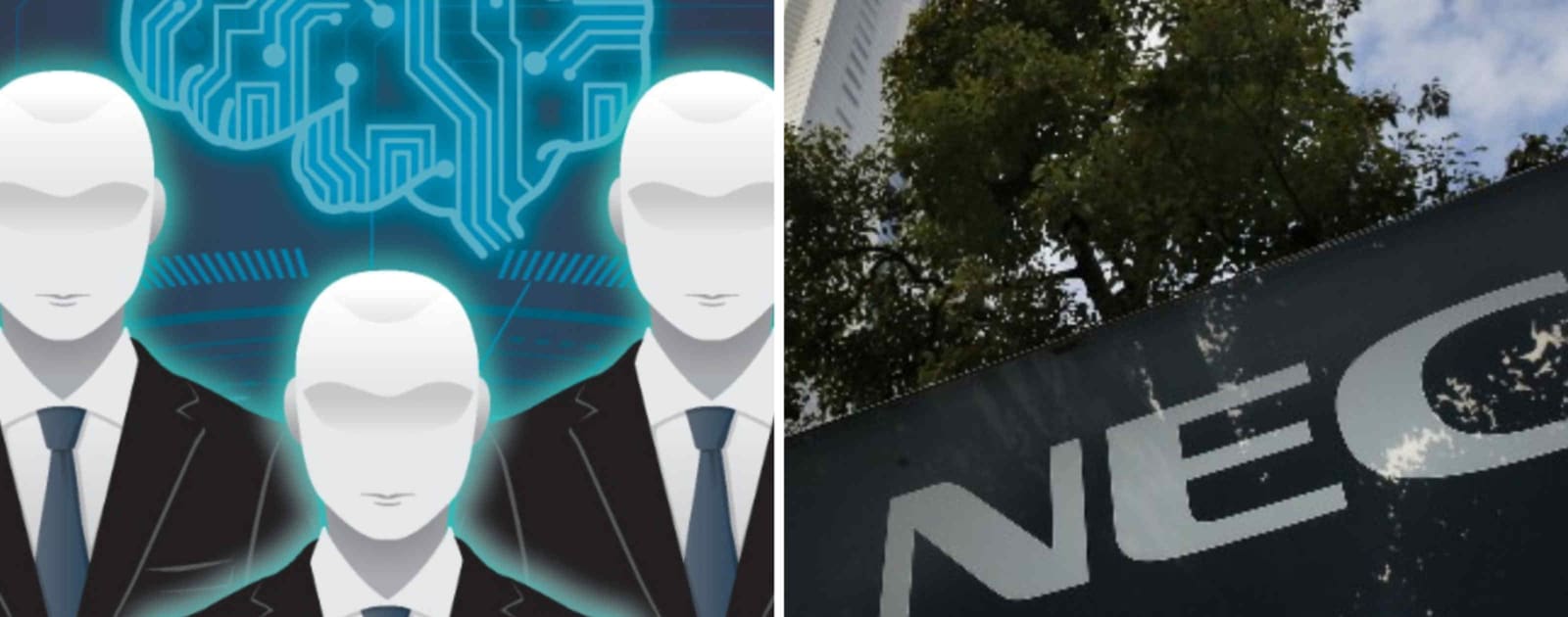
An Experiment in Organizational Boundaries
NEC has launched a department with no human employees. The unit, announced in early August, is staffed entirely by AI agents that handle automation tasks, report to other AI agents in managerial roles, and operate under human oversight from outside the department itself. The Tokyo-based technology group describes the initiative as an effort to draw sharper lines between work that should remain with people and tasks that can run autonomously.
The concept is straightforward but unprecedented in its implementation: worker-level agents execute defined processes, manager-level agents coordinate and monitor those workers, and humans sit above the department as strategic supervisors rather than day-to-day operators. NEC has not disclosed the size of the agent workforce, the scope of tasks assigned, or how long the pilot will run before a wider rollout or termination decision.
At DailyTechWire, we've tracked enterprise AI adoption across Asia for three years, and this marks the first time a large conglomerate has formalized an all-agent org chart. Most deployments treat agents as assistants embedded within human teams. NEC's move suggests a belief that productivity gains require structural separation, not just tooling upgrades.
Why Segregate Human and Agent Labor
The rationale centers on clarity. When agents and people share the same reporting lines, organizations struggle to measure which contributions come from which source, making it difficult to optimize either. By isolating agent work into its own department, NEC can instrument performance, identify failure modes, and iterate on agent design without disrupting human workflows.
This mirrors the logic behind robotic process automation cells in manufacturing, where lights-out production lines run independently and hand off to human-staffed quality control. The difference is that RPA handles physical repetition, while NEC's agents are targeting knowledge work: data aggregation, report generation, workflow orchestration, and potentially low-complexity decision-making.
The hierarchical structure, with manager agents overseeing worker agents, also reflects lessons from multi-agent systems research. Single-agent deployments often lack coordination mechanisms, leading to redundant work or conflicting actions. A manager layer can allocate tasks, resolve conflicts, and escalate exceptions to human supervisors, reducing the need for constant human intervention.
What the Manager Agents Actually Do
NEC has not detailed the technical architecture, but the manager-worker split implies at least two tiers of agency. Worker agents likely operate within narrow domains: pulling data from internal systems, formatting outputs, triggering downstream automations. Manager agents would then aggregate worker outputs, check for anomalies, and decide whether a given result should proceed or be flagged for human review.
In practice, this could mean a manager agent receives daily reports from a dozen worker agents, runs validation rules, and publishes a consolidated dashboard. If a worker agent's output falls outside expected parameters, the manager escalates to a human. The human does not manage the workers directly but audits the manager's decisions and adjusts policies or retrain models as needed.
This design assumes that agent reliability is high enough that most days require no human intervention, but not so high that exceptions never occur. If reliability were perfect, the manager layer would be redundant. If reliability were poor, humans would spend all their time on escalations, defeating the purpose. NEC is effectively betting that current large language models and agentic frameworks sit in the viable middle zone.
Risks and Organizational Friction
The all-agent department introduces several risks. First, opacity: if a manager agent escalates an issue, the human supervisor must diagnose whether the problem lies in the worker agent's logic, the manager's validation rules, or the underlying data. Debugging a chain of agent decisions is harder than debugging a single script, especially when models operate as black boxes.
Second, drift: agents fine-tuned on internal data can degrade over time as data distributions shift. Without continuous monitoring, an agent department could quietly produce lower-quality outputs, and the lack of humans in the loop might delay detection.
Third, employee perception. If the experiment succeeds, other departments may face pressure to adopt similar structures, raising anxiety about job security. NEC has framed this as a division of labor, not a replacement strategy, but the optics of an entire department with zero human headcount will inevitably fuel workforce concerns.
Regional Context: Japan's Labor Shortage and Automation Push
Japan's working-age population has been shrinking for two decades, and companies face chronic labor shortages in both blue-collar and white-collar roles. The government has encouraged automation and digital transformation as partial solutions, and conglomerates like NEC, Hitachi, and Fujitsu have positioned themselves as vendors and adopters of these technologies.
NEC's move fits within a broader pattern of Japanese enterprises experimenting with aggressive automation. Hitachi recently announced plans to use AI agents for entire systems development processes, and several financial institutions have deployed agents for compliance and reporting tasks. The regulatory environment remains cautious, there is no formal framework for agent liability or accountability, but the Ministry of Economy, Trade and Industry has signaled openness to pilot programs that demonstrate measurable productivity gains.
South Korea and Singapore have pursued similar strategies, though with more emphasis on human-agent collaboration rather than segregation. The NEC model represents a more radical hypothesis: that separating agent work into dedicated units will yield better outcomes than embedding agents within existing teams.
What Success Looks Like
NEC has not published success metrics, but reasonable benchmarks would include throughput per agent, error rates, escalation frequency, and cost per unit of output compared to equivalent human teams. If the agent department can handle a stable workload with minimal human oversight and lower cost than a human team of equivalent output, the experiment will likely expand.
If escalations remain high, or if the quality of agent output requires constant human correction, the department may be restructured or dissolved. The presence of manager agents adds a layer of complexity that could either reduce human overhead or simply obscure problems until they compound.
Longer term, the experiment tests whether organizational design needs to change to accommodate AI, or whether AI should adapt to existing org structures. Most enterprise software has followed the latter path, but NEC is exploring the former. The outcome will inform how other Asia-based conglomerates approach automation at scale.
The Bigger Question: Where Do Humans Fit
The all-agent department is not a vision of a humanless company. Humans still set strategy, define objectives, and intervene when agents fail. But it does represent a shift in how work is organized. Instead of humans and agents sharing tasks within the same team, they occupy separate layers, with agents handling execution and humans handling governance.
This could lead to more efficient organizations, or it could lead to a bifurcated workforce where strategic roles remain secure and execution roles vanish. The answer depends on whether new human roles emerge to fill the gap, whether agent capabilities plateau or continue to advance, and whether companies invest in retraining or simply shrink headcount.
For now, NEC's experiment is a data point. The company is testing a hypothesis, and the results will take months or years to fully assess. But the willingness to formalize an all-agent department signals that large enterprises are moving beyond pilot projects and into structural changes. The question is no longer whether AI will change how companies operate, but how quickly and how radically.