Microsoft Retreats on Copilot Complexity, Shutters Features and Merges Apps
The tech giant is consolidating its fragmented AI assistant strategy, cutting experimental features and admitting its approach lost clarity in the race against ChatGPT and Claude.
A Consolidation Born of Necessity
Microsoft is pulling back on its sprawling Copilot strategy, folding its consumer and business-facing AI assistant applications into a single product and eliminating a slate of features that failed to gain traction. The consolidation, detailed in Microsoft support documentation, will see Group Chats, AI-generated podcasts, Copilot Labs experimental features, and Deep Research disappear from the consumer app by August 18, 2026. For enterprise customers paying for Microsoft 365 Copilot, a feature called Researcher will replace the latter capability.
The move represents a candid acknowledgement that Microsoft's initial approach to competing with OpenAI's ChatGPT, Anthropic's Claude, and Google's Gemini was too fragmented. Two years after the company framed AI as a "generational shift" it intended to dominate, Redmond is instead simplifying an offering that confused users with overlapping functionality and unclear boundaries between personal and professional use cases.
At DailyTechWire, we've tracked similar consolidations across the generative AI landscape over the past six months. Anthropic merged its Cowork collaboration tool into Claude Chat. OpenAI integrated Operator, an agentic feature designed to automate web tasks, directly into ChatGPT rather than maintaining it as a separate experience. Google has been steadily adding specialized capabilities such as deep research and web browsing into Gemini rather than spinning them into distinct products. The pattern is clear: the market has rejected complexity in favor of unified interfaces.
The Internal Reckoning
Microsoft's retreat is not merely tactical. In July, an internal memo from Jacob Andreou, the executive vice president overseeing Copilot, told employees the product needed to "earn the right to exist" in customers' lives. That language, unusually stark for internal communications at a company of Microsoft's scale, signaled a willingness to abandon features that did not deliver measurable value or engagement.
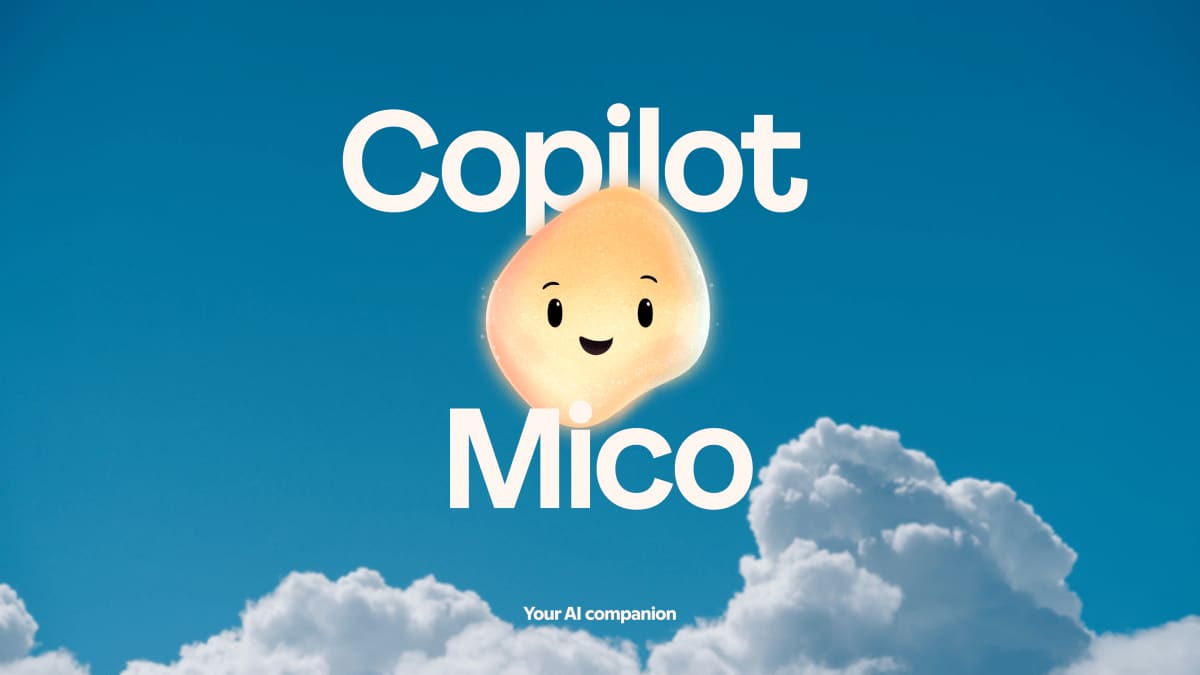
The cuts extend to whimsical elements like Mico, an animated floating blob that served as Copilot's mascot. Mico's design echoed Clippy, the infamous Office assistant from the 1990s, but failed to resonate with users who preferred direct interaction over anthropomorphized characters. Its removal underscores a broader shift away from novelty toward utility.
Files created in the standalone Copilot app will migrate to OneDrive, and Microsoft has warned that some features may temporarily vanish during the transition period. The company frames the consolidation as an effort to deliver a "simpler, more cohesive experience," language that doubles as an admission that the current state is neither.
Why Fragmentation Failed
Microsoft's original Copilot architecture reflected an enterprise software mindset: segment products by audience, create distinct SKUs, and upsell based on feature sets. That logic works for productivity suites where IT departments control procurement and users have little choice. It breaks down in consumer AI, where switching costs are negligible and alternatives are a browser tab away.
The decision to maintain separate consumer and business apps likely stemmed from Microsoft's organizational structure, where different divisions own consumer services and enterprise solutions. But users do not experience AI assistance through the lens of org charts. A knowledge worker drafting an email at 9 a.m. and planning a vacation at noon expects a single tool that understands context across both domains. By forcing users to toggle between apps, Microsoft introduced friction its competitors avoided.
The elimination of experimental features like Copilot Labs and AI-generated podcasts also reflects a maturation in how the company approaches innovation. Labs-style environments work when a product has achieved product-market fit and can afford to explore adjacencies. Copilot had not yet secured that foundation. Spreading engineering resources across speculative bets diluted focus on core conversational quality, latency, and accuracy, the dimensions where ChatGPT and Claude have set user expectations.
The Enterprise Calculation
For paying Microsoft 365 Copilot subscribers, the transition is less disruptive. Researcher, the replacement for consumer-facing Deep Research, will continue to offer multi-source synthesis and citation-backed outputs tailored for business contexts. Microsoft's enterprise AI strategy remains anchored in Office integration, where Copilot can surface insights from emails, documents, and calendar data that standalone consumer models cannot access.
But even in the enterprise, the consolidation signals a retreat from ambition. Microsoft initially positioned Copilot as a platform that could span everything from lightweight chat to complex workflow automation. The current pullback suggests the company is narrowing its aperture to scenarios where it has durable advantages: deep hooks into Microsoft 365 data, compliance frameworks that meet enterprise security requirements, and long-term volume licensing agreements that lock in customers.
That defensive posture contrasts with OpenAI's recent enterprise push, which has emphasized API flexibility and model customization, and Anthropic's focus on long-context windows that enable entire codebases or legal document sets to be analyzed in a single session. Microsoft's differentiation increasingly hinges on integration rather than model capability, a reasonable strategy but one that cedes the high ground in raw AI performance.
What the Market Rewards
The broader lesson from Microsoft's consolidation is that the generative AI market, at least in its current form, rewards simplicity and speed over feature breadth. Users want a single, fast interface that handles the majority of tasks well. They do not want to learn multiple apps, navigate feature hierarchies, or guess which tool is appropriate for a given query.
This dynamic has implications beyond Microsoft. Startups building specialized AI applications, whether for legal research, customer support, or creative work, face pressure to demonstrate that their vertical focus delivers enough value to justify yet another tool in a user's workflow. Many will struggle with that threshold. The companies that survive will either integrate deeply into existing workflows, the way Copilot embeds in Office, or deliver step-function improvements in accuracy or speed that generalist models cannot match.
For now, Microsoft's consolidation is a necessary course correction. Whether it arrives early enough to position Copilot as a credible alternative to ChatGPT and Claude will depend on execution over the next twelve months: model quality, response latency, user retention, and the ability to demonstrate clear ROI for enterprise customers. The company has the distribution and capital to remain a player, but it no longer has the luxury of assuming users will tolerate complexity in exchange for the Microsoft brand.