Mathematics Faces Its Existential Question as AI Solves Decades-Old Proofs
Field Medal laureates are soul-searching as machine intelligence claims territory once reserved for human intuition, raising questions about what mathematicians will do next
The Unthinkable Milestone
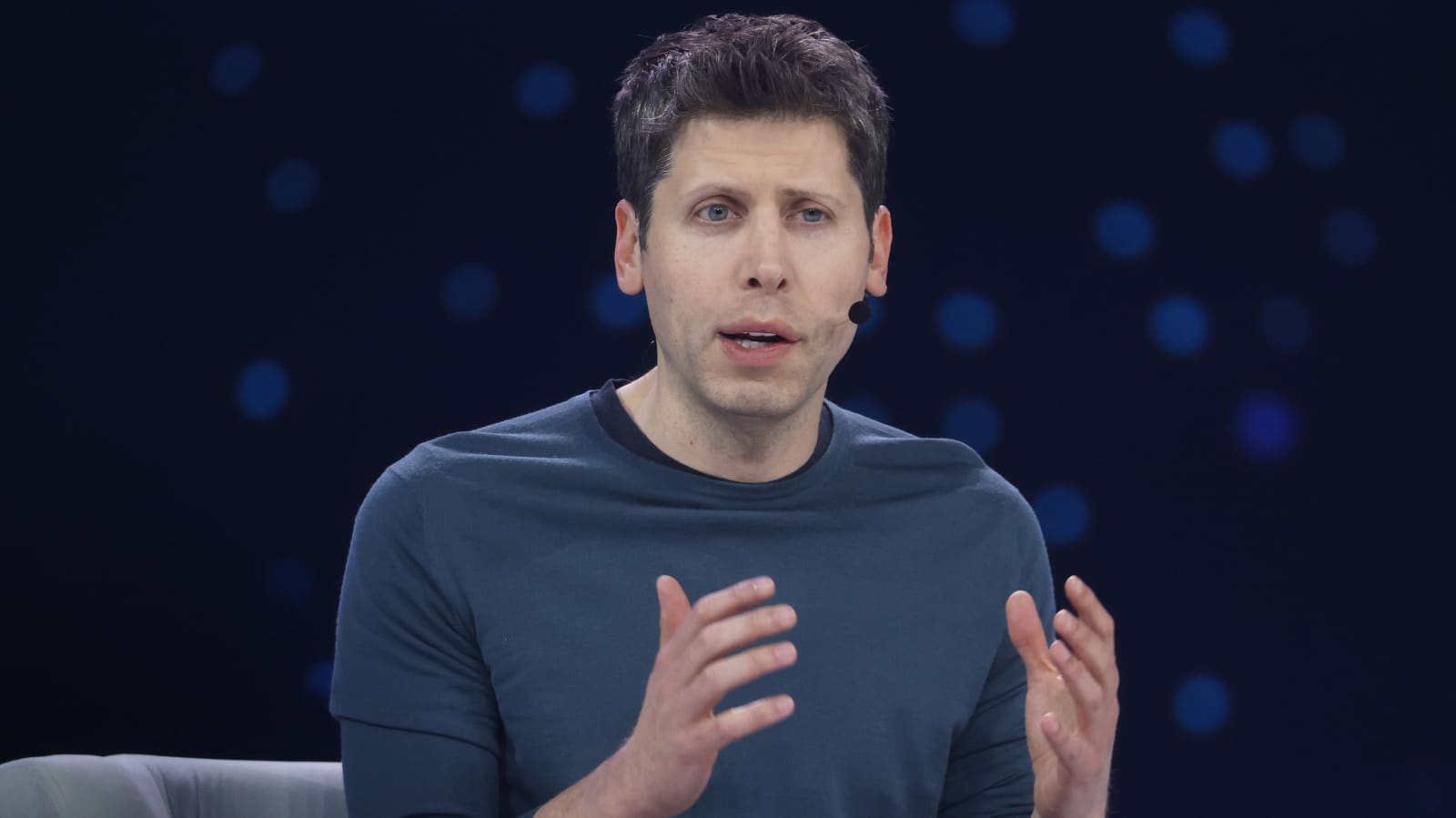
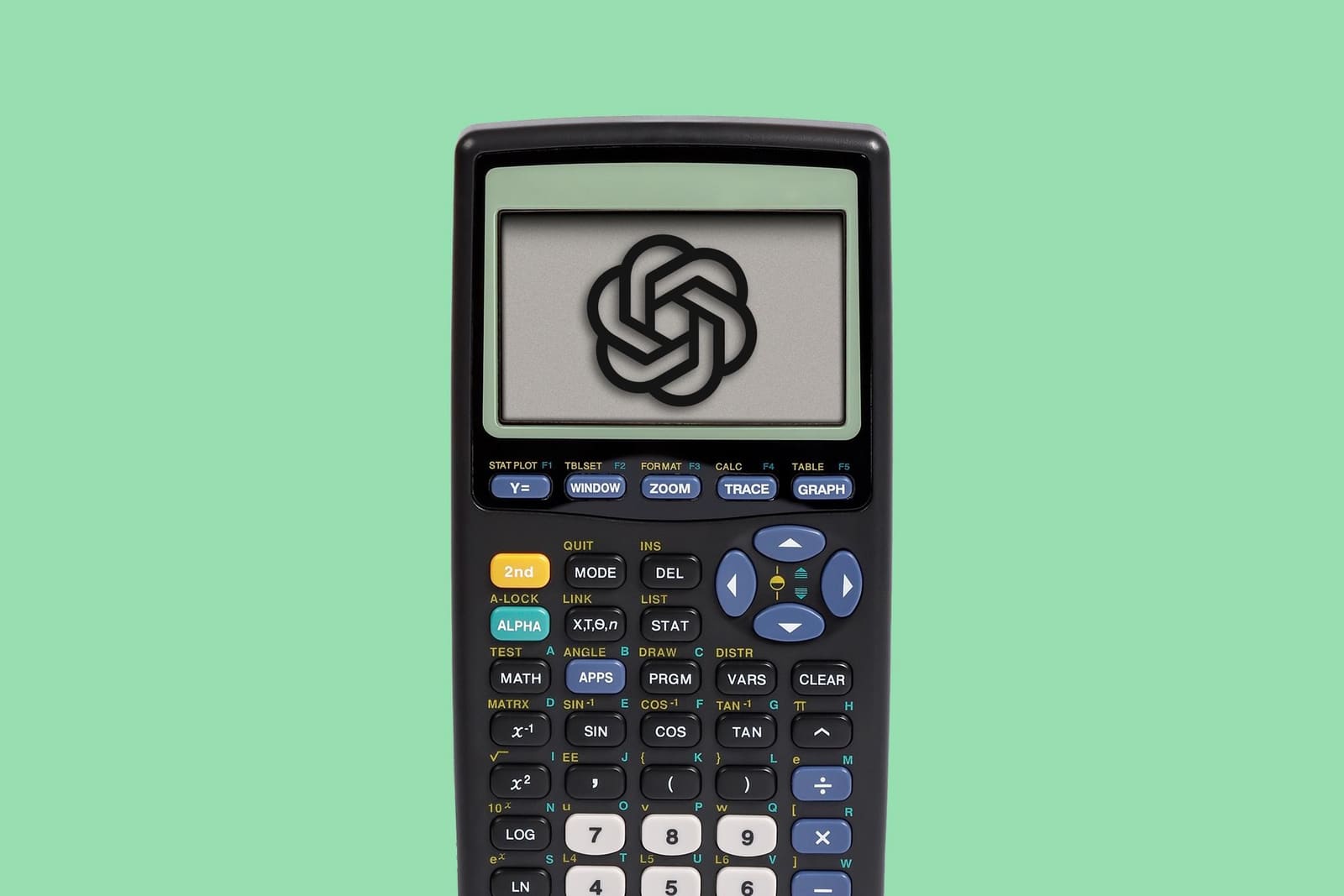
James Maynard, a University of Oxford mathematician and Fields Medal recipient, describes the past twelve months as a period of professional introspection unlike any other in his career. The trigger: OpenAI's announcement that its systems had produced valid solutions to ten longstanding mathematical challenges, several of which had resisted human attempts for decades.
At DailyTechWire, we've tracked AI progress across drug discovery, protein folding, and materials science. Mathematics represents something different. Unlike those domains where AI accelerates experimentation or pattern recognition in messy biological data, pure mathematics trades in absolute proof. A theorem is either correct or it isn't. There's no room for "good enough" or probabilistic confidence intervals. When a machine crosses that threshold, it doesn't just assist human mathematicians - it competes with them on their own terms.
A Discipline Built on Slowness
Mathematics has historically moved at a glacial pace by tech industry standards. Proving the Poincaré conjecture took a century. Andrew Wiles spent seven years in near-isolation working on Fermat's Last Theorem. The culture rewards depth, rigor, and the kind of sustained contemplation that doesn't map neatly onto quarterly roadmaps or funding cycles.
That temporal rhythm is now under pressure. Generative models trained on mathematical corpora - papers, proofs, textbooks, arXiv preprints - learn structural patterns in logical argumentation. They don't "understand" mathematics the way humans claim to, but they can navigate proof space with increasing fluency. The ten problems OpenAI highlighted weren't incremental exercises. They represented genuine gaps in human knowledge, the kind that build reputations and anchor tenure cases.
The implications cut deeper than workflow efficiency. If machines can generate novel proofs, what intellectual territory remains uniquely human? Maynard's soul-searching reflects a broader anxiety rippling through departments in Cambridge, Princeton, and the Indian Institutes of Technology. Mathematics has always prided itself on being the most abstract, the least automatable of disciplines. That self-conception is now negotiable.
What AI Actually Does in Proof Generation
Current systems don't yet possess general mathematical reasoning. They excel at specific proof strategies: combinatorial search, symbolic manipulation, pattern-matching across known lemmas. The breakthroughs OpenAI announced likely involved problems where those techniques suffice, domains like number theory, combinatorics, or algebraic topology where formal methods have gained traction.
Human mathematicians often describe intuition as essential, the ability to sense which approach might work before formal verification. Machine systems substitute exhaustive exploration for intuition. They can test millions of proof branches overnight, discarding dead ends and surfacing candidates that satisfy formal verification tools like Lean or Coq. The result is valid mathematics, even if the path to discovery feels alien.
This division of labor mirrors developments in other technical fields. In chip design, AI now handles floor-planning tasks that once required senior engineers. In legal research, models surface case precedents faster than associates. Mathematics is simply the latest domain where brute computational capacity reshapes what humans need to contribute.
The Crisis of Purpose
For early-career mathematicians, the shift arrives at a precarious moment. PhD timelines already stretch five to seven years. Postdoc positions are scarce. Tenure-track jobs in Asia-Pacific institutions have grown more competitive as universities in Seoul, Singapore, and Shanghai raise standards. If AI can solve the problems that would have anchored a dissertation or first major paper, what does a young researcher optimize for?
One response is to pivot toward questions machines struggle with: problems requiring deep contextual understanding, cross-domain synthesis, or entirely new frameworks that existing training data doesn't cover. Another is to become expert at collaborating with AI systems, framing problems in ways that maximize machine contribution while reserving conceptual leaps for humans.
Neither path offers the clarity previous generations enjoyed. The social contract of academic mathematics - spend years mastering a subfield, make incremental contributions, eventually achieve recognition - assumes human labor remains the bottleneck. When that assumption breaks, the entire incentive structure wobbles.
Regional Responses and Compute Access
Asia's mathematics communities are watching these developments with particular attention. China has invested heavily in formal methods and automated reasoning, viewing mathematical AI as both a research frontier and a strategic asset. Institutions in Beijing and Hangzhou are integrating proof assistants into graduate curricula faster than their Western counterparts.
India's research ecosystem, traditionally strong in pure mathematics, faces a different calculus. Access to frontier compute remains uneven. While IITs and TIFR have partnerships with cloud providers, smaller universities lack the infrastructure to experiment with large-scale proof generation. This creates a bifurcated landscape: elite institutions can train students in AI-augmented mathematics, while others continue traditional methods, risking a widening capability gap.
Singapore and South Korea are pursuing hybrid models, funding collaborations between mathematics departments and AI labs. The goal is to position local researchers at the intersection, contributing to both algorithmic development and mathematical discovery. Whether this strategy produces sustainable career paths remains an open question.
The Epistemological Shift
Beyond career logistics lies a deeper philosophical question: does it matter who - or what - produces mathematical knowledge? Some mathematicians argue that the beauty of their field lies in human creativity, the elegance of a proof that reveals unexpected connections. If machines generate correct but aesthetically uninspiring proofs, does the discipline lose something essential?
Others counter that mathematics is about truth, not authorship. If AI accelerates the discovery of new theorems, expands the frontier of what's known, and enables applications in physics or cryptography, the source of those insights is secondary. This pragmatic view aligns with how other sciences have absorbed computational tools: initial resistance, then gradual acceptance, then dependency.
Maynard's soul-searching suggests the profession hasn't reached consensus. The Fields Medal, awarded every four years to mathematicians under 40, celebrates human brilliance. What does that prize mean in an era when the most impressive results might emerge from GPU clusters? Do we create new categories, new forms of recognition, or do we accept that machines are simply another tool, no different in principle from computer algebra systems or proof assistants?
What Comes Next
The next twelve months will clarify whether OpenAI's announcement represents an inflection point or an isolated milestone. If other labs replicate and extend the results, if AI-generated proofs begin appearing in top journals, if hiring committees start valuing machine collaboration skills over solo technical virtuosity, the discipline will transform rapidly.
Alternatively, the ten problems might represent a ceiling - low-hanging fruit in a vast orchard where the hardest questions still require human ingenuity. The history of AI is littered with overhyped breakthroughs that failed to generalize. Mathematics might prove more resistant than current enthusiasm suggests.
For Maynard and his peers, the uncertainty is itself the challenge. Planning a research agenda, advising doctoral students, allocating scarce mental energy - all of these depend on assumptions about what problems will remain interesting and tractable five years out. When those assumptions shift beneath your feet, soul-searching becomes not indulgence but necessity.
At DailyTechWire, we'll continue monitoring how Asia's mathematics communities navigate this transition. The region's combination of strong technical talent, government investment in AI, and cultural emphasis on STEM education makes it a natural laboratory for these experiments. The answers emerging from Seoul, Bengaluru, and Hangzhou may shape the global discipline's future as much as any proof, human or machine-generated.