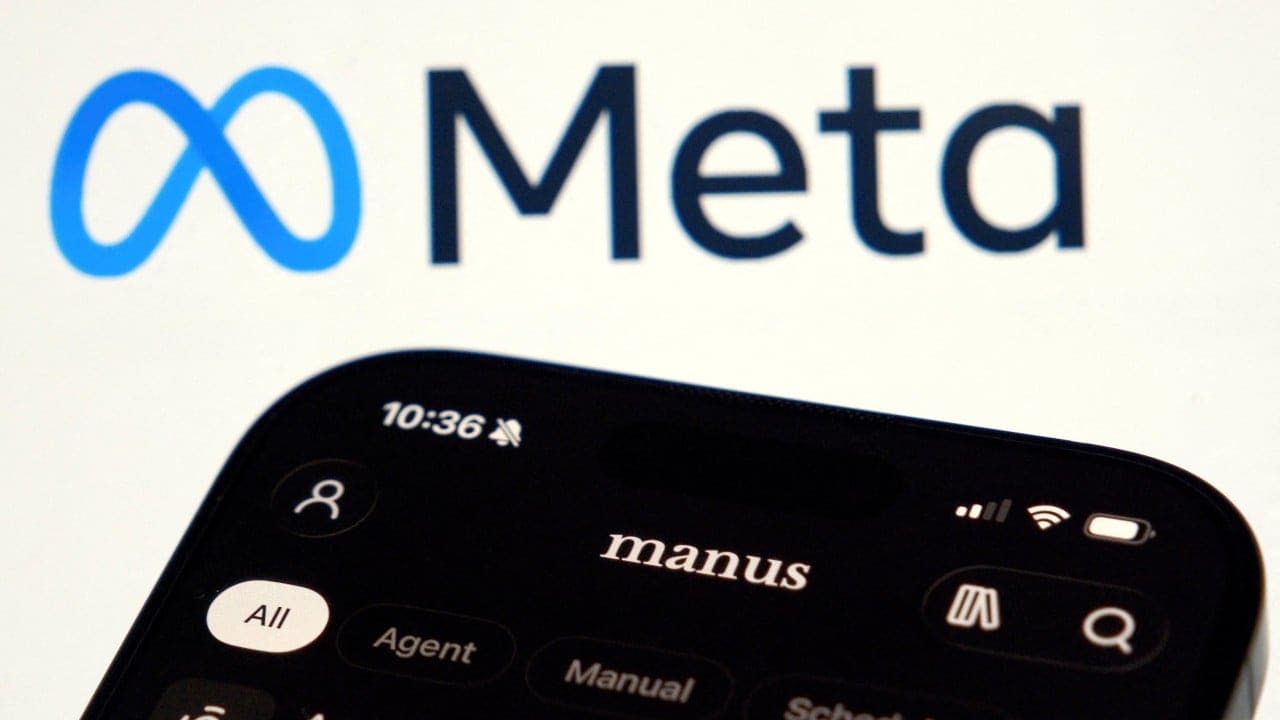
Chinese AI Lab Manus Charts Independent Path After Beijing Blocks Meta Acquisition
The $2 billion deal's collapse marks the latest flashpoint in U.S.-China tech decoupling, leaving the startup to rebuild momentum as a standalone agent research lab
A Deal Undone by Regulatory Veto
Four months after Chinese regulators killed a $2 billion acquisition by Meta Platforms, AI startup Manus confirmed Tuesday it has relaunched as an independent venture. The founding team will remain at the helm of what the company now describes as an "independent agent lab," signaling a strategic pivot away from the Silicon Valley orbit and back toward homegrown ambitions.
The collapse of the Meta transaction, announced in a brief blog post on the Manus website, closes a chapter that exposed the widening fissures in cross-border tech dealmaking. At DailyTechWire, we've tracked a steady uptick in regulatory interventions across Beijing, Brussels, and Washington - Manus is simply the latest casualty in a landscape where billion-dollar valuations no longer guarantee a smooth exit.
Why Beijing Said No
While neither Manus nor Chinese authorities disclosed the exact rationale for blocking the deal, the decision fits a familiar pattern. Beijing has grown increasingly protective of AI talent and intellectual property, especially when the acquirer is a U.S. tech giant with deep pockets and global ambitions. Export controls, data sovereignty concerns, and competition policy all likely played a role.
For Meta, the acquisition would have been a rare bet on Chinese-founded AI talent at a time when Washington's own export restrictions make collaboration thornier by the quarter. The company has poured tens of billions into its Reality Labs division and large language model initiatives, and a $2 billion price tag for a promising agent-focused team would have been modest by comparison.
Yet the regulatory veto underscores a hard truth: capital and capability no longer flow freely across the Pacific. Startups building sensitive AI infrastructure now face a binary choice - align with a domestic ecosystem or risk being caught in the regulatory crossfire.
What Manus Does, and Why It Mattered to Meta
Manus specializes in autonomous agent systems, a subfield of AI focused on software that can plan, reason, and execute multi-step tasks with minimal human oversight. Think of it as the layer above foundation models - where GPT or Llama provides the language understanding, Manus-style agents would handle the orchestration, memory, and real-world integration.
That capability is precisely what Meta needs as it races to embed AI into WhatsApp, Instagram, and its metaverse ambitions. Autonomous agents could power everything from customer service bots to virtual assistants that actually get things done, rather than just answering questions.
The startup's team, many of whom hold advanced degrees from top-tier Chinese universities and have published extensively on reinforcement learning and multi-agent systems, represented a rare concentration of expertise. Losing that acquisition means Meta will need to build or buy elsewhere - and the talent pool willing to relocate or work under U.S. jurisdiction is shrinking.
The Independent Lab Model
In its blog post, Manus framed the return to independence as an opportunity rather than a setback. The "independent agent lab" positioning suggests the company will focus on research and development, potentially licensing its technology to multiple partners rather than being absorbed into a single corporate parent.
This model has precedent. OpenAI, Anthropic, and Cohere all operate as standalone entities that sell API access and enterprise licenses, preserving strategic flexibility while still capturing value from their research. For Manus, the challenge will be securing fresh capital and customers in a market where U.S. cloud providers and Chinese hyperscalers are both racing to own the agent stack.
The company has not disclosed whether it raised a bridge round or is operating on prior funding. Given the high burn rate typical of cutting-edge AI labs - compute costs alone can run into millions per quarter - the clock is ticking.
Implications for Cross-Border AI Investment
The Manus episode is a data point in a broader trend. Venture investors and strategic acquirers are recalibrating their Asia playbooks as regulatory risk becomes harder to price. Term sheets now routinely include clauses tied to government approvals, and some firms are simply avoiding cross-border deals altogether.
We've seen similar dynamics in semiconductors, where export controls have forced companies to maintain separate product lines for different markets. AI is heading in the same direction, with distinct ecosystems emerging around U.S., Chinese, and increasingly European regulatory frameworks.
For founders, the lesson is stark: building for a global exit is no longer a safe assumption. Startups in sensitive categories - AI, quantum, biotech - need contingency plans that account for regulatory vetoes, and investors need to model those scenarios into their return expectations.
What Comes Next
Manus faces a steep climb. The company must rebuild momentum without the distribution, capital, and brand halo that a Meta acquisition would have provided. It will compete for talent with Alibaba, Tencent, ByteDance, and a growing roster of well-funded Chinese AI labs, all of whom are hiring aggressively in the agent space.
At the same time, the regulatory environment that killed the Meta deal may also create opportunities. If Beijing wants to demonstrate that Chinese AI startups can thrive independently, Manus could find itself the beneficiary of favorable policies, grants, or partnerships with state-backed entities.
The broader question is whether the era of mega-acquisitions in AI is over, or simply paused. For now, Manus is betting it can chart a third way - independent, research-focused, and unencumbered by the geopolitical baggage that comes with a Silicon Valley parent. Whether that bet pays off will depend as much on Beijing's next moves as on the quality of the code its engineers write.