Lucid Motors Faces Market Panic Over Bankruptcy Speculation
The EV maker's stock plunged more than 50% before recovering, as management rejects reports of Chapter 11 planning and defends its liquidity position
The Market Convulsion
Lucid Motors experienced its steepest single-day stock decline on Tuesday, with shares dropping more than 50% at the session's nadir before partially recovering to close 14% down at $4.72. The collapse followed unverified claims from an electric vehicle blog that the luxury EV manufacturer was exploring either Chapter 11 bankruptcy protection or a take-private transaction.
Nick Twork, Lucid's chief communications officer, issued a categorical denial. The company maintains sufficient liquidity to sustain operations well into the following year, according to its most recent quarterly disclosures, and has not convened any special board committee to evaluate restructuring scenarios.
At DailyTechWire, we've tracked the turbulent trajectories of capital-intensive EV startups across multiple funding cycles, and Lucid's current predicament illustrates a recurring pattern: production scale remains elusive even when the underlying technology earns industry praise.
The AlixPartners Factor
The speculation centered partly on Lucid's engagement with AlixPartners, a consulting firm that has become the de facto crisis manager for struggling electric vehicle companies. Twork confirmed that AlixPartners is assisting with operational strengthening but emphasized the firm has not recommended bankruptcy to management or the board.
The consulting relationship carries symbolic weight in the EV sector. AlixPartners previously worked with Lordstown Motors after its leadership resigned in 2021; that company eventually dissolved despite an attempted partnership with Foxconn. Faraday Future similarly brought in the consultancy following an internal investigation in 2022, yet continues to struggle with execution and credibility.
For investors watching Lucid, the presence of a turnaround specialist signals operational stress, even if bankruptcy remains off the table. The firm's track record suggests companies seek its counsel only after conventional management approaches have proven insufficient.
Delivery Numbers Tell the Real Story
Lucid delivered 3,953 vehicles in the second quarter of this year, barely exceeding the prior year's figure for the same period. The stagnant volume underscores the company's persistent challenge: its Air sedan boasts exceptional range and engineering specifications, yet has failed to attract buyers at the necessary scale.
Earlier this month, Lucid announced it would eliminate a second production shift at its Arizona manufacturing facility, aligning capacity with anticipated demand. The move accompanied layoffs affecting more than 2,000 employees in 2026, part of a broader restructuring under new CEO leadership.
The mismatch between technical capability and market traction reflects broader headwinds in the luxury EV segment. Tesla maintains pricing power and brand loyalty; Porsche and Mercedes-Benz offer established prestige. Lucid entered a crowded field without the scale economies or distribution networks that sustain profitability at lower volumes.
The Robotaxi Pivot
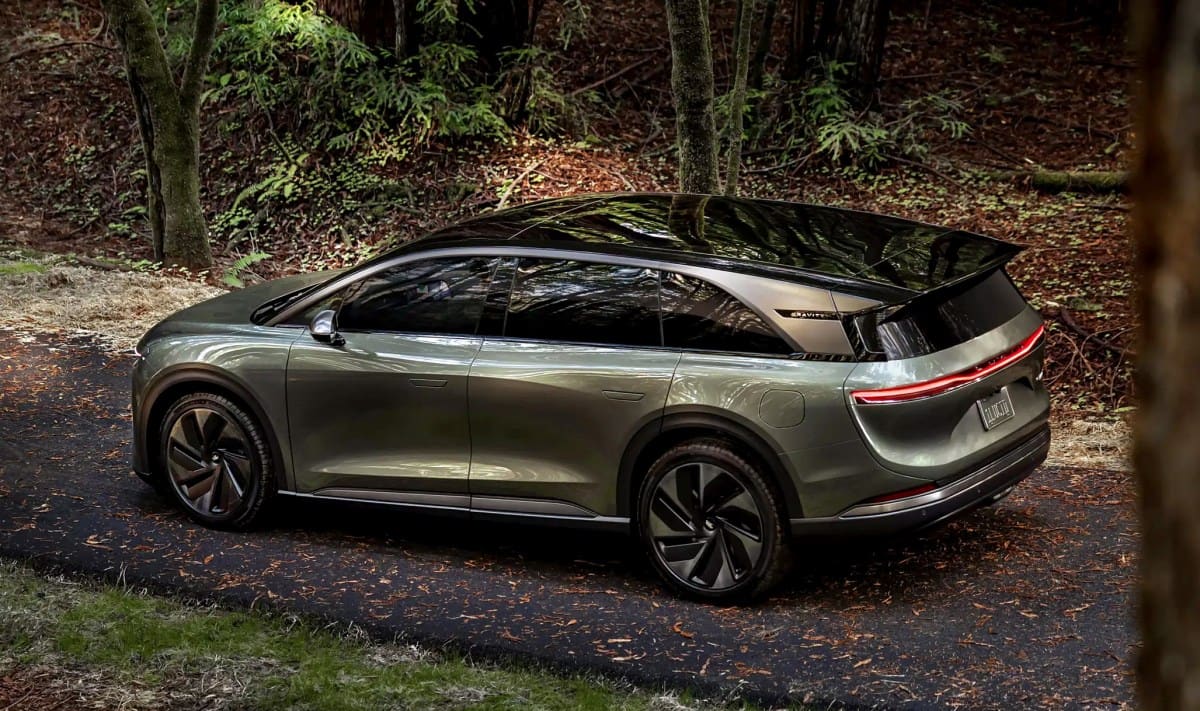
Lucid is simultaneously pursuing a partnership with Uber and autonomous vehicle technology company Nuro to launch a luxury robotaxi service by year-end. Uber has committed to acquiring at least 35,000 Nuro-equipped Lucid vehicles over the coming years: 10,000 Gravity SUVs and 25,000 units based on the forthcoming midsize platform.
The robotaxi strategy represents both opportunity and risk. If executed successfully, it provides a high-volume offtake agreement that could stabilize production schedules and improve unit economics. Fleet sales typically carry lower margins than retail, but they offer predictability.
Yet the timeline is aggressive. Lucid must ramp production of the Gravity SUV, which is expected to launch later this year as a more affordable entry point than the Air sedan. Simultaneously, it must integrate Nuro's autonomous hardware and software while meeting regulatory and safety requirements for a commercial robotaxi deployment.
The partnership also exposes Lucid to execution risk beyond its control. Nuro's technology must perform reliably in diverse urban environments, and Uber's operational infrastructure must scale to manage a luxury autonomous fleet. Any delays or technical shortcomings could jeopardize the volume commitments that underpin Lucid's financial projections.
Liquidity and the Countdown Clock
Lucid's assertion that it holds sufficient liquidity into next year is both reassuring and sobering. The timeframe implies the company must achieve meaningful revenue growth or secure additional capital within approximately 12 to 18 months.
The capital intensity of automotive manufacturing leaves little room for margin compression or demand shortfalls. Lucid's cash burn rate, while improved from earlier periods, remains substantial given its production volumes. Each quarter without significant delivery growth shortens the runway.
The company's largest shareholder, Saudi Arabia's Public Investment Fund, has provided repeated capital infusions, but investor patience is finite. The robotaxi partnership with Uber may have been structured partly to demonstrate a credible path to volume scale, making continued financial support more palatable.
Restructuring Without Bankruptcy
Lucid's leadership changes and workforce reductions signal a company attempting to right-size operations ahead of a critical product launch. The Gravity SUV and subsequent midsize platform represent the company's best opportunity to access broader market segments where price sensitivity and practicality outweigh the Air sedan's performance credentials.
The challenge lies in execution velocity. Lucid must compress the timeline between product launch and volume production while maintaining quality standards and managing supplier relationships under financial pressure. The company's denial of bankruptcy consideration is credible given its stated liquidity position, but the margin for error has narrowed considerably.
For the broader EV startup ecosystem, Lucid's trajectory serves as a reminder that technological excellence alone does not guarantee commercial success. Capital markets have grown less forgiving of companies that cannot demonstrate a clear path to sustainable unit economics. The next 12 months will determine whether Lucid can translate its engineering prowess into a viable business model or joins the growing list of EV ventures that fell short of their ambitions.