LimX Dynamics Secures $200 Million to Push Humanoid Autonomy
The Shenzhen-based robotics firm hits $2.2 billion valuation as European investors back its real-world data strategy
Funding Milestone in China's Robotics Push
LimX Dynamics announced it has closed a funding round worth nearly $200 million, valuing the Shenzhen-based robotics startup at 15 billion yuan ($2.2 billion). The capital injection signals continued investor appetite for humanoid robotics despite broader market caution around Chinese tech ventures.
What sets this round apart is the participation of European investors, a notable shift at a time when cross-border capital flows into Chinese AI and robotics startups have faced headwinds from regulatory scrutiny and geopolitical friction. The company plans to channel the funds into developing robots capable of performing complex tasks with minimal human oversight, a capability gap that remains the industry's central challenge.
At DailyTechWire, we've tracked dozens of humanoid robotics announcements across the region over the past eighteen months. Most have focused on hardware milestones or partnership theatrics. LimX's emphasis on autonomy through real-world data collection suggests a more pragmatic path, one that acknowledges the yawning distance between controlled demos and operational deployment.
The Autonomy Bottleneck
Humanoid robots can walk, grasp objects, and navigate structured environments under laboratory conditions. The harder problem is generalization: teaching a robot to handle the variability of real spaces, unexpected obstacles, edge cases in lighting or surface texture, and the thousand small adjustments humans make without thinking.
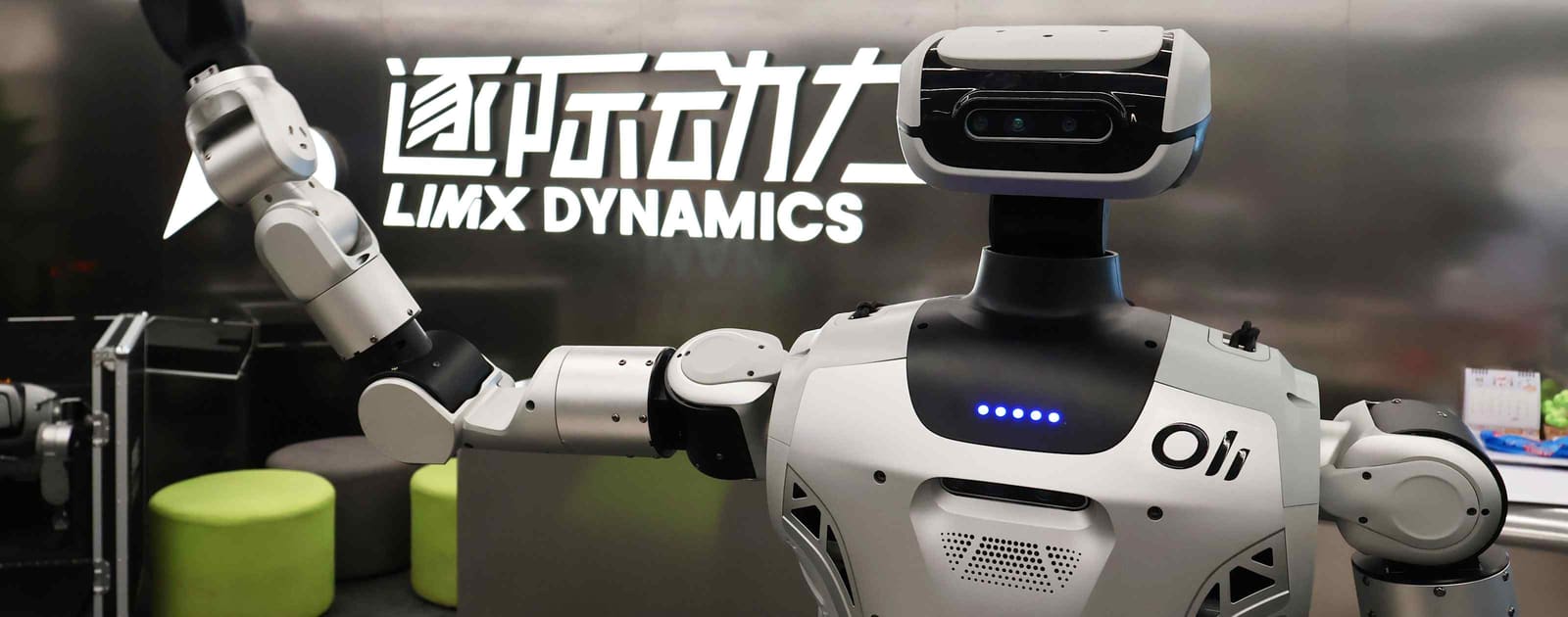
LimX has positioned its humanoid platform, known as Oli, as a testbed for this kind of learning. The company's strategy hinges on deploying robots in diverse settings to gather behavioral data, then using that corpus to refine motion planning, perception models, and task execution algorithms. This mirrors the approach taken by autonomous vehicle developers, who discovered that edge-case data matters far more than raw mileage.
The $200 million war chest gives LimX runway to scale that data flywheel. Building and maintaining a fleet of robots in the field is capital-intensive, and the timeline to revenue remains uncertain. Investors are effectively betting that whoever accumulates the richest dataset first will command a structural moat in the humanoid space.
Europe's Bet on Chinese Robotics
European participation in this round is worth unpacking. Over the past two years, venture flows from Europe into Chinese AI startups have slowed, driven by tighter scrutiny of dual-use technology and concerns about supply chain dependencies. Robotics sits at the intersection of AI, sensors, and manufacturing, all domains subject to export controls and investment screening.
Yet humanoid robotics for industrial and logistics applications occupies a gray zone. The technology is not inherently military, and the commercial upside in aging societies with tight labor markets, such as Germany, Italy, and parts of Eastern Europe, is substantial. European investors may see LimX as a hedge: access to cutting-edge robotics development without the political friction of directly funding Chinese AI infrastructure or semiconductor plays.
For LimX, European capital brings more than money. It opens doors to pilot deployments in markets with different regulatory environments, labor costs, and use cases. A robot optimized for a Shenzhen warehouse may need different tuning for a logistics hub in Rotterdam or a manufacturing floor in Milan. Geographic diversity in deployment accelerates the learning curve.
Shenzhen's Robotics Ecosystem
LimX operates out of Shenzhen, a city that has become the de facto capital of Chinese hardware innovation. The region's strengths in electronics manufacturing, supply chain density, and rapid prototyping give robotics startups an edge in iteration speed. Components that might take weeks to source elsewhere can be procured in days, sometimes hours.
This ecosystem advantage is compounding. As more robotics firms cluster in Shenzhen, specialized suppliers emerge: custom actuator manufacturers, sensor integrators, machine shops optimized for low-volume, high-mix production. LimX can tap into this network to iterate on hardware designs faster than competitors based in regions without equivalent infrastructure.
But Shenzhen's robotics boom also means fierce local competition. At least a dozen well-funded humanoid robotics startups are racing to similar milestones, and many have backing from state-linked investment vehicles or large tech conglomerates. LimX's ability to attract European capital suggests it has differentiated itself, either through technical performance, team pedigree, or commercial traction.
The Real-World Data Imperative
The emphasis on real-world data is not just a technical choice; it reflects a broader shift in how AI-driven robotics companies are thinking about product-market fit. Early humanoid projects often optimized for viral demos: robots doing backflips, dancing, or navigating obstacle courses. These showcases generated buzz but did little to solve the mundane, high-value problems that justify deployment costs.
LimX's focus on autonomy in complex tasks, such as handling irregular objects, adapting to dynamic environments, or collaborating with human workers, speaks to the demands of actual customers in logistics, manufacturing, and facilities management. These are environments where a robot must handle uncertainty gracefully, recover from minor failures without human intervention, and operate reliably over long shifts.
Gathering data in these settings is expensive and operationally complex. Robots break. Sensors drift. Software updates introduce regressions. But the data collected under these conditions is orders of magnitude more valuable than synthetic training sets or lab trials. It captures the long tail of edge cases that determine whether a robot is a useful tool or an expensive science project.
Market Positioning and Path to Revenue
LimX has not disclosed specific revenue figures or customer commitments, which is typical for early-stage robotics companies still in the pilot phase. The $2.2 billion valuation implies investor confidence in a large addressable market and a credible path to capturing share, but it also raises the stakes. The company will need to demonstrate commercial traction within the next funding cycle to justify continued growth-stage investment.
Potential revenue streams include direct sales of humanoid platforms to enterprise customers, robotics-as-a-service models where customers pay per task or per shift, and licensing of autonomy software to other hardware manufacturers. The latter could be particularly lucrative if LimX's data advantage translates into superior performance that other platforms cannot easily replicate.
Competitive pressure will come from multiple directions. Established industrial robotics firms are adding humanoid form factors to their portfolios. Big tech companies in China and the United States are investing heavily in robotics research. And a cohort of well-funded startups, many with similar origin stories and technical approaches, are vying for the same pilot opportunities and talent.
Forward Outlook
The $200 million round gives LimX the resources to execute on its autonomy roadmap, but the hard work is just beginning. Scaling real-world deployments, building reliable hardware, and tuning models for diverse tasks are engineering challenges that resist shortcuts. The robotics graveyard is full of companies that raised large rounds, generated impressive demos, and then foundered on the operational realities of deployment.
What LimX has in its favor is timing. Labor shortages in key industries are acute, regulatory attitudes toward automation are softening, and the cost of sensors and compute is falling. If the company can translate its data strategy into measurable performance gains, it will have a story that resonates with both customers and the next round of investors.
For now, the question is execution. Can LimX turn capital into capability, and capability into revenue, before the funding cycle turns or competitors close the gap? The answer will shape not just the company's trajectory but the broader narrative around humanoid robotics in Asia and beyond.