Lenovo Responds to Legion Go Failures as Repair Costs Mount
After weeks of silence, the PC giant offers troubleshooting guidance while sidestepping the question of free repairs for firmware-damaged handhelds
The Damage Surface
Three weeks. That's how long it took for Lenovo to address a growing chorus of complaints from Legion Go owners who found themselves holding expensive paperweights after routine software updates. The silence broke late Sunday with a statement that acknowledged the problem but offered little clarity on who would bear the financial burden of fixes.
At DailyTechWire, we've tracked the rising cost of firmware fragility across consumer hardware categories. What began as isolated Reddit posts about bricked Legion Go units has crystallized into a case study in vendor accountability when over-the-air updates go catastrophically wrong.
The repair bills landing in customers' inboxes tell the story in sharp relief: nearly $300 for hardware that failed not through user error or physical damage, but through the manufacturer's own software delivery pipeline. Lenovo's response, delivered through communications director Jeff Witt, amounts to extended troubleshooting advice and a referral to customer support channels.
A Tale of Two Hardware Makers
The contrast with Framework's approach is instructive. When the modular PC startup discovered its own software update had rendered devices inoperable, it committed to covering repair costs outright. The decision reflected both the company's positioning as a consumer-friendly alternative in the PC market and a pragmatic calculation about reputational risk in a category where trust compounds over product generations.
Lenovo operates at a different scale and with different margin pressures. The Legion Go competes in the crowded handheld gaming segment against Valve's Steam Deck, ASUS's ROG Ally, and a growing roster of Windows-based portables from Chinese manufacturers. Pricing is aggressive, distribution is global, and the customer support infrastructure spans dozens of markets with varying warranty frameworks.
But scale cuts both ways. A botched firmware update that bricks even a small percentage of devices becomes a four-figure headcount problem when your install base runs into six digits. The economic logic of absorbing repair costs shifts when every $300 bill multiplied across thousands of units starts threatening quarterly accessory margins.
What Lenovo Is Saying, and Not Saying
The statement Lenovo provided stops short of acknowledging a systemic firmware defect. Instead, it frames the issue as an awareness exercise: the company knows "some" Legion Go devices have exhibited problems, and affected users should attempt an extended power-button hold before escalating to support.
That phrasing matters. "Some" devices suggests an edge case rather than a reproducible failure mode. The troubleshooting step, holding the power button for an unspecified longer duration, implies the issue might be recoverable through user intervention rather than requiring depot-level repair or component replacement.
What the statement does not address: whether Lenovo will waive out-of-warranty repair fees for devices that fail this basic recovery procedure, especially when the root cause traces to a company-distributed update. It does not clarify whether in-warranty units will receive expedited replacement or repair. And it does not explain what went wrong in the update validation process that allowed a bricking-risk build to reach end users.
The Firmware Tightrope
Handheld gaming PCs occupy a particularly treacherous position in the firmware reliability landscape. They combine the thermal constraints of mobile devices with the driver complexity of x86 Windows systems, the power management demands of battery operation with the performance expectations of desktop-class gaming. BIOS and firmware updates in this category often touch multiple subsystems at once: CPU microcode, GPU voltage curves, charging logic, thermal tables.
When an update fails mid-flash or introduces incompatible parameters, recovery paths narrow quickly. Unlike smartphones, which typically include fallback bootloaders and factory restore partitions designed for consumer access, Windows handhelds often require specialized tools or hardware programmers to recover from a bricked state. That's where the $300 bills come from: technician labor, expedited shipping, and in some cases, mainboard replacement when flash memory becomes unrecoverable.
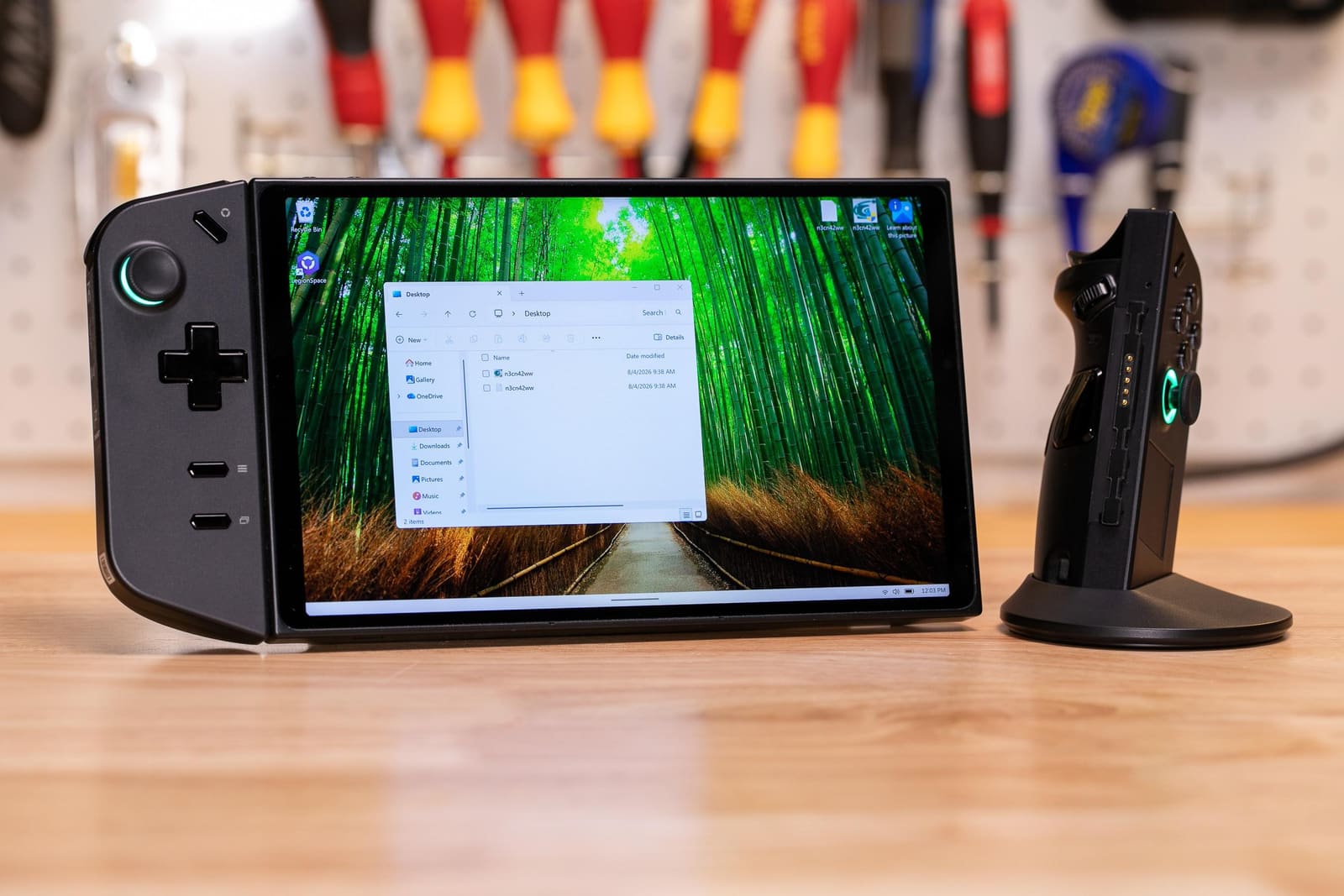
Lenovo's Legion Go launched last year as the company's entry into a segment dominated by Valve's subsidized Steam Deck and ASUS's established ROG brand. Early reviews praised its larger display and detachable controllers but noted software immaturity, particularly around power management and sleep-state reliability. Firmware updates were expected to close those gaps. Instead, at least some updates appear to have introduced new failure modes.
The Support Channel Bottleneck
Directing affected users to contact customer support sounds reasonable until you consider the operational reality. Lenovo's support infrastructure, like most global hardware vendors, operates on tiered escalation models. First-line agents follow scripts and decision trees. Warranty status gets checked. Diagnostic steps get repeated. Escalation to engineering requires supervisor approval.
For a user holding a device that won't power on, that process can stretch across days or weeks. Reddit threads and user forums fill with frustration not just at the initial failure, but at the opacity of the resolution path. Will the repair be covered? How long will it take? Can I get a replacement unit while mine is in depot?
Framework's decision to proactively cover costs short-circuits that entire loop. It's expensive in the short term, but it buys loyalty and defuses the social-media firestorm that can crater a product launch. Lenovo, with deeper pockets but also deeper bureaucracy, appears to be taking a more cautious path: assess each case individually, preserve flexibility, avoid setting a precedent that could be exploited.
Asia's Firmware Quality Question
The issue resonates beyond one product line. Across Asia's booming consumer electronics manufacturing base, from Shenzhen's smartphone workshops to Taipei's motherboard giants, firmware quality assurance remains a persistent friction point. Time-to-market pressures, lean validation budgets, and the complexity of modern hardware/software integration create conditions where updates ship with incomplete testing.
We've seen this pattern repeat: Xiaomi phones bricked by OTA updates in India, ASUS motherboards failing POST after BIOS flashes in Taiwan, Realme devices stuck in bootloops across Southeast Asia. Each incident follows a similar arc: user reports, social media amplification, vendor acknowledgment, case-by-case support, and eventually a patched update that may or may not reach all affected users.
Lenovo's scale and reputation give it more room to weather this storm than a startup would have. But the Legion Go is a halo product, meant to signal the company's gaming credibility and engineering ambition. A botched firmware update that leaves customers holding repair bills undermines both.
What Comes Next
The immediate question for affected Legion Go owners is whether Lenovo will move beyond troubleshooting advice to concrete repair commitments. The longer-term question for the industry is whether firmware update failures will be treated as manufacturing defects, with the accompanying warranty implications, or as operational risks that users and vendors negotiate case by case.
Framework's precedent won't necessarily scale. The company's direct sales model, smaller customer base, and premium positioning give it flexibility that mass-market vendors don't enjoy. But the contrast highlights a gap in consumer protection frameworks that haven't kept pace with the shift to software-defined hardware, where a single update can determine whether a device remains functional or becomes e-waste.
For now, Legion Go owners are left with Lenovo's advice: hold the button longer, then call support. Whether that support will include waived fees and expedited service remains an open question, one that will shape not just this product's trajectory but the broader calculus of trust in a market where firmware updates are both essential and, increasingly, risky.