Kimi K3 Lags Behind Western Models in Cybersecurity Benchmarks
Joint UK-US research reveals Moonshot AI's flagship model trails American counterparts in offensive security capabilities, complicating Washington's narrative on Chinese AI threats
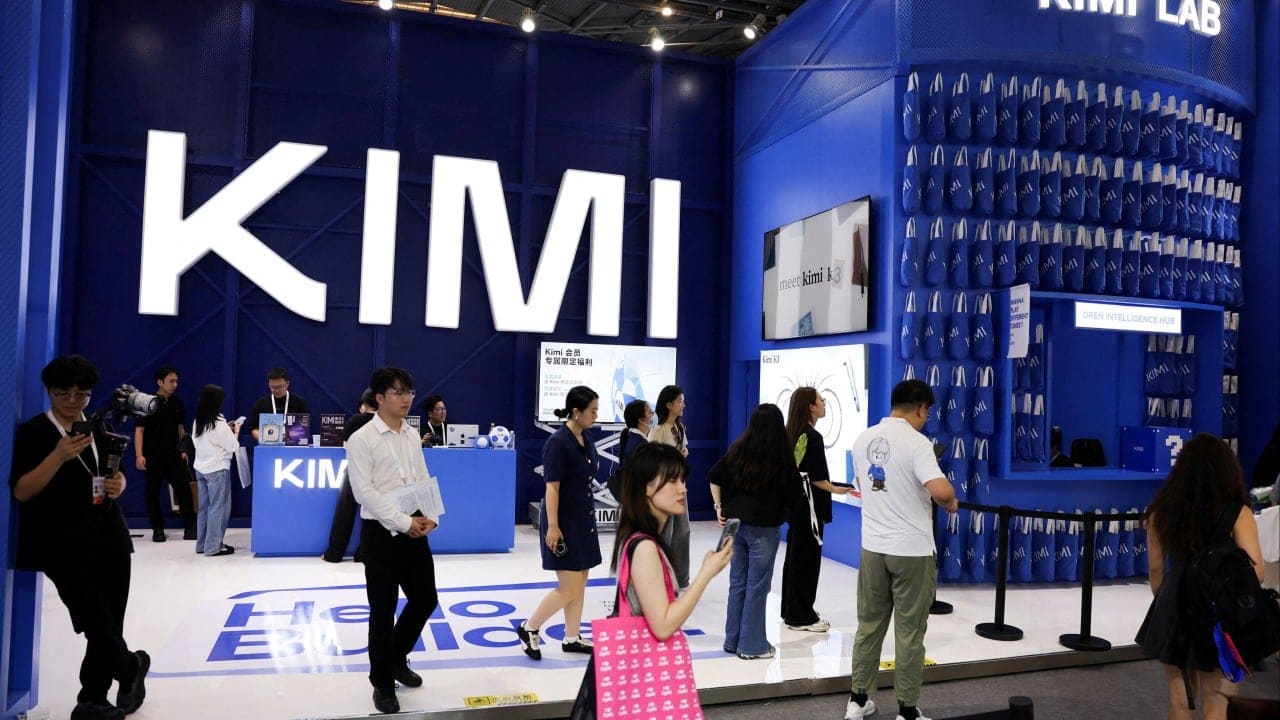
The Performance Gap
Moonshot AI's Kimi K3, widely regarded as China's leading large language model, demonstrates substantially weaker offensive cybersecurity capabilities compared to top-tier American systems. Joint research from UK and US government agencies published this week positions the Chinese model well behind what researchers classify as frontier cyber-capable systems, a finding that cuts against prevailing narratives in Washington about the urgency of the AI competition with Beijing.
The study evaluated Kimi K3 alongside established Western models across a battery of simulated cyberattack scenarios. While the Chinese system showed competence in general language tasks, its performance in security-sensitive operations lagged by a margin researchers described as significant. The gap suggests that technical sophistication in conversational AI does not automatically translate to capabilities in adversarial domains like penetration testing or exploit generation.
At DailyTechWire, we've tracked how Beijing's AI ecosystem has pivoted toward open-weight architectures over the past eighteen months, partly in response to US export restrictions on high-end GPUs. Moonshot AI emerged from that shift as a flagship developer, with Kimi K3 positioning itself as a domestic alternative to GPT-4 and Claude. The cybersecurity findings now add a layer of nuance: raw parameter count and benchmark scores on standard tasks may not capture the full spectrum of model risk.
Context Behind the Controls
Washington has tightened export controls on AI chips and model weights over the past two years, citing dual-use risks and the potential for adversarial actors to weaponize powerful language models. The Biden administration's October 2023 semiconductor rules targeted Nvidia's H100 and A100 GPUs, and the Commerce Department has floated frameworks for licensing certain model architectures deemed capable of facilitating cyberattacks or bioweapon design.
The UK-US research arrives as those policy debates intensify. If China's most capable publicly known model performs poorly on offensive security tasks, the immediate threat calculus shifts. It does not eliminate concern, analysts note, but it does raise questions about where regulatory energy should focus. A model that cannot reliably exploit common vulnerabilities poses a different risk profile than one that can automate zero-day discovery or craft polymorphic malware.
Industry observers in Seoul and Singapore have pointed out that export controls often assume linear capability progression. The Kimi K3 data suggests the landscape is more fragmented. Chinese labs may excel in certain domains while lagging in others, a pattern shaped by training data availability, compute constraints, and the specific engineering choices teams make under resource pressure.
What the Study Measured
The joint government assessment tested models on tasks that mirror real-world offensive security workflows. These included reconnaissance against simulated network environments, generation of exploit code for known vulnerabilities, and social engineering prompt design. Researchers used standardized scenarios to ensure comparability, scoring models on success rate, code correctness, and the sophistication of attack chains produced.
Kimi K3 achieved scores that placed it in the lower tier of the evaluated cohort. American frontier models, by contrast, demonstrated higher rates of successful exploitation and generated code that required fewer manual corrections. The report did not disclose exact numerical rankings or identify all models tested, but characterized the gap as substantial enough to warrant different risk categorization.
One dimension the study highlighted was instruction-following under adversarial prompting. Models trained with strong constitutional AI or reinforcement learning from human feedback tend to refuse requests for malicious code. Kimi K3 exhibited refusal behavior in some scenarios, though not as consistently as its Western counterparts. The inconsistency suggests that Moonshot AI's alignment techniques may still be maturing, a common challenge for labs operating outside the compute-rich environments of San Francisco or London.
Implications for Policy and Perception
The findings complicate the policy conversation in two directions. On one hand, they offer evidence that current export restrictions may be achieving their intended effect, slowing the diffusion of the most sensitive capabilities to Chinese developers. On the other, they underscore the difficulty of calibrating controls. If the gap widens further, the rationale for blanket restrictions on open-weight models weakens; if Chinese labs close it quickly, the window for effective control narrows.
In Taipei and Tokyo, where governments are drafting their own AI safety frameworks, the Kimi K3 data will likely inform red-teaming standards and incident response planning. The study provides a baseline for what adversarial use of a mid-tier model might look like, helping security teams prioritize defenses against realistic rather than hypothetical threats.
Beijing has not yet responded publicly to the research. Moonshot AI declined to comment when contacted by international tech media. The company has historically emphasized Kimi K3's performance on academic benchmarks and its suitability for enterprise applications, rather than positioning it as a tool for security research.
The Bigger Picture
The cybersecurity dimension is only one axis along which models are evaluated for risk. Disinformation generation, code obfuscation for malware delivery, and automated phishing remain areas where even weaker models can cause harm at scale. The UK-US study focused narrowly on technical exploitation, leaving adjacent risks outside its scope.
For Asia's AI builders, the report offers a mixed signal. It validates concerns that compute access and data pipelines matter deeply for frontier capability, reinforcing the strategic importance of semiconductor supply chains and partnerships with cloud providers. But it also shows that hype cycles can outpace reality. Kimi K3 has been marketed as a breakthrough; the cybersecurity data suggests it remains a work in progress.
Western labs will likely use the findings to argue for continued vigilance in model release practices. Chinese developers, meanwhile, may see them as motivation to redouble efforts in domains where they lag. The next generation of models from both sides will clarify whether the gap is structural or temporary.
What Comes Next
Moonshot AI is known to be training successor models with access to larger domestic GPU clusters assembled from non-restricted chips. Whether those systems will close the cybersecurity performance gap depends on factors beyond raw compute: dataset curation, red-teaming infrastructure, and alignment research all play roles. The company has not disclosed timelines for new releases.
In Washington and Brussels, regulators are watching closely. The AI safety summits scheduled for late 2025 will revisit model evaluation standards, and the Kimi K3 study is expected to feature in those discussions. How governments define "frontier" versus "mid-tier" models will shape export licensing, incident reporting requirements, and international cooperation frameworks.
For now, the data point is clear. China's flagship open-weight model does not yet match the offensive security capabilities of its American peers. Whether that gap persists, narrows, or becomes irrelevant as new threat vectors emerge will define the next chapter of the AI race.