iOS Browser Performance Lags by 29 Percent Under WebKit Mandate
Microsoft research shows alternative rendering engines could deliver substantially faster mobile web experiences, yet Apple's compliance framework keeps rivals off the platform
A 29 Percent Speed Gap
When Microsoft engineers tested a prototype version of Edge running on the Blink rendering engine against Safari on iOS, the results were stark: a 28.6 percent performance advantage on the Speedometer 3.1 benchmark, scoring 49.27 compared to Safari's 38.3 under iOS 26.5.1. On JavaScript and WebAssembly workloads measured by JetStream 3, the gap was 13.1 percent. Even graphics rendering showed a modest 2.1 percent edge on MotionMark 1.3.1.
Kyle Pflug, group product manager for the Edge Web Platform, published the findings this week with an important caveat: the numbers come from a research prototype running on a single device, not a controlled lab environment or a shipping product. Yet the implications are hard to dismiss. For years, browser vendors and web developers have argued that Apple's requirement to use WebKit on iOS creates a performance ceiling. Now there is quantifiable data.
At DailyTechWire, we have tracked regulatory scrutiny of mobile platform rules across Europe, Japan, and now Italy, where competition authorities opened a fresh investigation this month. The performance delta Microsoft documented offers a concrete measure of what that scrutiny aims to address: not simply a question of market access, but a measurable cost borne by every iOS user who opens a web page.
Three Engines, One Allowed Platform
The modern browser ecosystem rests on three major rendering engines. Blink powers Chrome and the Chromium family, including Edge, Brave, Vivaldi, and Opera. WebKit underpins Safari. Gecko drives Firefox. Together, Blink and WebKit account for the overwhelming majority of global browser share; Firefox sits below 3 percent, according to StatCounter data.
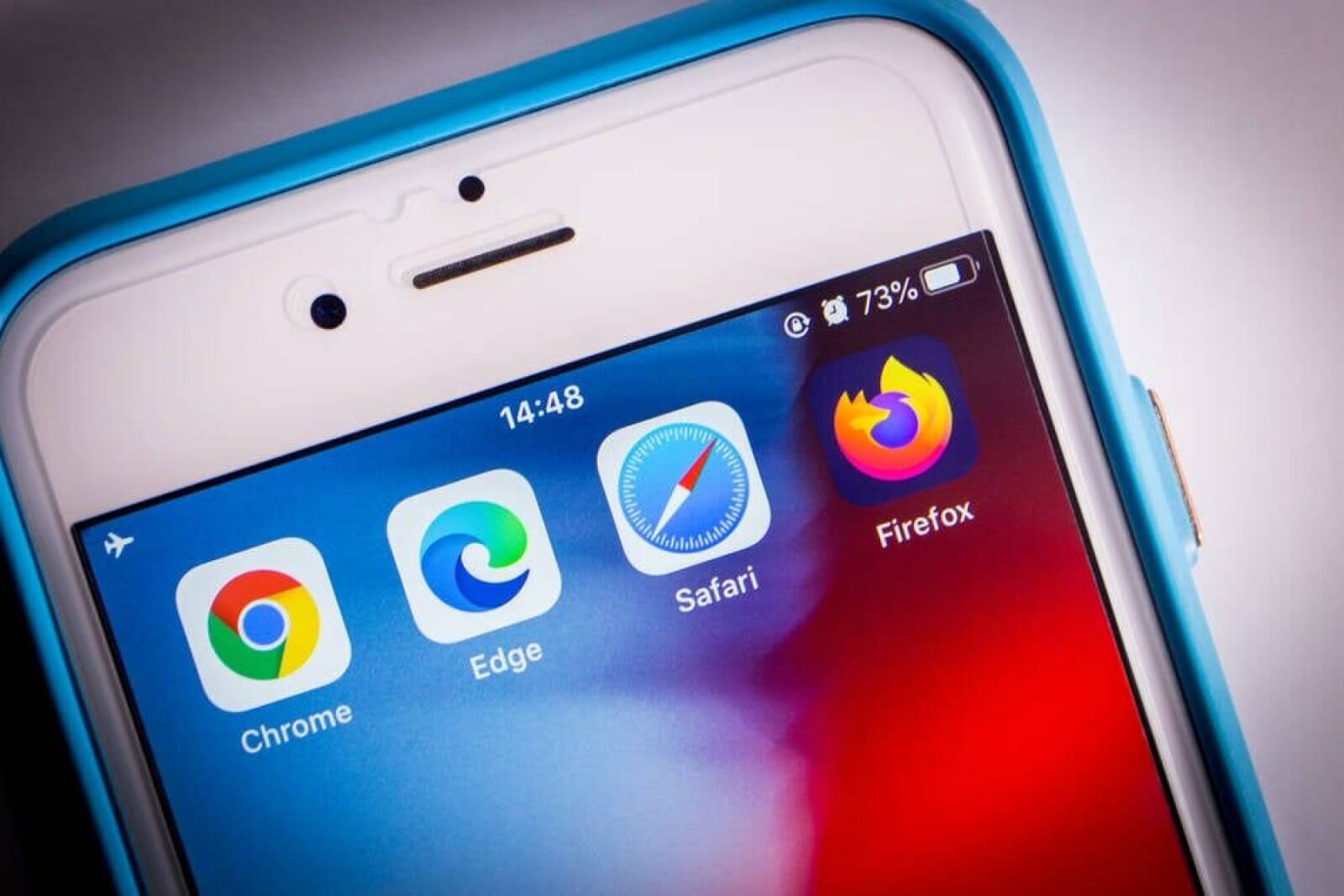
On iOS, however, the picture collapses into a monoculture. Apple's App Store rules have historically required every browser to use WebKit, regardless of brand or feature set. That means Chrome on iOS is effectively a reskinned Safari, as is Edge, Firefox, and every other third-party browser. Competitive differentiation is limited to user interface elements, sync features, and extension ecosystems. The underlying engine remains the same.
Safari commands 23.4 percent of mobile browsing globally and 51.2 percent in North America, according to DigitalApplied. Yet because all iOS browsers run on WebKit, the effective market share of that engine on Apple's mobile platform is 100 percent. This concentration has drawn criticism from browser vendors, standards advocates, and competition regulators who argue it stifles innovation and locks the mobile web into a single implementation of web standards.
The EU Opens a Door, but Nobody Walks Through
Europe's Digital Markets Act, which came into force in stages beginning in 2023, was designed to crack open precisely this kind of bottleneck. Among its provisions, the DMA requires Apple to permit third-party browser engines on iOS within the European Union. In March 2024, Apple introduced BrowserEngineKit, a framework intended to enable developers to build and ship browsers using Blink, Gecko, or any other engine they choose.
More than two years later, no major browser vendor has released an alternative-engine browser for iOS, even in the EU. Microsoft, Google, and Mozilla have each built prototypes. Microsoft's Blink-based Edge prototype is the source of the benchmark numbers published this week. Google has demonstrated a Blink version of Chrome for iOS. Mozilla has shown Gecko running on the platform. None have shipped.
The reasons are partly technical and partly strategic. BrowserEngineKit remains a young framework, and developers have reported bugs and gaps in functionality that make production deployment risky. Apple has not prioritized rapid iteration on the toolkit, and the compliance requirements remain complex. For instance, any browser vendor that ships an alternative-engine version of its app must release it as a separate binary, distinct from the existing WebKit-based app. That means starting from zero on user acquisition and fragmenting the installed base.
For Microsoft, that would mean asking millions of Edge users on iOS to download a second app and migrate their data. For Google, it would mean maintaining two versions of Chrome on the same platform, each with different capabilities and performance profiles. For Mozilla, already struggling with single-digit market share, the cost-benefit calculation is even less favorable.
What the Benchmarks Reveal
Speedometer 3.1, developed collaboratively by Apple, Google, and others, is designed to measure responsiveness in real-world web application scenarios. A score of 49.27 versus 38.3 translates to noticeably faster page loads, smoother interactions, and lower latency in single-page applications. The 13.1 percent advantage on JetStream 3 matters for compute-intensive tasks: data visualization, browser-based IDEs, and games running on WebAssembly.
Pflug noted that the Blink-based prototype has not been optimized for iOS. Chromium's performance team has spent years tuning for Android and desktop operating systems, but iOS has never been a target platform for Blink because it was not permitted. That makes the 29 percent gap all the more striking. A principal Chrome engineer at Google remarked that on macOS, Chromium and WebKit consistently trade the lead on Speedometer. On iOS, the gap is structural, not marginal.
This is the hallmark of a market without competition. When a single engine is guaranteed ubiquity, the incentive to invest in performance, standards compliance, and developer features diminishes. Internal documents cited in ongoing US antitrust litigation against Apple, as well as filings with UK regulators, suggest that Apple's mobile platform strategy has at times prioritized control over capability. One February 2020 email from an Apple vice president of iPhone marketing proposed setting a threshold for features considered "good enough for the consumer" rather than pushing the envelope.
The Cost of Compliance
Open Web Advocacy, a group that has lobbied competition authorities in Brussels, London, and Washington on behalf of web developers, argues that Apple's implementation of the DMA remains non-compliant in practice. Alex Moore, the organization's executive director, points to the separate-app requirement, the incomplete state of BrowserEngineKit, and the absence of any shipped alternative-engine browser as evidence that the barriers remain prohibitive.
The European Commission has the authority to open a specification proceeding, a mechanism that would require Apple to implement specific technical changes under regulatory supervision. So far, it has not done so. Italy's competition authority opened an investigation earlier this month, but the scope and timeline remain unclear.
For browser vendors, the calculation is straightforward: the cost of building, maintaining, and marketing a second iOS app must be justified by user demand and competitive advantage. So far, none has concluded that the equation works. That leaves iOS users, even in the EU, running WebKit-based browsers, regardless of which icon they tap.
What a Real Alternative Would Mean
The implications extend beyond benchmark scores. Web developers have long complained that Safari's implementation of web standards lags behind Chrome and Firefox, particularly in areas such as Progressive Web Apps, push notifications, and advanced graphics APIs. Because every iOS browser is Safari under the hood, those limitations apply universally on the platform.
If alternative engines were genuinely viable on iOS, developers could target Blink or Gecko for features that WebKit does not support. Users could choose browsers based on actual performance and capability, not just interface preferences. The mobile web could begin to close the feature gap with native apps, reducing dependence on app stores and the commission structures that come with them.
That is precisely what makes the issue so contentious. Apple's App Store generated an estimated $85 billion in revenue in 2023, according to industry analysts, with the company taking a 15 to 30 percent commission on most transactions. The mobile web, by contrast, operates outside that controlled economy. If web apps become as capable as native apps, the rationale for the App Store weakens.
At DailyTechWire, we have followed the interplay between platform policy and technical capability across the region, from Seoul's app store legislation to Tokyo's recent browser engine inquiry. The pattern is consistent: regulators open the door, platform holders comply minimally, and the market remains largely unchanged. The question now is whether the European Commission, which has shown willingness to impose fines and demand structural remedies, will push harder on browser engine access.
A Prototype, Not a Product
Microsoft has been careful to frame its Blink-based Edge prototype as research, not a product announcement. The company has not committed to shipping the browser, and the benchmarks come with caveats about methodology and reproducibility. Yet the exercise serves a strategic purpose. By demonstrating a measurable performance advantage, Microsoft adds weight to the argument that Apple's platform rules impose a real cost on users, not just on competitors.
Google and Mozilla face their own calculations. Google is already under antitrust scrutiny in the US and EU over Chrome's dominance and its integration with search and advertising. Shipping a Blink-based Chrome on iOS would expand that footprint and invite further regulatory attention. Mozilla, meanwhile, depends on a search distribution deal with Google for the majority of its revenue and has limited resources to invest in a separate iOS browser that may never gain traction.
The result is a standoff. The technical capability exists. The regulatory permission, at least in the EU, is on the books. But the practical barriers, economic and strategic, keep alternative engines off the platform. iOS users continue to browse the web at WebKit's pace, whether they realize it or not.
The Broader Ecosystem Question
The browser engine debate is ultimately a question about the mobile internet's architecture. If a single platform holder can dictate which engines are permitted, it can shape the evolution of web standards, determine which features reach users, and maintain a structural advantage for its own app ecosystem. The performance gap Microsoft documented is one symptom. The broader issue is control over the open web's future on the most widely used computing devices in the world.
As competition authorities in Europe and Asia continue to examine mobile platform rules, the enforcement question becomes critical. Opening the door is not sufficient if the threshold remains too high to cross. Whether the European Commission will compel Apple to lower that threshold, and whether browser vendors will walk through if it does, will determine whether iOS users ever experience the 29 percent performance gain that Microsoft's prototype suggests is already within reach.