Indium Phosphide Prices Surge as AI Data Centers Strain Supply Chain
A compound critical to optical modules is experiencing dramatic price escalation, exposing infrastructure bottlenecks as hyperscale AI deployment accelerates across the region.
The Material Behind the Wire
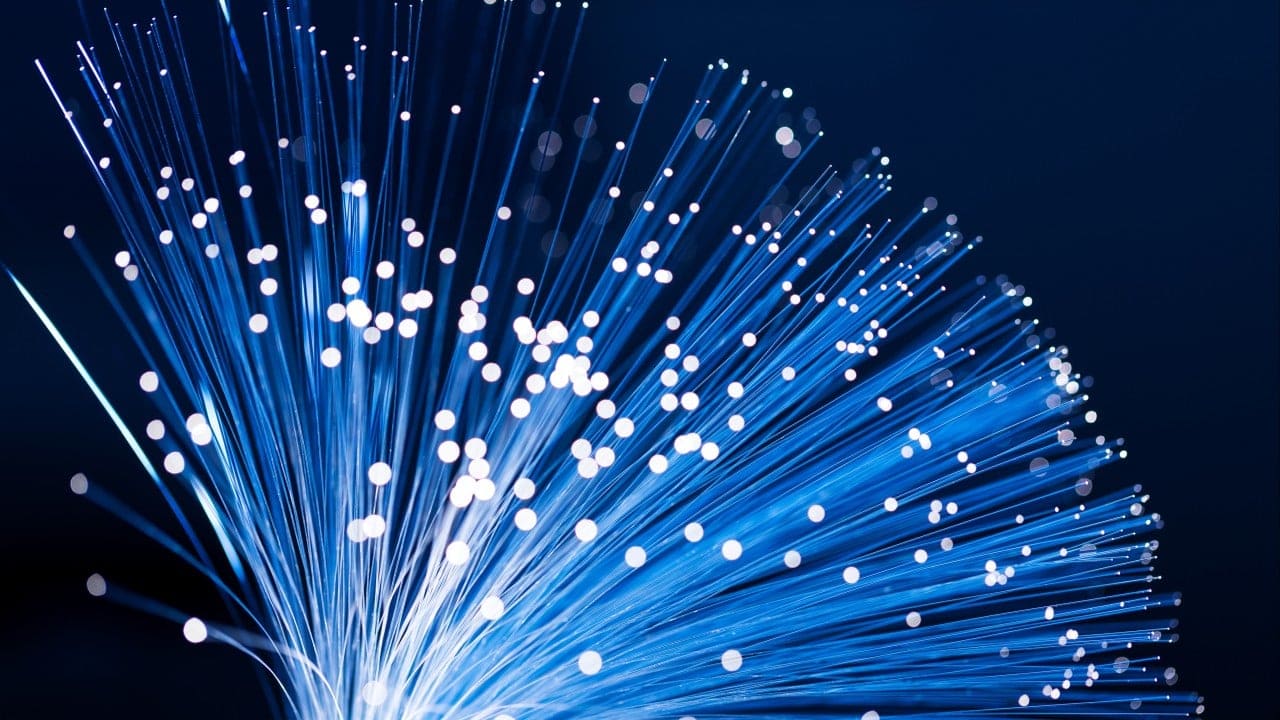
While the industry obsesses over GPU allocations and power grid capacity, a quieter constraint is tightening around AI infrastructure: the compound semiconductor that makes high-bandwidth optical links possible. Indium phosphide has become the latest material to experience supply stress as hyperscale operators race to connect thousands of accelerators in training clusters that can span entire warehouse floors.
At DailyTechWire, we've tracked the infrastructure buildout across Seoul, Singapore, and emerging compute hubs in Southeast Asia. The pattern is consistent: massive capital expenditure on chips and cooling systems, followed by scrambling to secure the less glamorous components that actually move data between them. Optical modules containing indium phosphide lasers fall squarely in that second category, and the pricing signals suggest the market has underestimated how quickly demand would climb.
Why This Compound Matters
Indium phosphide serves a specific but irreplaceable function in modern data centers. The material enables lasers that convert electrical signals into optical pulses, which then travel through fiber-optic cables at speeds electrical copper connections cannot match. For AI training workloads that shuffle terabytes of gradient updates between nodes every few seconds, that optical layer is non-negotiable.
The compound's properties allow it to operate at the wavelengths and modulation speeds required for 400-gigabit and 800-gigabit optical modules, the current standard in hyperscale facilities. Silicon photonics has made inroads in some applications, but indium phosphide remains dominant for the highest-performance transceivers, particularly in coherent optics where phase and amplitude modulation push bandwidth limits.
Production is geographically concentrated. China accounts for a substantial share of global indium phosphide wafer manufacturing, alongside established suppliers in Japan and smaller operations in North America and Europe. That concentration creates vulnerability when demand spikes faster than capacity can scale, which is precisely what has unfolded over the past six quarters.
Price Trajectory and Market Dynamics
The pricing environment has shifted dramatically. Industry participants report that indium phosphide wafer costs have climbed well above historical ranges, driven by procurement competition among optical module manufacturers who are themselves under pressure to fulfill multi-year commitments to cloud providers and AI labs.
Unlike commodity materials with deep spot markets and transparent pricing, indium phosphide trades in a relatively opaque supply chain. Wafer producers negotiate contracts with epitaxial growers and device manufacturers, who in turn supply module assemblers. Price discovery happens through those bilateral relationships rather than public exchanges, which can amplify volatility when supply tightens.
The current spike reflects several converging factors. Hyperscale operators have accelerated data center construction timelines, compressing what were once 18-month procurement cycles into 9- or 12-month sprints. That leaves less buffer for suppliers to ramp production. Simultaneously, automotive lidar and 5G infrastructure continue to consume indium phosphide for their own optical components, broadening the demand base beyond data centers alone.
Capacity additions take time. Building or expanding a semiconductor-grade indium phosphide fabrication line requires clean-room infrastructure, specialized epitaxy reactors, and skilled technicians, investments measured in quarters rather than weeks. Producers who committed to expansions 18 months ago are only now bringing that capacity online, while current order books already extend into 2027 for some high-specification wafers.
Regional Implications
For operators building out AI infrastructure in Asia, the supply crunch introduces a layer of complexity beyond the usual GPU allocation battles. Singapore's data center corridor and emerging facilities in Malaysia and Indonesia rely on the same global optical supply chain as North American hyperscalers, but often with less bargaining power and longer lead times.
We've observed procurement teams at regional cloud providers and telcos quietly securing multi-quarter allocations of optical modules earlier in the buildout cycle than they historically would have, a hedging behavior that itself feeds forward demand and keeps prices elevated. The risk is that smaller operators or later-stage entrants find themselves capacity-constrained not by compute or power, but by the availability of the interconnect fabric that makes distributed training feasible.
China's role as a major producer adds a geopolitical dimension. Export controls and technology transfer restrictions have so far focused on advanced logic chips and manufacturing equipment, but optical components sit in a grey zone. Indium phosphide itself is not restricted, yet the lasers and modules built from it are critical to AI system performance. Any future policy shifts that affect the flow of optical materials or finished modules could ripple through global infrastructure timelines.
Japan's established indium phosphide suppliers have benefited from the rebalancing, as have North American startups working on alternative materials and architectures. But scaling takes time, and the near-term market remains tight. Module manufacturers are exploring design changes to reduce per-unit indium phosphide content or shift to silicon photonics where performance trade-offs are acceptable, yet those transitions require requalification cycles that can stretch six to nine months.
What Comes Next
The supply-demand imbalance is unlikely to resolve quickly. Hyperscale capital expenditure guidance for 2027 suggests sustained or even accelerating infrastructure investment, much of it directed toward AI-optimized clusters that demand high-radix optical switching and dense interconnect topologies. Each new GPU generation increases the bandwidth required to keep accelerators fed with data, which translates directly into more optical modules per rack.
On the supply side, capacity additions will gradually ease the tightness, but producers remain cautious about overbuilding. The memory of previous semiconductor cycles, where rapid expansions led to brutal price collapses, tempers enthusiasm for aggressive capacity investments. The result is a measured ramp that lags demand growth by several quarters, keeping the market in a state of persistent undersupply.
For infrastructure teams, the lesson is that the AI stack has dependencies well beyond the headline components. Power, cooling, and compute get the attention, but the materials and devices that enable high-speed communication between those compute nodes are equally critical and often more constrained. Indium phosphide is one example; others will emerge as deployment scales and the industry discovers which parts of the supply chain were never designed for this pace of growth.
At DailyTechWire, we'll continue following the infrastructure layer where capital allocation meets physical constraints. The next bottleneck is already forming somewhere in the stack; the question is whether the industry will spot it before it shows up in deployment delays and another round of price spikes.