India's UPI Chief Maps AI-Driven Path to One Billion Daily Transactions
As digital payments reach 750 million transactions per day, NPCI's leadership sees language models and voice interfaces as critical infrastructure for fraud detection, credit access, and the next 500 million users.
Voice, Multilingual AI, and the Next Half Billion
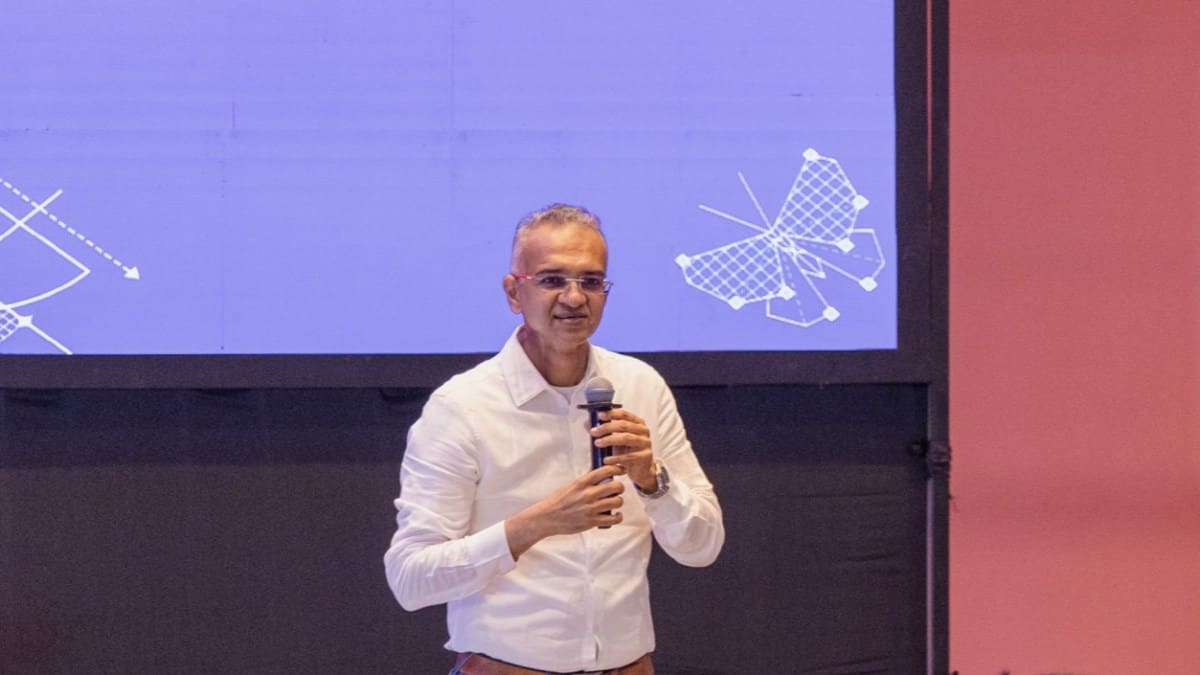
India's Unified Payment Interface processes more than 750 million transactions each day, a volume that dwarfs most national rail systems in complexity and throughput. At DailyTechWire, we've tracked UPI's trajectory since its 2016 launch, when monthly transaction counts were measured in tens of millions; the system now handles in a single day what took two months seven years ago. Dilip Asbe, managing director and CEO of the National Payments Corporation of India, framed the next milestone during a conversation at Mumbai Tech Week last month: one billion transactions daily, powered substantially by artificial intelligence.
Asbe outlined three deployment vectors for AI in the payments stack. The first is user acquisition, specifically multilingual voice interfaces designed to onboard populations that remain outside the digital economy. The second is fraud detection and mitigation, using pattern recognition to identify transaction anomalies and mule accounts in near real time. The third is credit underwriting, applying behavioral and transactional data to extend loans to merchants and consumers who lack traditional credit histories.
Voice assistance has been a recurring theme in Indian fintech for the past three years, yet adoption remains patchy. NPCI introduced a voice-based interactive system in 2023, and Asbe acknowledged that uptake has been slower than anticipated. Accuracy remains the limiting factor; vernacular speech models struggle with code-switching, regional accents, and ambient noise in crowded urban and rural environments. The executive suggested that the right use case has not yet crystallized, but that once accuracy crosses a threshold, voice could become load-bearing infrastructure rather than a novelty feature.
Agentic Commerce and the Regulatory Lag
In the United States, agentic finance has moved from proof of concept to production deployment. Coinbase and Robinhood now permit algorithmic agents to execute trades on behalf of retail investors, and OpenAI allows users to feed personal account data into ChatGPT for budgeting and portfolio advice. NPCI demonstrated agentic commerce flows in collaboration with payment gateway Razorpay last year, showing scenarios in which an AI agent negotiates delivery slots, applies discount codes, and completes checkout without human intervention. Those demonstrations have not yet translated into public-facing services.
Asbe argued that India can adopt AI-powered finance at scale, provided that regulation and technical architecture evolve in tandem. He emphasized the need for robust user consent mechanisms, audit trails that capture the instructions given to an agent, and liability frameworks that clarify accountability when an autonomous system makes an erroneous or fraudulent transaction. The regulatory sandbox approach, which the Reserve Bank of India has employed for other fintech experiments, may offer a pathway, though no formal framework for agentic payments has been published.
Small Language Models and the Data Advantage
While frontier labs in San Francisco and London compete on parameter count and benchmark scores, Asbe sees an opening for India to build domain-specific small language models trained on transactional and behavioral datasets unique to the subcontinent. He pointed to the richness of UPI's dataset, which encompasses hundreds of millions of users across income brackets, geographies, and spending patterns, as a strategic asset that could underpin models optimized for deterministic financial tasks rather than open-ended conversation.
NPCI launched a model called FIMI last year to automate dispute resolution and mandate cancellations. According to Asbe, FIMI now serves more than one million users and is scaling rapidly. The system interprets natural-language complaints, cross-references transaction logs, and either resolves issues programmatically or escalates them to human agents. The architecture is narrower than a general-purpose assistant, but the precision and speed gains are measurable.
The emphasis on small, task-specific models aligns with a broader shift in enterprise AI, where companies are trading versatility for efficiency and control. Training a model on proprietary financial data also sidesteps some of the privacy and sovereignty concerns that accompany the use of third-party cloud APIs. If Indian banks and fintechs coordinate on shared datasets and model architectures, the result could be a payment intelligence layer that is both locally governed and commercially competitive.
Market Concentration and the December Deadline
PhonePe and Google Pay together command more than 80 percent of UPI transaction volume, a duopoly that has persisted despite NPCI's stated preference for a more distributed ecosystem. The regulator proposed a market share cap of 30 percent per app, with an original deadline that has been deferred multiple times. The current enforcement date is set for December 31, 2026, though industry observers expect another extension.
Asbe attributed the concentration to the absence of viable commercial models for smaller players. PhonePe and Google Pay invested heavily in user acquisition, subsidizing transactions and building loyalty programs that smaller competitors could not match. He suggested that once alternative revenue streams emerge within the fintech stack, such as embedded lending, insurance distribution, or merchant analytics, new entrants will find it economically rational to compete for share.
NPCI spun off its BHIM UPI app in 2024 to operate as a standalone entity, with the goal of offering a sovereign, secure alternative to the dominant apps. Transaction volume has grown, but BHIM's market share remains around one percent. Asbe clarified that NPCI does not have a specific share target for BHIM; the objective is to maintain a government-backed option that can serve as a reference implementation and a fallback in the event of platform concentration risk.
The December deadline will test whether regulatory pressure alone can reshape market structure, or whether commercial incentives must shift first. For investors evaluating Indian fintech, the answer will determine whether capital flows toward challenger apps or consolidates further around the incumbents.
Credit Distribution and Digital Footprints
AI's third role in NPCI's roadmap is credit underwriting. Millions of UPI users and merchants generate transactional data every day, yet many lack the documentation required by traditional lenders. Machine learning models can infer creditworthiness from payment velocity, merchant category mix, repeat customer behavior, and seasonality patterns, creating a parallel credit infrastructure that operates outside the formal banking system.
This approach is not without risk. Algorithmic underwriting can embed bias if training data reflects historical inequities, and the opacity of some models makes it difficult for borrowers to understand why they were approved or denied. NPCI's emphasis on deterministic, explainable models suggests an awareness of these pitfalls, but the regulatory framework for algorithmic credit in India is still under construction.
The potential scale is significant. If even a fraction of UPI's 750 million daily transactions can be converted into credit events, whether microloans for working capital or point-of-sale financing for consumer goods, the resulting liquidity could accelerate consumption and formalize segments of the economy that currently operate on cash and informal lending.
The Road to a Billion
Reaching one billion daily transactions will require more than linear growth. It will demand infrastructure that can handle peak loads during festival seasons, fraud detection systems that adapt to evolving attack vectors, and interfaces that work for users who are preliterate or digitally inexperienced. AI is being positioned as the connective tissue across all three challenges.
The emphasis on small language models, voice interfaces, and agentic commerce reflects a pragmatic recognition that India's payment ecosystem cannot simply import solutions built for Western markets. The linguistic diversity, connectivity constraints, and regulatory environment are distinct, and the technology stack must reflect those realities.
Whether NPCI and its partners can execute on this vision will depend on coordination across the Reserve Bank of India, commercial banks, fintech startups, and technology providers. The regulatory clarity Asbe called for has not yet materialized, and the market concentration problem remains unresolved. But the ambition is clear: to build a payments infrastructure that is not only high-volume and low-cost, but also intelligent, inclusive, and resilient.
India's digital economy is already one of the largest in the world by user count. If AI can unlock the next half billion users while maintaining security and trust, the implications will extend well beyond transaction throughput. It will set a template for how emerging markets deploy machine learning in critical infrastructure, and how they balance innovation with sovereignty in an era when data and models are strategic assets.