Honda Redirects Ohio Battery Production to Storage Market After U.S. EV Exit
The Japanese automaker is channeling cells originally meant for electric vehicles into data centers and grid infrastructure, joining a rush toward stationary storage that promises margins twice those of cars.
From Driveways to Data Centers
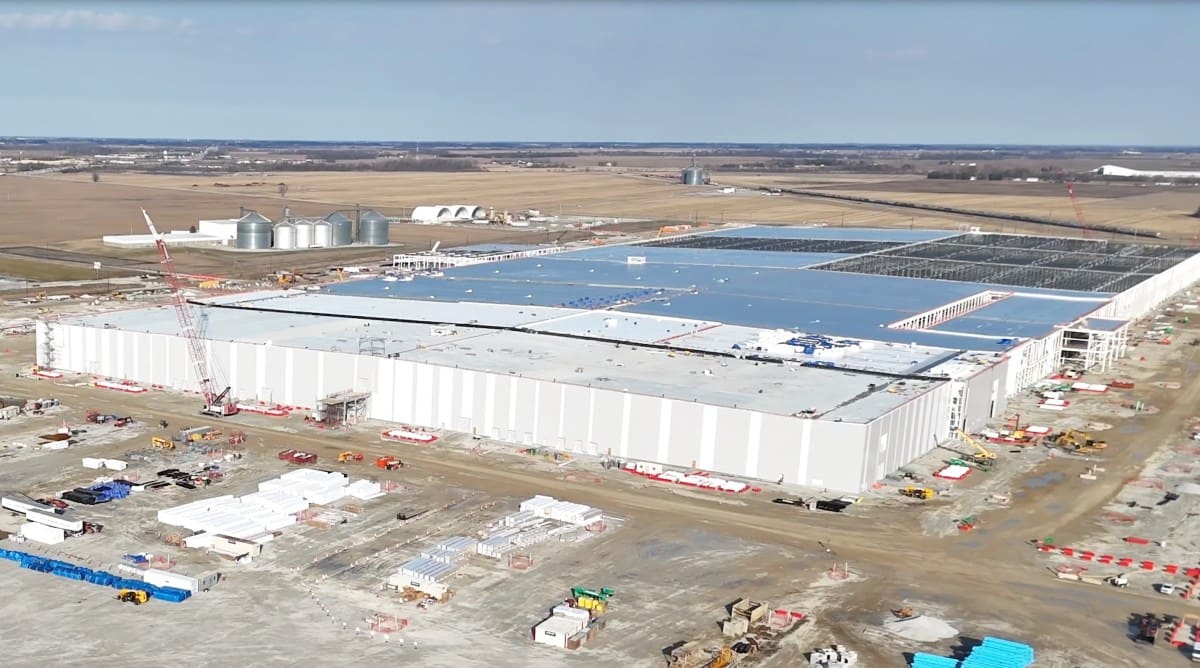
Honda began producing batteries for energy storage systems at its Ohio facility this week, marking a sharp turn away from the electric vehicle plans the company abandoned three months earlier. The cells rolling off the line were originally destined for Honda EVs in the American market. Instead, they will power data centers and grid infrastructure, a shift that underscores how quickly automakers are recalibrating their strategies in response to changing incentives and market demand.
The Ohio plant operates as a joint venture between Honda and LG Energy Solution. When Honda canceled three U.S.-bound EV models earlier this year, industry observers expected the partnership might dissolve. It did not. Rather than walk away from battery manufacturing altogether, Honda chose to redirect the output toward stationary applications, a decision that mirrors moves by Tesla, Ford, and General Motors in recent quarters.
Honda's restructuring involved a $15.7 billion write-down last fiscal year, driven partly by the EV strategy overhaul and partly by a weakening position in China, where electric vehicles have surged while Honda's traditional lineup has struggled. The company's pivot reflects both the collapse of U.S. EV tax credits last September and a broader recognition that batteries themselves represent a lucrative business, independent of the vehicles they were meant to serve.
A Market Growing Faster Than Vehicle Demand
Stationary energy storage installations reached 9.7 gigawatt-hours in the first quarter of this year, enough capacity to build roughly 120,000 electric vehicles, according to data from SEIA and Benchmark Minerals. That figure represents 32% growth compared to the same period last year. By the end of the decade, annual installations are projected to hit 110 gigawatt-hours, nearly tripling the current market size.
The economics are compelling. Tesla, which has captured the majority of sales in this segment, reports gross profit margins of around 30% on its Megapack and Powerwall products. That is approximately double the margin the company earns on its vehicles. For automakers facing compressed margins in a fiercely competitive EV landscape, the appeal of stationary storage is clear: higher profitability, growing demand, and a technology base they have already invested billions to develop.
Falling battery prices have enabled storage systems to carve out roles in grid stabilization and renewable energy integration. Wind and solar installations, long criticized for their intermittency, become more predictable when paired with storage that can dispatch power during periods of low generation. Grid operators have embraced batteries as a flexible tool for managing supply and demand, a role that has driven deployment beyond data centers and into utility-scale projects.
Policy Shifts and Market Consequences
The U.S. EV market has been volatile since tax credits were eliminated last year. Sales of new electric vehicles remain below prior-year levels, a result of consumers accelerating purchases to capture the credits before they disappeared. That demand pull-forward left the market in a lull, and uncertainty around future policy has made automakers cautious about committing capital to new EV production lines.
Honda's decision to cancel its U.S. EV programs was a direct response to this environment. The company had planned to leverage the Ohio factory to supply batteries for a lineup of electric models tailored to American buyers. When the policy foundation shifted, Honda opted to preserve the manufacturing capacity while changing the end application. The move avoids the sunk cost of closing the facility and allows the company to participate in a segment where policy support remains more stable.
At DailyTechWire, we've tracked similar pivots across the automotive sector. The pattern is consistent: automakers that built battery capacity in anticipation of EV demand are now finding alternative revenue streams in stationary storage, backup power, and grid services. The technology is largely the same; the business model is different.
The Broader Energy Transition Bet
Honda's shift does not signal an exit from electrification. The company continues to invest in hybrid powertrains and is developing EV platforms for markets outside the U.S., particularly in Asia and Europe, where policy frameworks remain more supportive. What the Ohio pivot illustrates is a willingness to adapt deployment strategy based on near-term market realities rather than holding to a fixed roadmap.
Data centers have emerged as a particularly hungry customer for stationary batteries. The rapid expansion of AI infrastructure has driven demand for reliable, low-latency power systems that can bridge gaps when grid supply falters. Batteries offer a cleaner, quieter alternative to diesel generators, and their ability to charge during off-peak hours makes them economically attractive in regions with time-of-use electricity pricing.
Grid-connected storage, meanwhile, is becoming a fixture in power markets from California to Texas. These systems provide frequency regulation, peak shaving, and capacity reserves, services that utilities and independent power producers are willing to pay for. As renewable penetration increases, the value of storage is likely to rise, creating a long-term market that extends well beyond the current data center boom.
Strategic Flexibility in an Uncertain Landscape
Honda's trajectory reflects a broader challenge facing automakers: how to manage capital allocation when policy, technology, and consumer preferences are all in flux. The company invested heavily in battery production with the expectation that EVs would dominate the U.S. market within the decade. That expectation has not materialized, at least not on the anticipated timeline.
Rather than absorbing the full cost of that miscalculation, Honda is redeploying assets toward a market with clearer near-term growth. The joint venture with LG Energy Solution remains intact, preserving the option to return to EV cell production if conditions improve. In the meantime, the Ohio facility generates revenue and keeps the supply chain operational.
This kind of flexibility is rare in the automotive industry, where production lines are typically configured for a single purpose and retooling is expensive. Battery manufacturing, by contrast, is more fungible. Cells produced for EVs can, with relatively minor adjustments, be packaged for stationary applications. That versatility is proving valuable as companies navigate an energy transition that is advancing unevenly across geographies and sectors.
What Comes Next
Honda's move into stationary storage is unlikely to be its last strategic adjustment. The company faces continued pressure in China, where local EV makers have captured market share with aggressive pricing and rapid product cycles. In the U.S., the regulatory environment remains uncertain, with future administrations likely to revisit policies around electrification and emissions.
The energy storage market, however, offers a measure of stability. Demand is driven by infrastructure needs that transcend political cycles, and the technology is mature enough that deployment can scale without waiting for breakthroughs. For Honda, that makes it a logical hedge, a way to extract value from battery investments even as the path forward for EVs remains clouded.
Other automakers are likely watching closely. If Honda can achieve margins comparable to what Tesla reports on its storage products, the Ohio pivot will look prescient rather than reactive. And if U.S. EV demand eventually rebounds, the facility can shift production back toward automotive applications. In the meantime, Honda has found a way to stay in the energy transition without betting everything on a single outcome.