The Home Robot That Doesn't Want to Replace Your Caregiver — Yet
Hello Robot's Stretch prioritizes safety and human control over humanoid hype, deploying where others still demo. Can real-world hours build the moat AI giants can't simulate?
The Deployment Gap No One Wants to Talk About
Keith Platt spent nearly two hours getting his breakfast protein shake the first time he tried it alone with Stretch, the home assistance robot from Hello Robot. By the hundredth attempt, he'd cut that down to minutes — drinking the shake, returning it to the counter, all without human help. For someone who became quadriplegic in 2021, the difference between two hours and two minutes isn't incremental progress. It's the difference between dependence and autonomy.
At DailyTechWire, we've tracked the flood of capital into humanoid robotics over the past eighteen months — Figure AI's $675 million raise, 1X's Neo pre-orders, Tesla's Optimus promises. Yet Platt's kitchen in Georgia represents something most of those bets lack: a robot operating outside a lab, under real liability, with a human who can't afford for it to fail. Hello Robot, a Martinez, California startup founded in 2017 by ex-Google robotics director Aaron Edsinger and Georgia Tech professor Charlie Kemp, released the fourth iteration of Stretch last month. It costs $30,000, ships in a cardboard box via UPS, and explicitly does not promise to do every job a human can do.
What it does promise is harder: working safely in unstructured environments, today, while competitors are still polishing demos.
Why Real Homes Are the Real Test
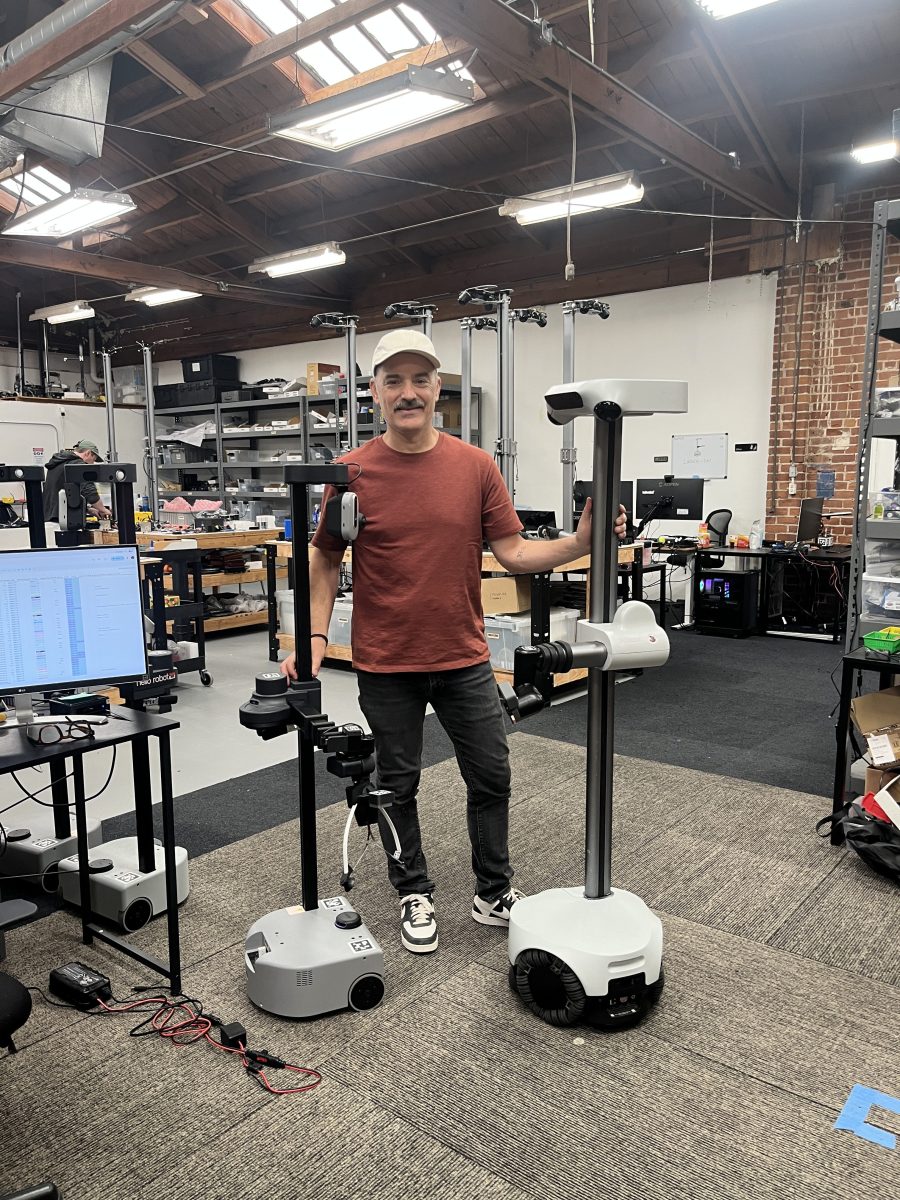
Stretch doesn't look like the humanoids dominating venture pitch decks. It rides on a heavy omnidirectional wheeled base, extends a telescoping arm with pinchers instead of fingers, and mounts sensors on a vaguely anthropomorphic head. When its battery runs low, lights around its "eyes" glow red — "it looks angry," jokes Blaine Matulevich, an engineer at Hello Robot. The design is intentional: prioritize stability and safety over aesthetic ambition. No active balancing means no catastrophic falls. No legs means no risk of a 150-pound humanoid toppling onto a user.
The choice reflects a thesis increasingly echoed by deployment-focused investors. Bullhound Capital wrote last week that "companies that deploy first accumulate site-specific recovery loops and workflow tolerances that no competitor can buy or synthesize. In robotics, the moat isn't just IP, but accumulated operating hours under real-world liability." Hello Robot has been placing Stretch units with researchers, enterprise customers testing data-center applications, and individuals with mobility challenges since 2020. The company expects to manufacture 200 to 300 Stretch 4 units at its Martinez facility this year; the first production run has already sold out.
That deployment cadence matters because the hardware-software co-evolution everyone talks about requires real edge cases — the protein shake that tips unexpectedly, the cabinet door that sticks, the user command phrased in a way no prompt engineer anticipated. Simulation is improving, but it still can't replicate the physics of a chipped tile or the user frustration when a task takes two hours instead of two minutes. Mahi Shafiullah, a postdoc at UC Berkeley who used Stretch's third generation during his PhD at NYU, recalls industrial robots in his lab accidentally punching through a plastic kitchen play set they were supposed to manipulate delicately. "The state of hardware today is actually abysmal from the perspective of, 'I want to have robots in my parents' place,'" he noted.
Hello Robot's design constraints — must ship in a cardboard box, must not require installation teams, must operate safely around vulnerable users — aren't marketing copy. They're guardrails that make deployment economically and ethically viable at small scale.
The Human-in-the-Loop as Feature, Not Bug
Platt controls his Stretch using a voice-operated iPhone app. He can task it to navigate autonomously to a location in his house, then take direct control to manipulate objects. The division of labor is deliberate: Stretch handles the heavy, repetitive mobility work; Platt retains agency over the final actions. "Being in control is a feature — it's desired to be embodied in the robot," Matulevich explained.
This stands in stark contrast to the fully autonomous visions pitched by humanoid startups, where the robot is supposed to infer intent, plan multi-step workflows, and execute without supervision. For Platt, autonomy isn't about the robot acting independently — it's about him acting independently. Anything he can do himself — putting on reading glasses, brushing his teeth — "is huge," he said, not just physically but emotionally. The ability to spend a day at home safely, without hiring a professional caregiver or relying on family, could be "life-changing" for households managing mobility challenges.
Hello Robot employs an occupational therapist to support users like Platt, a staffing choice that signals the company's view of its product as assistive technology first, general-purpose platform second. That focus has attracted researchers: models Shafiullah helped develop with Stretch won the best demonstration prize at the 2025 Computer Vision and Pattern Recognition conference. The robot's comprehensive sensor suite and safe operation profile make it a candidate for generating the kind of high-quality, task-diverse training data that foundation model builders need but can't easily obtain.
"The algorithms may be there, but the data is not, and data is actually like 80% of the ingredient that matters," Shafiullah observed. Having a robot that can safely collect that data in real environments, rather than scripted lab scenarios, represents a structural advantage.
The Hardware Reality Check
While capital floods into startups designing robot "brains," the bodies remain stubbornly expensive and fragile. Components are getting cheaper, but state-of-the-art actuators still deliver heavy limbs requiring high-energy active balancing. A robotic hand and arm weighs far more than a human's; when mistakes happen, physics is unforgiving. One San Francisco startup, the Bot Company, is being sued by an Airbnb owner who alleges the company rented his apartment to work on its robot, which then scratched furniture, broke appliances, and chipped bathroom tiles.
Hello Robot's wheeled base and telescoping arm sidestep some of these failure modes, but the $30,000 price tag — roughly in line with Chinese manufacturers once sensors and software are included — still puts Stretch out of reach for most individual consumers. Edsinger compares his company's trajectory to Waymo, which became the leading self-driving car provider by prioritizing safety and constrained deployment over rapid scale. The analogy has limits: Waymo had Alphabet's balance sheet. Hello Robot is venture-backed, with Georgia investor Keith Platt joining the board after becoming a user. The company will need to demonstrate a path to volume manufacturing and sub-$10,000 unit economics if it wants to reach the mass market for elder care and disability assistance.
Meanwhile, 1X, a humanoid robotics leader, announced last year that it had sold out of 10,000 Neo units planned for 2026 — but as of early June, none have shipped. The gap between pre-orders and delivery is where hardware startups go to die. Hello Robot's advantage is that it's already on the other side of that chasm, iterating based on real user feedback rather than projected use cases.
Why It Matters: The Deployment Moat in Physical AI
The race to build general-purpose humanoid robots is predicated on the belief that a sufficiently capable foundation model, given a sufficiently dexterous body, will unlock massive economic value across every domain humans currently occupy. That belief may prove correct in the 2030s. But in 2026, the bottleneck isn't model architecture — it's the messy, expensive, legally fraught work of putting robots in environments where they can fail in novel ways and hurt someone.
Hello Robot's approach — constrained form factor, human-in-the-loop control, focus on a narrow use case with high emotional and economic value — looks conservative compared to the humanoid maximalism of Figure, 1X, or Tesla. But it's generating something those companies can't buy: thousands of operational hours in real homes, with real users who have no tolerance for failure. Every time Platt successfully retrieves his protein shake, every time Stretch navigates a cluttered hallway or recovers from a failed grasp, the company accumulates edge-case data and workflow tolerances that inform the next hardware iteration.
Edsinger has indicated that lessons from Stretch 4's rollout will feed into a fifth-generation design aimed at lower cost and broader capabilities. If Hello Robot can drive the price below $15,000 while maintaining safety and reliability, the addressable market expands from well-funded research labs and early adopters to the millions of households managing aging or disability. That scale, in turn, could generate the data volumes needed to train the kind of general-purpose manipulation models that humanoid builders are betting on — but with a safety profile and deployment track record no competitor can replicate in simulation.
The risk is that Hello Robot's conservatism becomes a ceiling. If a rival achieves a breakthrough in low-cost, stable humanoid hardware — or if foundation models get good enough to compensate for clumsy bodies — Stretch's design constraints could look like technical debt rather than strategic discipline. But for now, the company occupies a unique position: the only player shipping home robots at volume to users who can't afford for them to fail.
The Autonomy Paradox
Platt's two-hour protein shake ordeal, compressed over time into a two-minute routine, encapsulates the paradox of assistive robotics. The goal isn't to remove humans from the loop — it's to give them back agency within it. "Being dependent on people is a real challenge, both physically and emotionally," Platt said. Every task Stretch enables him to do independently doesn't just save time; it preserves dignity and reduces the emotional load on caregivers.
That framing inverts the usual narrative around automation, where the robot's value is measured by how much human labor it displaces. In Hello Robot's model, the robot's value is measured by how much human dependence it displaces. The distinction matters, especially as demographic aging accelerates across Asia and the West. Japan, South Korea, and Singapore are already deploying service robots in elder care facilities, but most are glorified telepresence screens or meal-delivery carts. A robot that can help someone dress, eat, or move safely around their home — without requiring a engineering degree to operate — represents a different order of impact.
Whether Hello Robot can scale that impact before better-funded humanoid rivals catch up on safety and reliability remains the open question. But the company has already answered a more fundamental one: yes, Silicon Valley is ready to put robots in people's homes. The question is whether it's ready to do so responsibly, at a pace determined by real-world constraints rather than fundraising timelines. For now, Hello Robot is the only one proving it can.


