Google DeepMind's Hurricane Model Delivers 24-Hour Edge in Storm Forecasting
WeatherNext AI predicted Jamaica's Category 5 landfall five days ahead with 80% confidence, outpacing traditional models in cyclone tracking accuracy
When Models Diverged Over the Caribbean
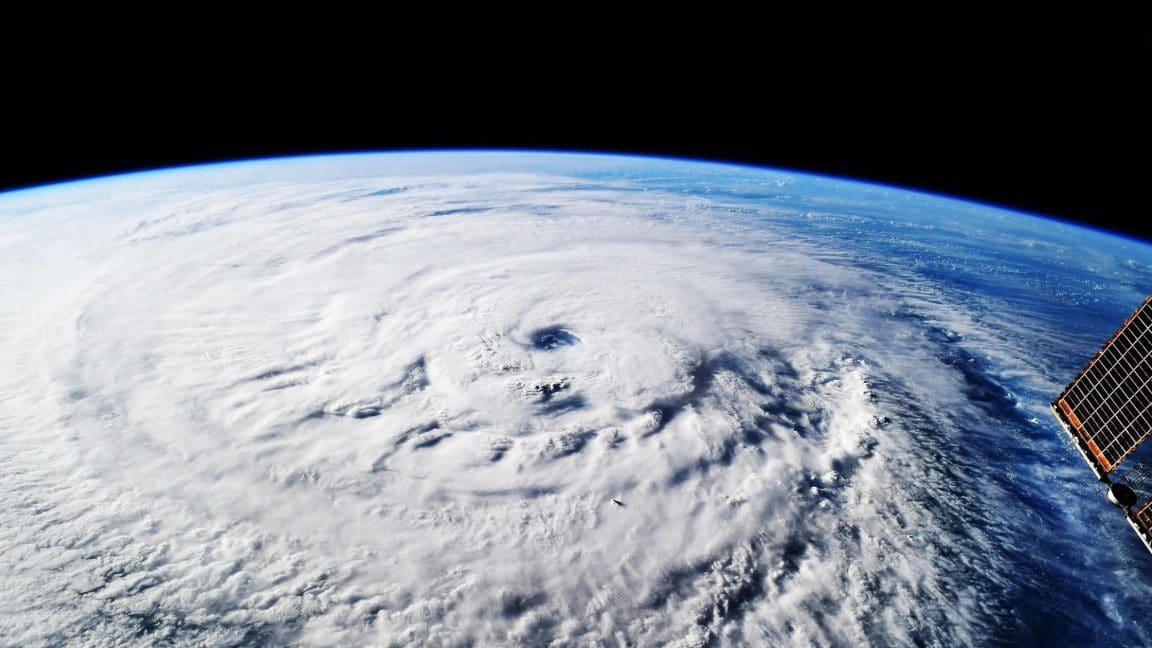
In October 2025, forecasters faced a familiar dilemma: conflicting projections. A storm system churned over the Caribbean, and traditional weather models couldn't agree on its future. Some simulations showed the disturbance weakening and drifting toward Haiti. Others suggested intensification, but with uncertain direction. The question wasn't just academic. Millions of people across multiple islands needed to know whether to evacuate, stockpile supplies, or stand down emergency crews.
WeatherNext, the AI forecasting system built by Google DeepMind and Google Research, made a definitive call. Five days before impact, it assigned 80 percent confidence to a specific outcome: the system would strengthen into a Category 5 hurricane and strike Jamaica directly. That prediction proved accurate. Hurricane Melissa became one of the most destructive storms in Jamaica's recent history, bringing severe flooding and landslides. But because forecasters had an extra day to issue warnings, communities had more time to prepare, evacuate vulnerable areas, and position emergency resources.
The episode illustrates a shift in how meteorologists approach one of their most difficult challenges. Tropical cyclone prediction has improved steadily over decades, but progress has been incremental. Adding even a few hours of reliable lead time requires advances in satellite data, atmospheric modeling, and computational power. WeatherNext's performance, detailed in a Nature paper published in August 2026, suggests that machine learning can compress years of conventional progress into a single algorithmic leap.
A Full Day of Lead Time
According to Google DeepMind, WeatherNext achieves cyclone predictions at three days out that match the accuracy traditional models deliver at two days out. That 24-hour margin is significant. Emergency managers use that window to mobilize shelters, reroute shipping traffic, and coordinate cross-agency responses. In low-income regions with limited infrastructure, the difference between two days and three days of warning can determine whether people reach safety or remain trapped in flood zones.
The model doesn't just extend the forecast horizon; it also narrows uncertainty bands. Traditional ensemble forecasts generate dozens of simulations, each representing a plausible future atmospheric state. Forecasters then interpret the spread of outcomes, often finding wide disagreement about storm intensity or track. WeatherNext synthesizes those uncertainties into sharper probability distributions, giving decision-makers clearer guidance on where to focus resources.
At DailyTechWire, we've tracked AI weather models from startups and research labs across Asia, Europe, and North America. Most have focused on short-term precipitation or temperature forecasts, where ground truth arrives within hours and training data is abundant. Cyclone forecasting is harder. Hurricanes, typhoons, and cyclones are rare events, and their behavior depends on complex interactions between ocean heat, wind shear, and atmospheric moisture. Training a model to recognize those patterns requires massive datasets and careful validation against historical storms.
Training on Decades of Atmospheric Data
WeatherNext was trained on reanalysis datasets that reconstruct global atmospheric conditions from the 1970s onward. These datasets blend satellite observations, weather station readings, ship reports, and aircraft measurements into a consistent four-dimensional picture of temperature, pressure, humidity, and wind at multiple altitudes. The model learned to map current atmospheric states to future cyclone tracks and intensities by ingesting millions of time steps from past storms.
One challenge in machine learning for weather is that the atmosphere doesn't repeat itself exactly. A model trained only on historical data might fail when confronted with novel patterns driven by climate change or rare atmospheric configurations. DeepMind addressed this by incorporating physics-informed constraints. Rather than treating weather prediction as a pure pattern-matching problem, WeatherNext respects fundamental conservation laws for energy, momentum, and mass. This hybrid approach helps the model generalize beyond its training set.
The result is a system that runs faster than traditional numerical weather prediction models. Conventional models solve differential equations on a three-dimensional grid covering the globe, a process that can take hours on supercomputers. WeatherNext performs inference in minutes on tensor processing units, the specialized chips Google designed for neural network workloads. That speed advantage means forecasters can run more scenarios, update predictions more frequently, and respond faster to new satellite data.
Deployment Challenges Beyond the Algorithm
Publishing accurate predictions is only part of the problem. Getting those predictions into the hands of emergency managers, government agencies, and affected populations requires infrastructure, trust, and coordination. In the Caribbean, Central America, and parts of Southeast Asia, many communities rely on regional meteorological centers that lack access to cutting-edge AI models. Even when a model is available, forecasters may be skeptical of black-box systems that don't explain their reasoning.
Google has not yet announced plans to commercialize WeatherNext or integrate it into public forecasting platforms. The model remains a research prototype, and its predictions are shared with meteorological agencies on a case-by-case basis. That limited deployment raises questions about equity. If AI models can deliver life-saving lead time, who gets access? Will low-income countries depend on proprietary systems controlled by a handful of tech companies, or will open-source alternatives emerge?
Similar debates have played out in other domains where AI has outperformed human experts. In medical imaging, radiology, and drug discovery, researchers have grappled with how to validate opaque models, integrate them into existing workflows, and ensure they don't encode biases from training data. Weather forecasting has the advantage that outcomes are observable and measurable within days. A model's track record becomes clear quickly. But that transparency doesn't resolve questions about access, governance, or the long-term role of human forecasters.
Regional Implications for Asia-Pacific
The Asia-Pacific region experiences more tropical cyclones than any other part of the world. The western Pacific typhoon season brings an average of 25 named storms annually, affecting the Philippines, Taiwan, Japan, South Korea, and coastal China. Accurate forecasting is critical for densely populated coastal cities, shipping routes, and offshore energy infrastructure. Any model that improves lead time or reduces uncertainty has immediate economic and humanitarian value.
Several research groups in the region are developing their own AI weather models. The Korea Meteorological Administration has experimented with deep learning for typhoon intensity prediction. China's National Meteorological Center has deployed machine learning for short-term rainfall forecasts. These efforts reflect a broader trend: governments and institutions that once relied on models developed in the United States or Europe are now building domestic capabilities. WeatherNext's performance will likely accelerate that investment.
At the same time, the model's success raises questions about data access. Training a competitive AI weather model requires decades of high-quality atmospheric data, much of which is collected by satellites operated by NASA, NOAA, and the European Space Agency. Countries that lack their own satellite fleets depend on data-sharing agreements, which can be disrupted by geopolitical tensions or budget cuts. If AI weather models become a strategic asset, access to training data may become as contested as access to semiconductor manufacturing or cloud computing infrastructure.
What Forecasters Still Bring to the Table
Despite WeatherNext's capabilities, meteorologists aren't being replaced. The model produces probabilistic forecasts, not certainties. A human forecaster still needs to interpret those probabilities, integrate local knowledge, and communicate risk to the public. In the case of Hurricane Melissa, forecasters used WeatherNext's prediction alongside output from traditional models, satellite imagery, and historical storm behavior. The AI provided a valuable signal, but the final warning was a human judgment call.
This collaborative model is likely to define the near-term future of weather forecasting. AI systems will handle pattern recognition, uncertainty quantification, and rapid scenario generation. Human experts will focus on communication, context, and edge cases where models struggle. The division of labor mirrors what we've seen in other fields where machine learning has been integrated: radiologists still read scans, but AI flags anomalies; traders still make decisions, but algorithms execute orders.
The question is whether that balance will hold as models improve. If WeatherNext's successors achieve 95 percent accuracy at five days out, or seven days out, the role of human forecasters may shift further toward communication and away from prediction. That transition has economic consequences. Meteorological agencies employ thousands of people worldwide, many in countries where government jobs are a critical part of the middle class. Automating forecasting could reduce costs, but it also concentrates expertise in a small number of organizations with the resources to train and deploy AI models.
The Road Ahead for AI Weather Systems
WeatherNext's performance on cyclone forecasting is a proof point, not an endpoint. Other weather phenomena remain challenging. Tornadoes form on timescales too short for most models to predict reliably. Localized flooding depends on terrain, soil saturation, and drainage infrastructure that global models don't capture. Winter storms involve phase transitions between rain, sleet, and snow that are difficult to simulate accurately. AI models will need to tackle each of these problems separately, and some may prove more tractable than others.
Climate change adds another layer of complexity. As ocean temperatures rise and atmospheric circulation patterns shift, the historical data that AI models rely on becomes less representative of future conditions. A model trained on cyclones from 1980 to 2020 may underperform on storms in 2030 or 2040 if the underlying physics has changed. Researchers will need to develop techniques for adapting models to non-stationary environments, where the rules of the game evolve over time.
Despite these challenges, the trajectory is clear. Machine learning is becoming a core tool in atmospheric science, not a peripheral experiment. The question is no longer whether AI can improve weather forecasting, but how quickly it will be adopted, who will control it, and whether its benefits will be distributed equitably. Hurricane Melissa was a test case. The next decade will determine whether AI weather models become a public good or a proprietary advantage.