Gmail Gets Voice Search Through Beta Gemini Integration
Google's latest AI push brings conversational inbox queries to mobile users, part of a broader rollout of live assistant features across Workspace apps.
Voice Commands Come to Email
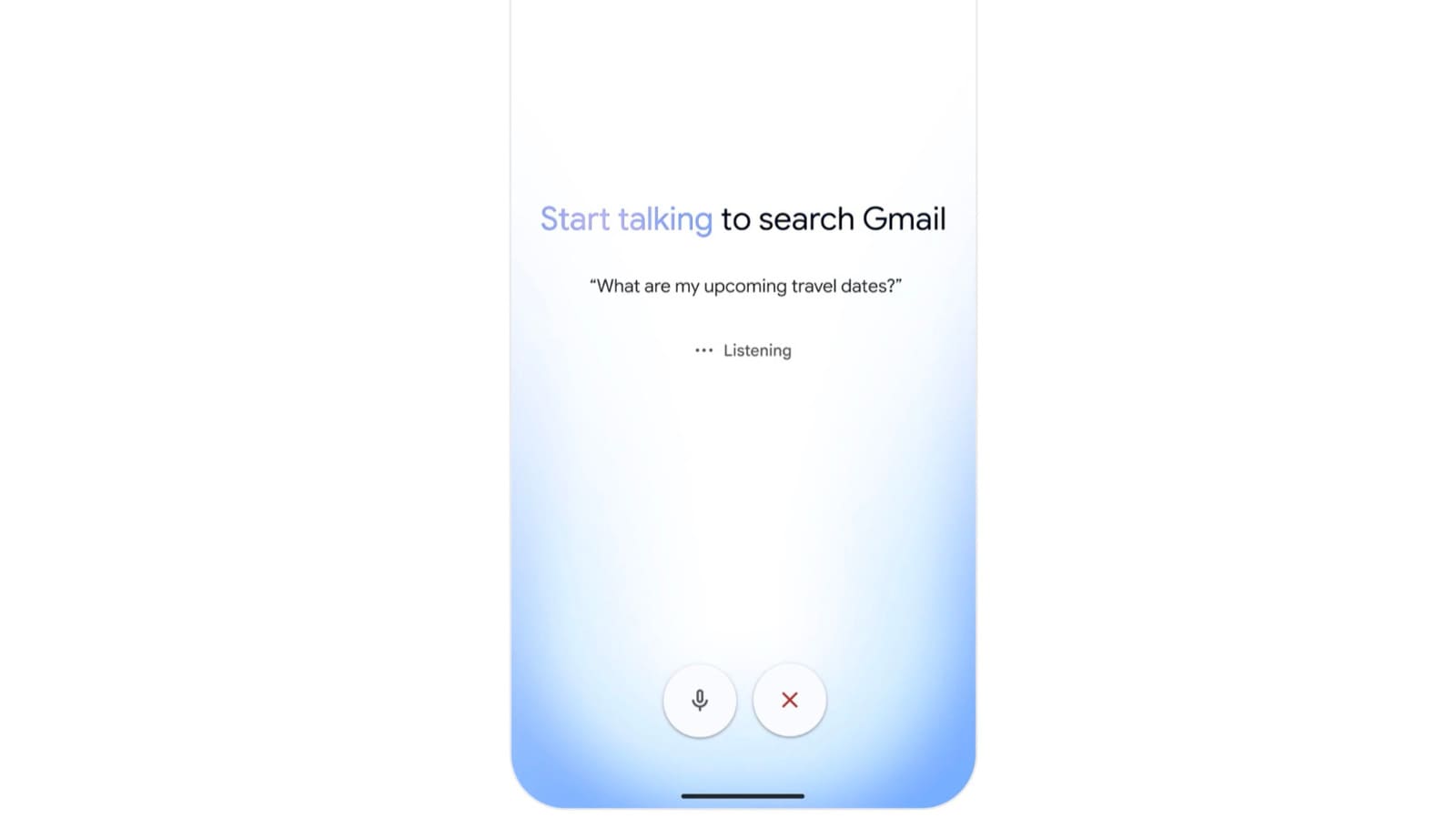
Google has opened beta access to a voice-powered search feature for Gmail, letting users query their inboxes through spoken natural language rather than typed keywords. The functionality, which surfaces as "Gmail Live" in mobile apps, represents the company's effort to embed conversational AI interfaces directly into productivity tools where millions already spend their workdays.
Early testers on Android and iOS are reporting access ahead of a planned summer rollout to subscribers of Google's AI Pro and Ultra tiers. The feature launches in fullscreen mode when activated, displaying a microphone toggle and an exit button to return to the standard inbox view. A beta disclaimer appears on launch, signaling the experimental nature of the release.
At DailyTechWire, we've tracked Google's push to layer Gemini across its application suite since the I/O announcements in May. This Gmail integration follows a pattern the company has telegraphed clearly: take the live voice interaction model that debuted in standalone Gemini chatbot sessions and port it into the apps where users actually do their work.
What Users Can Actually Do
The practical use cases center on retrieval tasks that typically require manual filtering or keyword guesswork. Users can ask Gemini to surface emails related to upcoming travel, locate package tracking updates, or pull correspondence from specific timeframes. The system processes spoken queries and returns relevant threads, though early reports indicate a brief processing lag between voice input and results.
The interface replaces Gmail's existing search bar interaction model. Instead of typing fragmented keywords and hoping for the right autocomplete suggestions, users tap a Live icon that appears alongside the familiar Gemini button in the search field. The shift from text to voice input may appeal to mobile users navigating inboxes while commuting or multitasking, though the value proposition hinges on whether voice recognition accuracy and retrieval precision exceed the speed of a quick keyword tap.
Google has not disclosed the underlying retrieval architecture, but the feature likely relies on Gemini's language model to parse conversational queries into structured search parameters, then maps those against Gmail's existing indexing layer. The challenge lies in disambiguation: when a user asks for "my flight details," the system must infer whether that means upcoming bookings, past trips, or confirmation emails from a specific airline.
Part of a Broader Workspace AI Strategy
Gmail Live sits within a wider rollout of voice-enabled features across Google's productivity stack. Docs Live, still unreleased, is designed to transform spoken stream-of-consciousness input into formatted document drafts, pulling contextual details from linked apps with user permission. Keep Live, the note-taking variant, has been spotted in limited testing and aims to let users dictate notes hands-free with automatic structuring.
The naming convention signals Google's intent to establish "Live" as a recognizable brand for voice-first AI interactions across Workspace. The strategy mirrors Microsoft's Copilot branding, which unified AI features across Office apps under a single identity. For Google, the challenge is ensuring that each app-specific Live implementation feels native rather than like a chatbot awkwardly grafted onto existing interfaces.
Access remains gated behind subscription tiers. Google AI Pro and Ultra subscribers will be the first to use Gmail Live in production, with Workspace business customers able to preview the features before broader availability. The tiered access model reflects both the computational cost of running inference on voice queries and Google's effort to monetize generative AI capabilities beyond ad revenue.
Adoption Friction and Behavioral Shifts
Voice interfaces in productivity apps face a familiar adoption hurdle: they require users to change ingrained behaviors. Typing a search query is fast, private, and silent. Speaking to an app demands a quiet environment, tolerance for potential misrecognition, and comfort with audibly describing work tasks in shared spaces. Gmail Live may find traction among users who already rely on voice assistants for other tasks, but converting keyboard-first users will require demonstrable speed and accuracy gains.
The beta designation also suggests Google is still tuning the feature's performance. Processing delays, even brief ones, can erode trust in voice interfaces. If a user can type and execute a search faster than waiting for a voice command to process, the feature becomes a novelty rather than a tool.
Google's broader AI integration strategy assumes that embedding intelligence directly into workflows where users already operate reduces friction compared to asking them to switch contexts to a separate chatbot interface. The counterargument is that adding new interaction models to familiar apps introduces cognitive overhead, especially if the voice interface behaves unpredictably or requires users to learn new phrasing conventions.
What Comes Next
The summer rollout timeline positions Gmail Live as part of Google's H2 product cadence, likely timed to coincide with Workspace feature announcements and subscription tier promotions. Whether the feature graduates from beta to general availability will depend on user engagement metrics and feedback from the current testing cohort.
Google Workspace business customers, who represent a significant revenue stream, will be watching closely. Enterprise IT teams typically move cautiously on features that touch sensitive data like email, and voice-driven search raises questions about data handling, transcription logging, and compliance with industry-specific regulations. Google will need to provide clear documentation on how voice queries are processed, stored, and whether they feed back into model training.
For now, Gmail Live remains an experiment in making email search conversational. Its success will hinge less on the novelty of talking to your inbox and more on whether it can consistently deliver the right results faster than the tools users already know.