Flock's Investigative AI Tracks Drivers by Behavior, Not Just Plates
New surveillance software allows law enforcement to locate people using movement patterns, physical descriptions, and natural-language prompts - without a crime or license plate number.
From Plates to Patterns
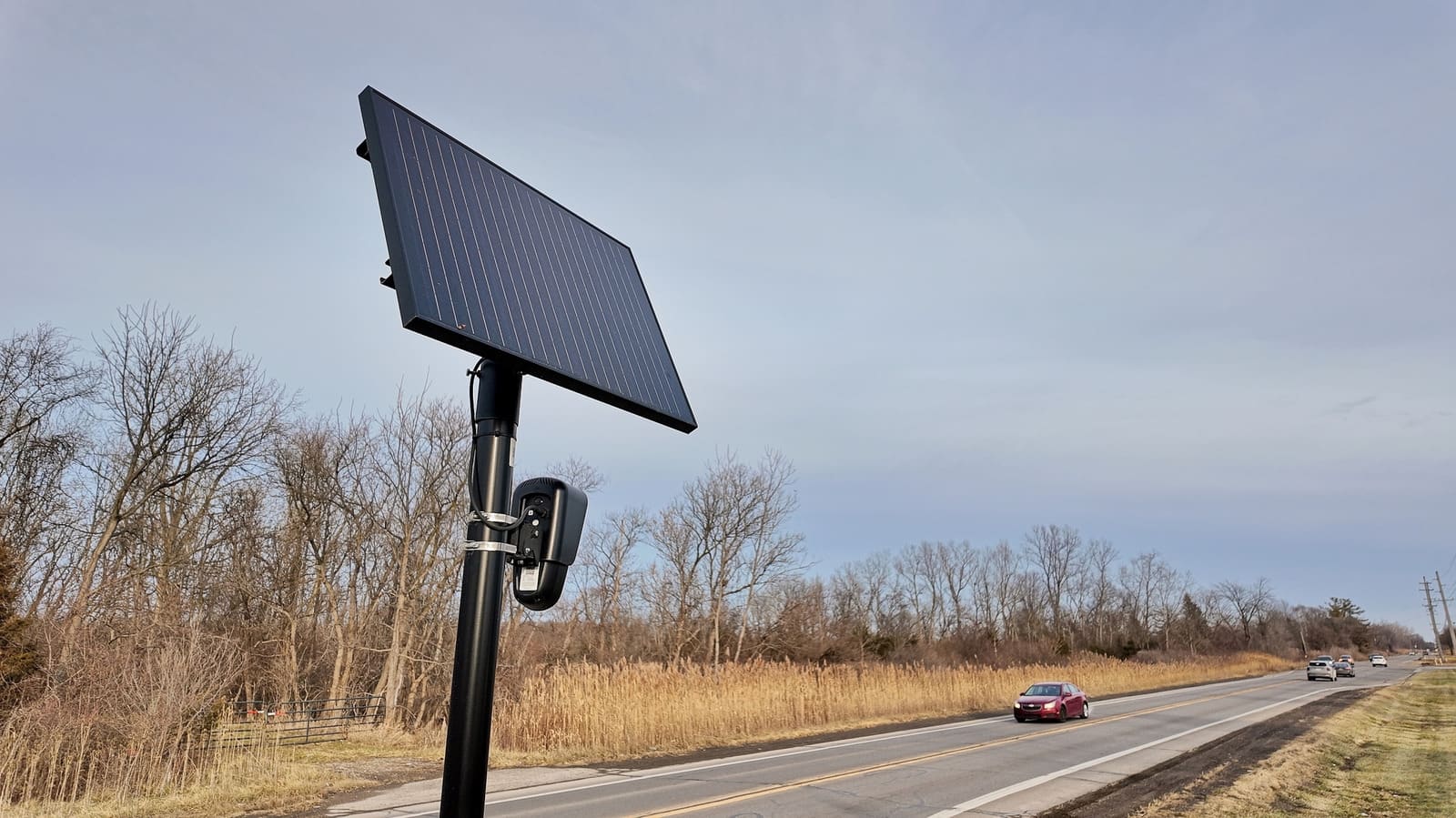
Flock Safety has operated in the automated license plate recognition space for years, positioning itself as a community safety tool. The company's newest product, OS Investigate, represents a significant expansion in capability. Instead of simply logging vehicle registrations, the software analyzes driving behavior across a network spanning 6,000 communities and allows officers to search for individuals without traditional identifiers like names or license plates.
The system draws from existing camera infrastructure but layers behavioral analysis on top. An officer can define a geographic area, specify a time window, and describe a pattern - someone who drives through a particular neighborhood every Tuesday morning, for instance - and the algorithm surfaces matching vehicles. From there, the software can cross-reference police case files, emergency dispatch records, and commercial identity databases to produce names, addresses, and relationship maps.
At DailyTechWire, we've tracked the evolution of smart-city surveillance across Asia and North America, and this shift from passive recording to predictive search represents a new threshold. The question is no longer what the cameras see, but how the software interprets routine movement as investigative signal.
Natural Language as Search Interface
OS Investigate includes a chatbot that accepts plain-English prompts. Pre-loaded examples include queries like "find me witnesses based on vehicles most seen in [neighborhood] during [last 14 days] during [daily timeframe]." Officers fill in the blanks and submit. Notably, these prompts do not require an incident number or evidence of a crime.
The conversational interface lowers the technical barrier to broad-scope searches. Instead of constructing database queries with specific parameters, an officer can ask the system to surface patterns and let the algorithm decide what qualifies as relevant. This design choice prioritizes ease of use over constraint, a trade-off that has implications for how widely - and how casually - the tool might be deployed.
Noel Pichardo, a former police officer who reviewed the software, called the capability "completely insane" and argued that the system amounts to tracking people rather than vehicles. An active officer who spoke on condition of anonymity described the witness-finding function as making him "slightly uncomfortable," though he added that law enforcement should use every available tool. Security researcher Buchodi acknowledged the investigative utility but noted that many innocent activities could be flagged by pattern-matching algorithms.
Fishing Expeditions and Fourth Amendment Questions
Chad Marlow, an attorney with the American Civil Liberties Union, identified a structural risk: officers can effectively go fishing for crimes by asking open-ended questions. The difference between "Do you see any criminal patterns?" and "Find me criminal patterns" may seem semantic, but the framing influences what the algorithm surfaces. Without constraints on prompt design, the software can be steered toward speculative investigations rather than responding to known incidents.
This concern sits at the intersection of technology and constitutional law. Traditional search warrants require probable cause tied to a specific person or location. Behavioral pattern searches invert that logic, starting with a hunch and working backward to identify suspects or witnesses. Whether such searches comply with Fourth Amendment protections remains an open question, and one that will likely be tested in court as the technology scales.
Flock has stated that OS Investigate is currently in testing with select law enforcement partners and that the final product may differ from the version under review. The company has not disputed the reported capabilities but emphasized that this is a separate offering from its license-plate recognition technology.
A History of Misuse
Flock's core product has already attracted scrutiny for officer abuse. Multiple reports have documented cases in which police used the cameras to surveil individuals for personal reasons, including stalking former partners. In response, Flock introduced safeguards such as user lockouts for flagged behavior and mandatory case-code attachment to searches.
The safeguards were reactive, implemented after patterns of misuse became public. The scale and scope of OS Investigate raise the stakes. If officers can search by physical description and location alone, the potential for pretextual or discriminatory searches grows. The system's reliance on pattern recognition also means that routine behavior - commuting, visiting family, frequenting a gym - can become investigative data points.
A Massachusetts officer is currently facing dismissal and charges for allegedly misusing Flock camera data, while an Ohio community has called for a pause on Flock deployments. These incidents underscore the gap between the technology's technical capabilities and the institutional controls needed to govern its use.
Community Backlash and Vandalism
Public opposition to Flock has intensified in recent months. Several law enforcement agencies have ended contracts with the company, and residents in multiple jurisdictions have taken direct action. Cameras have been vandalized, destroyed, or stolen. In one Minnesota town, the entire fleet of Flock cameras disappeared overnight; the local police department announced it would not replace them.
The backlash reflects broader discomfort with pervasive surveillance infrastructure. Even when deployed with stated crime-prevention goals, these systems create a persistent record of movement that can be queried retroactively and repurposed in ways communities did not anticipate. OS Investigate amplifies that discomfort by making behavioral pattern analysis the explicit use case rather than a latent capability.
The Inference Layer Changes Everything
License plate recognition is a mature technology, widely deployed and relatively well understood. What OS Investigate introduces is an inference layer - software that interprets movement as behavior, behavior as pattern, and pattern as probable relevance to an investigation. That interpretive step is where the legal and ethical questions concentrate.
Inference engines trained on movement data do not distinguish between suspicious and routine. A person who drives through a neighborhood at the same time each week might be casing homes, visiting a relative, or commuting to a second job. The algorithm flags the pattern; the officer decides what it means. But the decision is shaped by what the algorithm surfaces, and the algorithm is shaped by the prompts it receives.
This feedback loop - between officer intuition, prompt design, and algorithmic output - is where the risk of bias and overreach becomes structural rather than incidental. As jurisdictions consider adopting OS Investigate or similar tools, the governance framework will need to account for how inference changes the nature of surveillance, not just its scale.