Federal Regulators Tell Robotaxi Operators to Fix Emergency Response Failures
NHTSA's directive to autonomous vehicle developers escalates pressure on operators whose fleets repeatedly block first responders, as fractures deepen between Waymo and Uber.
A Line in the Sand
The National Highway Traffic Safety Administration has drawn a hard line with autonomous vehicle operators. In a directive sent to every AV developer listed in the Department of Transportation's Standing General Order, NHTSA administrator Jonathan Morrison declared that vehicles unable to detect and respond to emergency scenes represent a "functional insufficiency," not an acceptable limitation of emerging technology.
Morrison's language cuts through the usual technicalities that define federal automotive regulation. Emergency scenes, he wrote, are not rare or extreme edge cases. The implication is unmistakable: if your robotaxi cannot navigate around a fire truck or yield to an ambulance, your system is not ready for public roads.
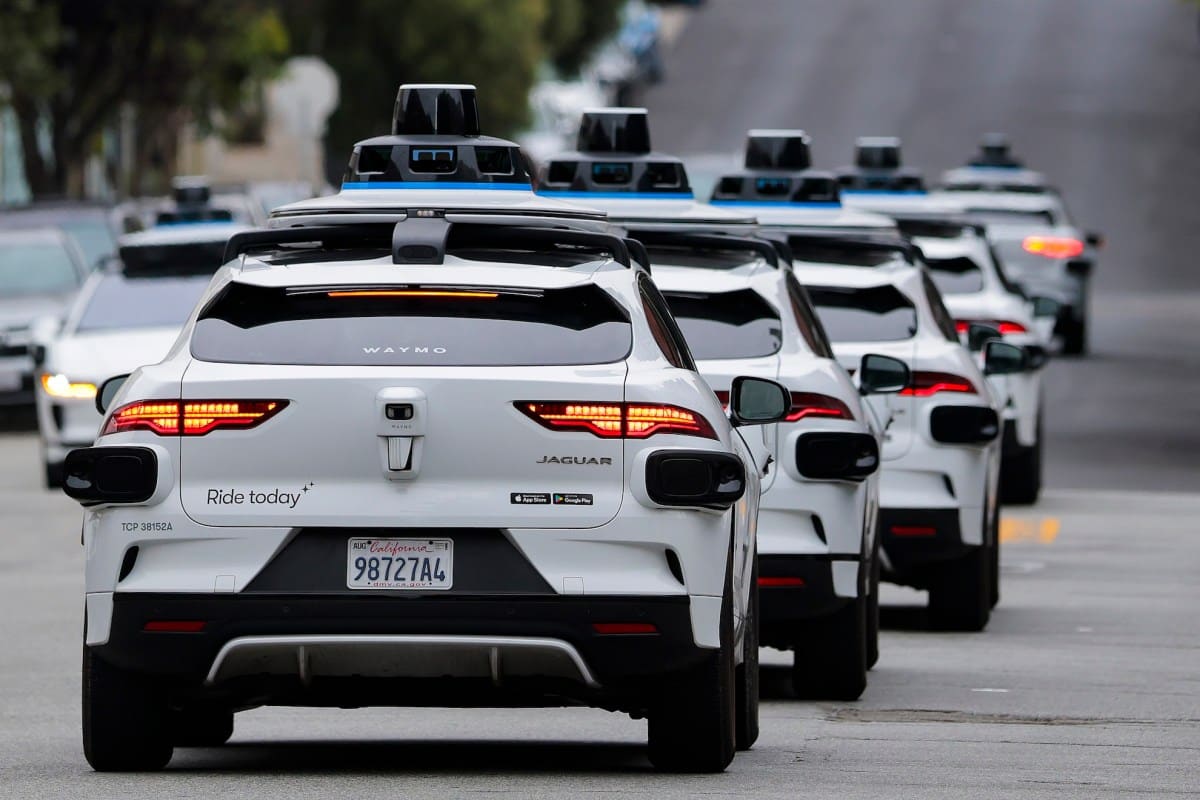
The directive arrives against a backdrop of mounting incidents. Waymo, which operates the largest robotaxi fleet in the United States across Los Angeles, Phoenix, and San Francisco, has logged repeated encounters with first responders that have delayed emergency operations. While Morrison's letter does not single out any company by name, the timing and context suggest federal patience is wearing thin with the segment leader.
The San Francisco Stress Test
A recent July 4 fireworks display in San Francisco delivered an unintended stress test for autonomous vehicles. The event triggered massive gridlock, and multiple Waymo robotaxis ran out of battery power during the extended traffic jam. Local authorities had to tow the stranded vehicles.
San Francisco supervisor Bilal Mahmood announced plans to submit a letter of inquiry examining how autonomous vehicles affected public transit services and emergency responders during the incident. The inquiry reflects a growing willingness among local officials to scrutinize robotaxi operations more closely, particularly when failures cascade into broader public safety consequences.
At DailyTechWire, we've tracked similar incidents across deployment cities. What differentiates this episode is not the technical failure itself but the political response it has catalyzed. Municipal and federal regulators are no longer treating these events as isolated glitches in a maturing technology. They are framing them as systemic gaps that demand urgent remediation.
Compliance Without Teeth?
NHTSA has demanded that companies present solutions by the end of the month. The question facing the industry is whether this directive carries substantive enforcement mechanisms or remains another advisory in a long chain of federal guidance.
Morrison's letter has rhetorical weight. But the agency's historical approach to AV oversight has leaned heavily on voluntary compliance and data reporting rather than punitive action. The Standing General Order itself is a reporting framework, not a permitting regime. Companies are required to disclose crashes and certain operational data, but they do not need federal approval to deploy vehicles in most jurisdictions.
The lack of explicit consequences in Morrison's directive suggests NHTSA is testing whether public pressure and reputational risk will compel action. If companies fail to deliver credible fixes by the deadline, the agency will face a decision: escalate to formal investigation and potential enforcement, or accept incremental progress and risk further public incidents.
Regulatory Roadmap for Vehicles Without Drivers
Beyond the emergency response directive, the federal government has quietly advanced a broader regulatory agenda for autonomous vehicles. The 2026 Regulatory Plan and Unified Agenda, updated last week, includes a series of proposed changes to Federal Motor Vehicle Safety Standards.
These revisions target design requirements that assume human operation: steering wheels, pedals, mirrors, and dashboard controls. Companies like Tesla and Zoox, which are developing purpose-built autonomous vehicles without traditional driver interfaces, have long argued that existing FMVSS rules constrain innovation without improving safety.
The proposed changes signal federal willingness to accommodate novel vehicle architectures, provided manufacturers can demonstrate equivalent safety performance. But the regulatory process is slow. Rulemaking often spans years, and industry observers expect final standards to lag well behind deployment timelines for many next-generation AV platforms.
The Uber-Waymo Fracture
While federal regulators tighten scrutiny, the commercial landscape for robotaxis is shifting. Uber and Waymo ended their partnership in Phoenix, leaving only Atlanta and Austin as remaining collaboration markets. The question is not whether these agreements will terminate, but when.
Uber executives have recently taken thinly veiled shots at Waymo in public forums and earnings calls. The rhetoric reflects a strategic pivot. Uber initially positioned itself as a neutral platform willing to integrate multiple AV providers. That stance is eroding as the company pursues its own autonomous technology through partnerships with other developers and internal R&D.
Once the remaining partnerships dissolve, expect the rivalry to move beyond public relations. Policy will become a central battleground. Both companies are lobbying state and municipal governments for favorable operating rules, permit allocations, and access to high-demand routes. Waymo's first-mover advantage in deployment gives it operational leverage, but Uber's relationships with drivers, regulators, and urban transit agencies provide a different kind of influence.
The coming policy fights will shape which cities open to robotaxi expansion, what safety standards operators must meet, and whether incumbents can use regulatory capture to slow new entrants. At DailyTechWire, we expect these dynamics to intensify through the end of 2026 and into 2027, particularly in markets like Miami, Seattle, and Dallas where multiple operators are positioning for entry.
Capital and Scale
Rivian's recent capital raise underscores the financial intensity of scaling vehicle production, even for companies with established products. The EV maker sold 86.25 million Class A common shares at $15.50 each, raising $1.32 billion. The timing coincides with the start of R2 SUV deliveries and an upward revision to the company's 2026 sales forecast, now targeting 65,000 to 70,000 vehicle deliveries.
Rivian has not disclosed the specific use of proceeds, but the fundamentals are clear. The company remains unprofitable, and ramping production of the R2 requires substantial capital investment in manufacturing capacity, supply chain partnerships, and service infrastructure. For context, Tesla burned billions of dollars during the Model 3 ramp, even with fewer vehicle variants and a more vertically integrated supply chain.
The capital markets remain open to EV manufacturers with credible growth trajectories, but investor patience is finite. Rivian's ability to hit delivery targets and demonstrate margin improvement over the next 18 months will determine whether it can access additional capital on favorable terms or faces a valuation reset.
What Comes Next
Morrison's directive sets a 30-day clock. Companies will submit plans, NHTSA will review them, and the public will watch for signs of meaningful action. If the solutions are substantive and rapidly deployed, the incident may mark a turning point in AV safety culture. If they are perfunctory, the agency will face pressure to escalate.
Meanwhile, the Uber-Waymo split continues to redraw competitive lines. The robotaxi industry is moving from a phase of cautious collaboration to one of direct competition, with policy influence as a primary lever. Cities, states, and federal regulators will find themselves courted, lobbied, and pressured by companies seeking advantageous rules.
The stakes are high. Autonomous vehicles promise to reshape urban mobility, reduce traffic deaths, and unlock new economic models. But those benefits depend on systems that work reliably in the messy, unpredictable environments where emergency responders operate every day. Morrison's letter is a reminder that technology alone is not enough. The industry must also earn and maintain public trust.