FCC Approves Satellite That Beams Sunlight to Earth, Astronomers Push Back
Reflect Orbital's demo won spectrum clearance despite warnings about sky brightness and safety risks, exposing a gap in US space regulation.
A License for Artificial Daylight
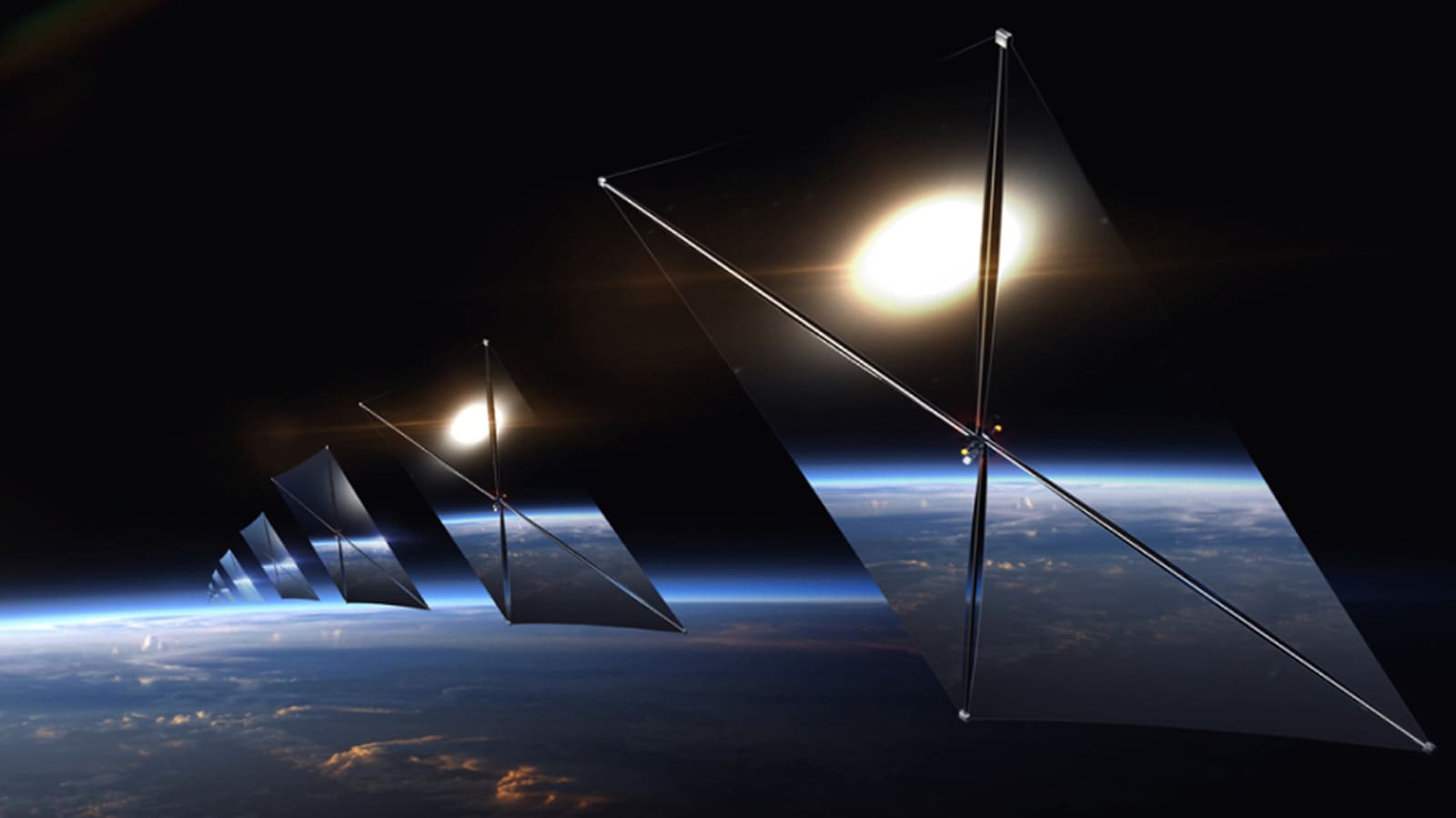
The Federal Communications Commission cleared Reflect Orbital to launch Earendil-1, a demonstration satellite designed to redirect sunlight toward Earth after dark. The approval, issued this week, centers on the spacecraft's use of radio frequencies - but scientists say the real stakes lie in what happens when a mirror the size of a car starts bouncing concentrated solar rays across the night sky.
Reflect Orbital envisions a constellation similar in scale to Starlink, positioning reflectors on demand to illuminate solar farms during off-peak hours or aid search-and-rescue operations in remote terrain. For now, the company will test the concept with a single unit equipped with a thin-film reflector and onboard propulsion for collision avoidance in low-Earth orbit.
The American Astronomical Society met with FCC staff before the decision, arguing the application differs fundamentally from standard telecom satellite filings. The group noted that Earendil-1 is engineered to maximize brightness - a feature that creates unavoidable interference for ground-based telescopes and introduces hazards the commission has no statutory authority to assess.
Where the Mandate Ends
The FCC acknowledged the criticism but declined to weigh health or environmental factors in its decision. In its published opinion, the commission cited the Communications Act, which directs it to promote new technologies serving the public interest. Safety concerns beyond spectrum allocation, the agency concluded, fall outside its remit.
That position leaves a regulatory void. Dark Sky UK's James Verner posed the question directly: if the body licensing these satellites cannot examine their effects on the sky or the surface below, who holds that responsibility?
At DailyTechWire, we've tracked regulatory fragmentation across Asia's space sector - where ministries of science, transport, and defense often divide oversight - but the US framework presents a different puzzle. The FCC controls frequency. The Federal Aviation Administration licenses launches. The National Oceanic and Atmospheric Administration regulates remote sensing. No single agency evaluates cumulative light pollution or the broader environmental footprint of commercial constellations.
Brightness by Design
The American Astronomical Society raised specific risks in its filing. Earendil-1's reflector could cause temporary flash blindness for pilots and drivers if the beam intersects flight paths or highways. The society also warned of retinal damage for amateur astronomers observing through telescopes with apertures exceeding twelve inches - a threshold Reflect Orbital itself acknowledged in technical documents.
The FCC's response framed the issue as a probability calculation: the chance that an individual happens to be using a large telescope at the precise moment the satellite passes overhead, actively reflecting sunlight at maximum exposure angle, and stares long enough to sustain injury. Balanced against that narrow scenario, the commission wrote, is the benefit of letting American companies test innovative technology in orbit.
Reflect Orbital has published operational guidelines intended to mitigate interference. The company plans to activate the reflector only during scheduled windows, notify research institutions in advance, and avoid directing light near observatories or protected dark-sky zones. Whether those measures prove sufficient - or enforceable - remains untested, especially if the startup scales to dozens or hundreds of satellites.
The Precedent Question
Reflect Orbital is not the first venture to propose altering Earth's albedo or extending daylight artificially. A Russian project in the 1990s deployed a space mirror called Znamya, which produced a brief flash of light visible from the ground before the reflector failed to unfurl properly. China's state media reported in 2018 that Chengdu planned to launch "artificial moons" to replace streetlights, though no operational system materialized.
What differs now is the commercial infrastructure. Launch costs have dropped by an order of magnitude in the past decade, and regulatory pathways - however fragmented - exist for private actors to file applications and secure spectrum. The result is a growing queue of proposals that treat near-Earth orbit as a testing ground for concepts that were previously confined to research papers.
The astronomy community has spent years negotiating with satellite operators over constellation brightness. SpaceX agreed to add visors to Starlink units after initial deployments caused streaks across telescope exposures. OneWeb adjusted orbital altitude to reduce reflection during twilight hours. Those accommodations, however, addressed unintended side effects. Reflect Orbital's mission is to create brightness - turning mitigation into a fundamentally harder problem.
Jurisdictional Gaps and Market Pressure
The FCC's narrow interpretation of its authority may accelerate a broader reckoning. If spectrum licensing becomes the de facto gateway for space-based services with terrestrial effects, other agencies will face pressure to assert jurisdiction or accept gaps in oversight.
The National Environmental Policy Act requires federal agencies to assess environmental impacts for major actions, but the FCC has historically treated satellite licenses as categorical exclusions. Environmental groups could challenge that practice in court, though litigation timelines rarely keep pace with orbital deployments.
International frameworks offer limited recourse. The Outer Space Treaty establishes liability for damage caused by space objects, but light pollution and astronomical interference occupy a gray zone - harmful in aggregate, difficult to attribute to any single actor, and largely unaddressed in treaty text drafted decades before megaconstellations became economically viable.
Asia's regulatory approach has been more centralized in some jurisdictions. Japan's space activity law consolidates licensing under the Cabinet Office, while South Korea's aerospace ministry coordinates with environmental and science agencies before approving missions. Neither system is without friction, but the integrated review process surfaces conflicts earlier than the US model, where agencies operate in parallel with minimal coordination.
What Comes After the Demo
Reflect Orbital has not disclosed a timeline for expanding beyond Earendil-1, though the company's website describes a future network capable of delivering sunlight "on demand, anywhere on Earth." That vision assumes continued regulatory approval, customer demand, and the ability to operate without triggering legal or diplomatic pushback.
The astronomy community is preparing for the latter scenario. The American Astronomical Society has called for a moratorium on highly reflective satellites until impact assessments are completed and mitigation standards established. The International Astronomical Union is drafting guidelines for satellite operators, though compliance remains voluntary.
For now, the question is not whether artificial sunlight is technically feasible - Reflect Orbital's demo will answer that - but whether the patchwork of agencies overseeing space activity can adapt to missions that blur the line between orbit and atmosphere, infrastructure and intervention. The FCC's approval suggests the current framework is not built for that task.