Tencent-Backed Enflame Draws 4,000x Oversubscription in Shanghai Tech Listing
The mainland AI chip maker's retail frenzy signals deepening domestic appetite for Nvidia alternatives as export controls reshape the semiconductor landscape.
Retail Investors Pile Into AI Silicon Play
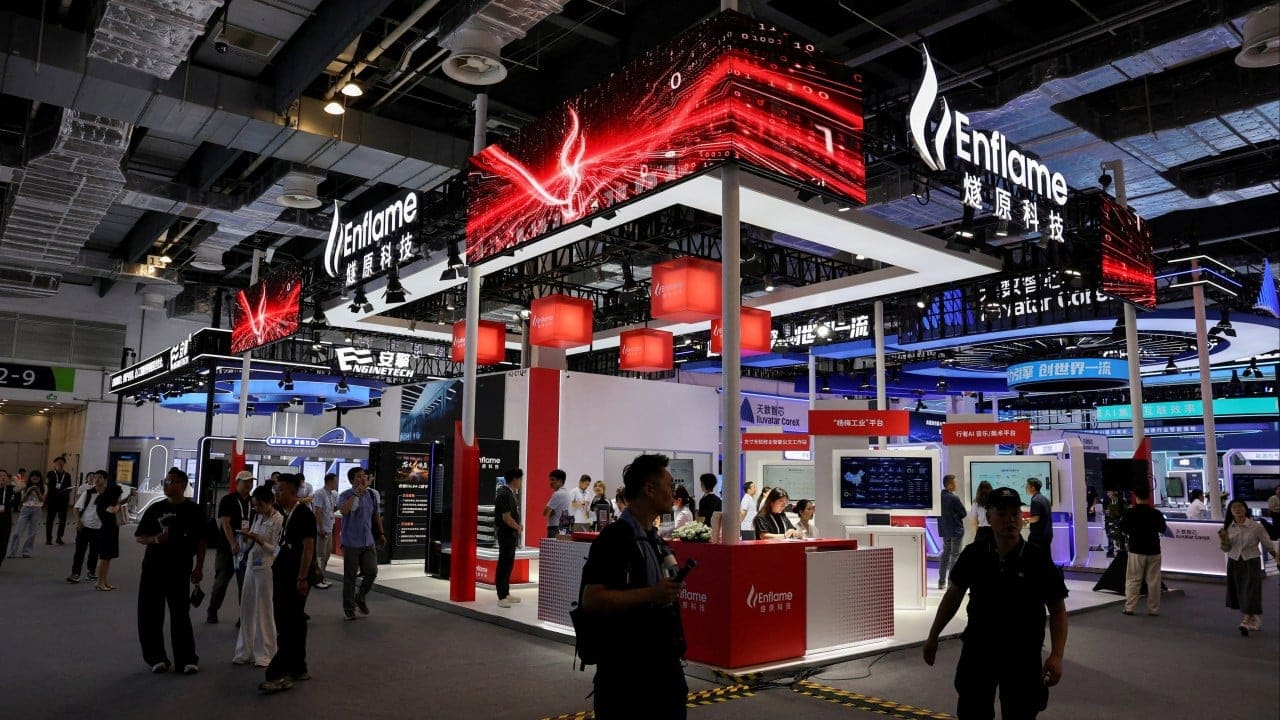
Seven million retail investors submitted orders for shares in Enflame Technology's Shanghai debut, generating demand 4,073 times the available allocation in the mainland AI chipmaker's 6.12 billion yuan (US$910.9 million) initial public offering. The oversubscription ratio, disclosed in filings to the Shanghai Stock Exchange, places the Tencent-backed company among the most sought-after tech listings on the Star Market this year.
At DailyTechWire, we've tracked a steady escalation in domestic semiconductor IPOs since Washington tightened export controls on advanced AI chips in 2022 and again in 2023. Enflame's reception suggests that retail and institutional capital in China now views indigenous AI silicon not as a defensive hedge but as a growth vector in its own right, one that sits at the intersection of national technology policy and genuine commercial opportunity in inference and training workloads.
Why Enflame Matters in the Nvidia Shadow
Enflame designs chips tailored for machine-learning inference and training, positioning itself as a domestic substitute in data centers that can no longer source Nvidia's H100 or A100 accelerators. The company's architecture focuses on efficient tensor operations and lower power envelopes, trade-offs that matter in hyperscale deployments where electricity and cooling costs compound quickly.
Tencent Holdings holds a stake in Enflame, lending both capital and a potential route to volume orders across the internet giant's cloud and gaming infrastructure. That backing also signals strategic alignment: Tencent has publicly committed to reducing reliance on US semiconductor suppliers, and Enflame's roadmap dovetails with those procurement goals.
The 4,073x oversubscription for the retail tranche alone underscores two forces. First, Chinese savers have limited outlets for equity exposure to the AI boom, a dynamic that concentrates speculative energy on any credible domestic chip play. Second, the listing arrives as Beijing continues to funnel subsidies and procurement preferences toward semiconductor firms that can demonstrate progress on process nodes, packaging, and software stacks that together constitute a workable alternative to incumbents like Nvidia and AMD.
The Capital Structure and Use of Proceeds
Enflame plans to deploy the 6.12 billion yuan toward expanding R&D headcount, scaling production partnerships with foundries, and building out a software ecosystem that includes compilers, runtime libraries, and model optimization tools. The last piece is often the choke point: hardware performance means little if developers cannot easily port PyTorch or TensorFlow workloads to a new instruction set.
Institutional tranches in the IPO were also heavily oversubscribed, though the company has not yet disclosed final allocation figures for that segment. Star Market rules require a minimum 20 percent retail allocation for tech IPOs, a structure designed to broaden participation but one that also amplifies volatility in the first weeks of trading.
Enflame's valuation at the IPO price implies a forward revenue multiple in line with other Chinese fabless chip designers, though still well below Nvidia's stratospheric ratios. The gap reflects both the maturity of Enflame's product line and lingering questions about gross margins when competing against a supplier that enjoys economies of scale in silicon, software, and a decade-long developer moat.
Competitive Landscape and the Race for Inference Share
Enflame enters a crowded domestic field. Cambricon Technologies, Horizon Robotics, and a clutch of venture-backed startups are all vying for the same pool of hyperscaler and enterprise customers. Differentiation hinges on a mix of performance per watt, software maturity, and the ability to secure foundry capacity at SMIC or other mainland fabs operating under US equipment restrictions.
The most credible near-term opportunity lies in inference workloads, particularly for large language models and recommendation engines, where latency and throughput matter more than raw floating-point muscle. Training remains the domain of Nvidia's top-end parts, and replicating that capability on older process nodes or with alternative architectures is a multi-year engineering challenge.
Export controls have inadvertently created a protected domestic market. Chinese cloud providers and device makers cannot easily procure cutting-edge US silicon, so they are forced to evaluate local alternatives even if those chips trail by a generation or more in absolute performance. That dynamic gives Enflame and its peers a window to iterate, gather deployment data, and close the gap before any potential easing of restrictions.
Risks and the Road Ahead
High oversubscription ratios often precede sharp first-day pops followed by equally sharp corrections as retail speculators rotate out. Enflame's fundamentals will be tested in quarterly earnings, where revenue growth, design win announcements, and gross margin trends will either validate the valuation or expose it as frothy.
Longer term, the company must navigate foundry constraints. SMIC's most advanced nodes remain under US export restrictions for certain lithography tools, limiting the pace at which Enflame can shrink geometries and improve power efficiency. Any further tightening of controls on EDA software or packaging technology would compound those headwinds.
On the software side, Enflame has open-sourced parts of its compiler stack, a move intended to build developer goodwill and accelerate ecosystem contributions. Whether that strategy can rival the network effects Nvidia enjoys through CUDA remains an open question, one that will shape not just Enflame's trajectory but the viability of China's broader push for AI silicon sovereignty.
The 4,073x oversubscription is a data point, not a verdict. It tells us that capital is abundant and that the narrative of domestic tech self-reliance resonates with both retail and institutional investors. What it cannot tell us is whether Enflame's chips will close the performance gap, win sustained hyperscaler orders, and deliver the margins that justify the IPO price. Those answers will emerge in the next twelve to eighteen months, as the company ships volume silicon and navigates a geopolitical landscape that shows no sign of simplifying.