How a Taiwanese PC Giant Is Quietly Reshaping Its Footprint for the AI Era
Compal Electronics, a contract manufacturer that has spent decades building laptops for HP and Dell, is betting its future on a very different kind of hardware - and a very different geography.
The Pivot No One Saw Coming
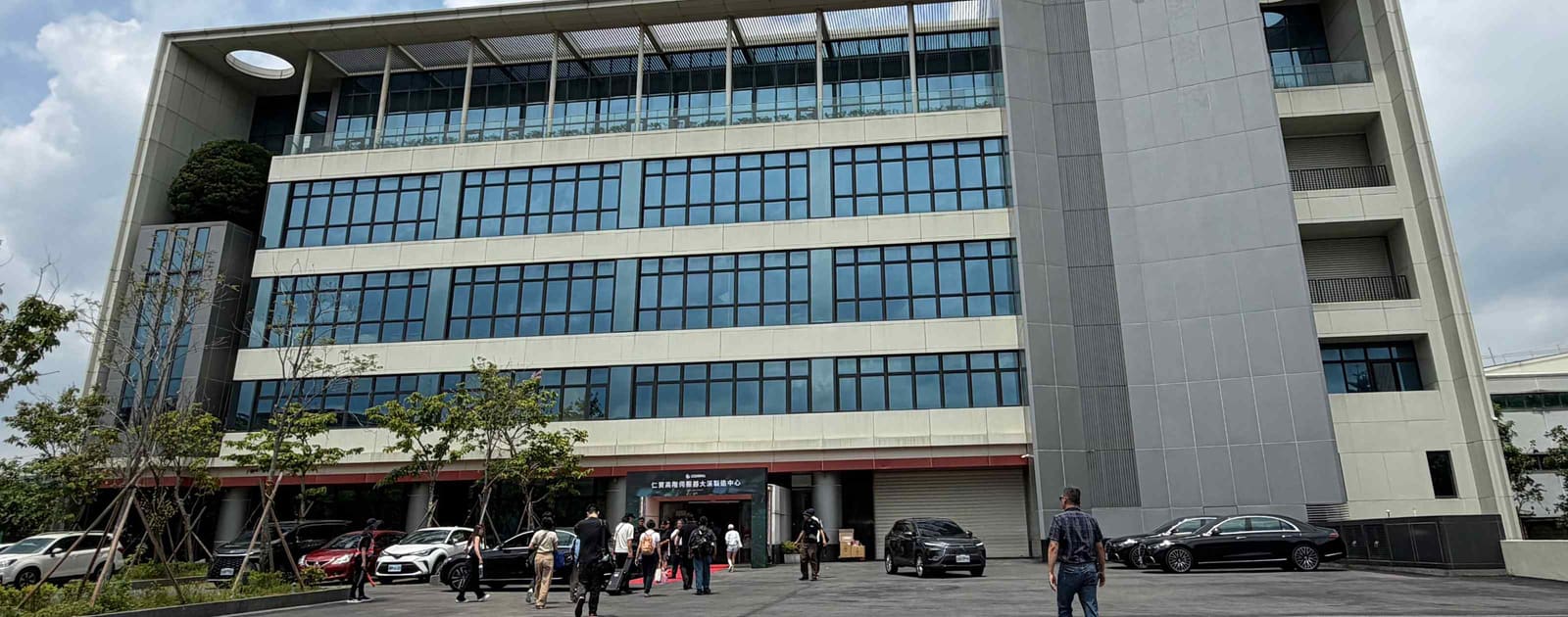
Walk into Compal Electronics' new facility in Taoyuan, and you will notice something unusual: the racks being assembled here bear little resemblance to the clamshell notebooks that built the company's fortune. These are AI servers - dense, power-hungry machines designed to train large language models and run inference workloads at scale. For a firm that has quietly supplied laptops to HP and Dell for decades, the shift represents more than a product line expansion. It is a geographic and strategic recalibration driven by one of the fastest-moving infrastructure buildouts in modern computing history.
Compal is now spreading capacity across three continents. New lines are coming online in Taiwan, Vietnam, and the United States, each chosen for distinct reasons: proximity to hyperscale customers, labor cost arbitrage, and - increasingly - compliance with export controls and supply chain resilience mandates. At DailyTechWire, we have tracked similar moves by Quanta, Wistron, and Inventec over the past eighteen months, but Compal's timing and geographic spread offer a case study in how legacy contract manufacturers are navigating the AI infrastructure gold rush.
Why Contract Manufacturers Matter in the AI Stack
The AI boom is often framed around chip designers - Nvidia, AMD, Broadcom - and the hyperscalers that deploy them. But between the silicon and the data center sits a less glamorous, capital-intensive layer: the companies that actually assemble the servers. These firms negotiate supply chains for GPUs, high-bandwidth memory, cooling systems, and custom chassis, then integrate them at volume. Margins are thin, lead times are brutal, and a single component shortage can cascade into quarters of lost revenue.
Compal's legacy business - notebooks - is mature and commoditized. Global PC shipments have been flat or declining for years, and the pandemic-era bump has fully reversed. AI servers, by contrast, represent double-digit growth and higher average selling prices. According to industry data, the market for AI-optimized servers is expected to exceed $150 billion annually by 2027, driven by hyperscale deployments in North America and Asia-Pacific. For a contract manufacturer, that is a rare opportunity to capture both volume and margin.
But the shift is not without risk. AI servers require different engineering competencies - thermal management for 700-watt GPUs, high-speed interconnects, liquid cooling integration - and customers demand rapid iteration cycles. Compal is making that transition while also managing a geographic buildout that spans regulatory regimes, labor markets, and customer proximity requirements.
Taiwan: The Core, but Not the Future
Taiwan remains Compal's engineering and manufacturing nucleus. The Taoyuan facility, opened earlier this year, is where the company tests new server designs, qualifies components, and runs pilot production before ramping at scale. Taiwan's ecosystem advantages are well understood: proximity to TSMC, a deep bench of electrical and mechanical engineers, and tight integration with the broader electronics supply chain. For AI servers, that means faster time to market when Nvidia or AMD release new GPU generations.
Yet Taiwan also presents challenges that are forcing Compal - and its peers - to diversify. Geopolitical risk is the most obvious. Any escalation in cross-strait tensions would disrupt not just semiconductor fabs but also the downstream assembly and logistics networks that depend on them. Hyperscale customers, particularly those based in the United States, are increasingly explicit in their preference for geographic redundancy. Microsoft, Google, and Amazon have all signaled in vendor discussions that they want at least a portion of their server supply outside Taiwan.
Power and land constraints are another factor. Taiwan's electricity grid is already stretched, and AI servers consume vastly more power per rack than traditional compute. Local governments in northern Taiwan have been slow to approve new industrial power allocations, and environmental reviews have added months to facility timelines. For a company planning to double or triple AI server output over the next two years, those bottlenecks are existential.
Vietnam: Cost, Complexity, and the ASEAN Bet
Vietnam is where Compal is placing its volume manufacturing bet. The country has emerged as a preferred destination for electronics assembly over the past decade, driven by labor costs roughly 40 percent lower than coastal China, a young workforce, and a government eager to attract foreign direct investment. Compal already operates notebook lines in northern Vietnam; expanding into AI servers is a logical next step.
But AI servers are not notebooks. They require cleanroom-like environments for GPU and memory integration, more sophisticated quality control, and tighter logistics coordination with component suppliers. Vietnam's electronics ecosystem is still maturing. High-bandwidth memory, power supplies, and custom interconnects often must be imported, adding cost and lead time. Compal is working with local partners to build out a supplier base, but the process will take years.
There is also a talent gap. Vietnam has a large pool of assembly line workers, but fewer engineers with experience in high-speed signal integrity, thermal simulation, or firmware development - skills critical for AI server design. Compal is rotating engineers from Taiwan to train local teams, a common pattern among Taiwanese manufacturers but one that introduces cultural and operational friction.
Still, the economics are compelling. For hyperscalers ordering tens of thousands of units per quarter, even a 10 percent cost reduction per server translates into hundreds of millions in annual savings. Vietnam also offers tariff advantages under the Comprehensive and Progressive Agreement for Trans-Pacific Partnership, making it an attractive export hub for servers destined for North America and Europe.
The United States: Compliance, Proximity, and the Reshoring Push
Compal's planned expansion into the United States is the most strategically significant - and the most operationally complex. The company has not yet disclosed a specific location, but industry observers expect a facility in Texas or Arizona, states that have offered aggressive incentives for electronics manufacturing and have existing data center concentrations.
The U.S. buildout is driven less by cost than by compliance and customer proximity. Export controls on advanced AI chips to China have created a two-tier server market: unrestricted systems for domestic and allied customers, and downgraded configurations for Chinese buyers. Assembling servers on U.S. soil simplifies compliance, reduces customs scrutiny, and allows Compal to participate in government and defense contracts that require domestic sourcing.
Customer proximity is equally important. Hyperscalers increasingly want server suppliers located near their own data center clusters to enable rapid prototyping, on-site support, and just-in-time delivery. A Texas facility would sit within a day's drive of major Microsoft, Amazon, and Google data center regions. That geographic closeness can shave weeks off deployment timelines, a meaningful advantage when AI infrastructure is a bottleneck to revenue growth.
The trade-off is cost. U.S. labor rates are multiples of those in Vietnam, and the domestic supply chain for server components is thin. Compal will likely import most parts and perform final assembly and testing domestically - a model that captures the "Made in USA" label without requiring full vertical integration. Even so, the cost structure will be higher, and Compal will need to convince customers that speed and compliance justify the premium.
What This Means for the Contract Manufacturing Landscape
Compal's three-continent strategy reflects a broader recalibration in electronics manufacturing. For decades, the industry optimized for cost and scale, concentrating production in China and Taiwan. The AI era is introducing new variables: geopolitical risk, export controls, power availability, and customer co-location. The result is a more distributed, more expensive, and more strategically complex manufacturing footprint.
Other Taiwan-based contract manufacturers are following similar paths. Quanta has announced AI server capacity in Thailand and is exploring U.S. sites. Wistron is expanding in Mexico. Inventec is doubling down on Taiwan while hedging with Vietnam. The playbook is consistent: keep high-mix, low-volume production and engineering close to home, move high-volume assembly to Southeast Asia, and establish a compliance-friendly beachhead in North America.
For hyperscalers, this geographic spread is a feature, not a bug. It reduces single-point-of-failure risk and creates competitive pressure among suppliers. For contract manufacturers, it is a capital-intensive gamble. Building and ramping a new AI server line costs tens of millions of dollars, and there is no guarantee that today's customer commitments will translate into sustained orders two years from now. The AI infrastructure cycle could peak sooner than expected, or customers could bring more manufacturing in-house, as Meta has done with some custom server designs.
The Margins Are Thin, but the Stakes Are High
Compal's pivot is a reminder that even in a high-growth market, contract manufacturers operate on razor-thin margins. AI servers command higher prices than notebooks, but they also require more engineering support, tighter inventory management, and faster obsolescence cycles. A single GPU generation typically lasts twelve to eighteen months before customers migrate to the next node. That means Compal must continuously invest in new tooling, retrain workers, and requalify supply chains - all while competing against peers with similar capabilities.
The company's success will depend on execution: ramping Vietnam capacity without quality issues, securing U.S. site approvals and incentives, and maintaining engineering velocity in Taiwan despite power and talent constraints. It will also depend on the broader trajectory of AI infrastructure spending. If the current buildout is front-loaded - as some analysts suggest - Compal could find itself with excess capacity by 2028. If, on the other hand, AI workloads continue to scale and diversify, the company will have positioned itself at the center of the next decade of compute growth.
At DailyTechWire, we see Compal's geographic spread as both a hedge and a signal. The company is betting that AI infrastructure will remain a priority for hyperscalers, that export controls and geopolitical risk will drive demand for manufacturing diversification, and that customers will pay a premium for speed and compliance. Whether that bet pays off will become clear over the next two years, as the first wave of AI deployments matures and the economics of inference - rather than training - begin to dominate infrastructure decisions.