Britain Walks Back Mandatory Digital ID After Public Revolt
New Burnham government redirects £1.8 billion program to household energy relief as privacy fears and administrative missteps sink the second attempt at national identity infrastructure in two decades.
A Familiar Defeat for Identity Infrastructure
The United Kingdom has abandoned its second attempt in twenty years to build a national digital identity system. Prime Minister Andy Burnham confirmed on Monday that his administration will scrap the mandatory digital ID card program introduced by his predecessor, redirecting the £1.8 billion budget to energy bill relief as household costs continue to climb.
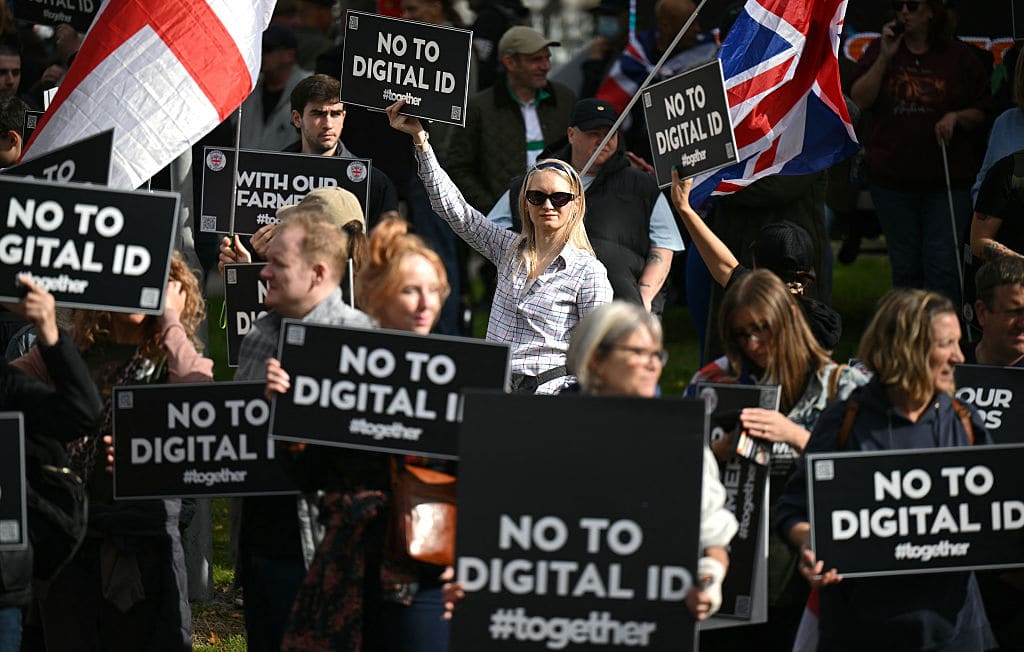
The decision follows a public petition that drew nearly three million signatures, making it the second-largest parliamentary petition in British history. For anyone tracking digital identity deployments across Europe and Asia, the failure offers a case study in what happens when privacy architecture meets political transition and a skeptical electorate with long institutional memory.
The Program That Never Quite Added Up
The digital ID scheme was pitched as a dual-purpose tool: tighten enforcement against unauthorized employment and streamline access to government services. Former Prime Minister Keir Starmer announced the initiative last year, framing it as a modernization imperative for an aging administrative apparatus.
Yet the funding model remained murky. While official estimates pegged the three-year cost at £1.8 billion, questions persisted about whether budget allocations had actually been secured. Finance Minister John Healy, appointed under the new Burnham government, indicated that reallocating the ID program's notional budget would provide "breathing room on bills, and provide some reassurance this winter." The phrasing suggests the funds were either earmarked but not yet committed, or existed primarily as a line item in forward projections.
That ambiguity became a political liability. When the public backlash intensified in early June, the program's cost-benefit calculus collapsed. Starmer announced his resignation on June 22, and within weeks the incoming administration had shelved the scheme entirely.
Privacy Concerns and the Ghost of 2011
Opposition to mandatory digital identity in Britain is not new, and it is not abstract. Critics pointed to surveillance risk, the potential for function creep, and the historical precedent of the last ID card attempt under Tony Blair's government in the mid-2000s. That program, too, promised administrative efficiency and border security. It was canceled in 2011 after a change in government, with the incoming coalition citing cost overruns and civil liberties concerns.
At DailyTechWire, we've tracked identity infrastructure rollouts across Asia and Europe over the past five years, and the pattern is consistent: programs that begin with narrow, technical justifications tend to expand in scope once the database and verification rails are in place. India's Aadhaar system, for example, started as a subsidy delivery mechanism and now underpins financial services, telecom registration, and tax filing. Singapore's SingPass evolved from a government portal login to a federated identity layer used by private-sector platforms.
The British public's resistance reflects a different calculus. Unlike jurisdictions where identity infrastructure is perceived as enabling access to services, the UK debate centered on what the state might do with consolidated identity data once it exists. The fact that the program was framed as mandatory, rather than opt-in, intensified those concerns.
What the Petition Revealed
The parliamentary petition that ultimately helped sink the program gathered close to three million signatures, an extraordinary figure in a country of roughly 67 million people. Only one other petition in the UK's parliamentary system has ever exceeded that threshold.
The scale of the response suggests more than routine policy disagreement. It points to a deeper discomfort with centralized digital identity as a category, particularly when imposed rather than offered. In contrast, decentralized identity models, such as those being piloted in parts of the European Union under the eIDAS 2.0 framework, allow individuals to control which attributes they share and with whom. The UK program offered no such granularity.
The petition also served as a forcing function for political accountability. When millions of constituents register formal opposition to a policy, the cost of defending it rises sharply, especially during a period of leadership transition. Starmer's resignation in late June created a window for reversal, and Burnham's administration moved quickly to capitalize on it.
Redirecting the Budget to Energy Relief
The Burnham government's decision to reallocate the ID program's budget to household energy relief is politically astute but fiscally modest. £1.8 billion spread across millions of households will not fundamentally alter energy affordability, but it signals a shift in priorities: immediate cost-of-living relief over long-term administrative infrastructure.
Finance Minister Healy framed the move as a way to provide "breathing room" ahead of the winter heating season. Energy costs in the UK have remained elevated since the 2022-2023 supply shock, and while wholesale prices have stabilized, retail tariffs have not returned to pre-crisis levels. Redirecting digital ID funds to subsidies or rebates offers a tangible, if limited, intervention.
The decision also avoids the risk of sunk costs. Had the government pressed forward with the ID program despite public opposition, it would have faced implementation delays, legal challenges, and the possibility of another reversal after the next election. Cutting the program now preserves political capital and avoids the entrenchment of a contested system.
Lessons for Identity Policy Across Asia and Europe
Britain's retreat from mandatory digital ID carries implications beyond Westminster. Across Asia, governments have largely succeeded in deploying national identity systems, in part because they were introduced incrementally, often beginning with specific use cases such as banking or social services, and in part because the political context allowed for top-down implementation.
In Europe, the picture is more fragmented. The EU's eIDAS framework aims to create interoperable digital identity across member states, but adoption remains uneven. Some countries, such as Estonia, have built robust digital identity ecosystems that enjoy high public trust. Others, including Germany and France, have seen slower uptake and ongoing debates about privacy and data governance.
The UK's experience suggests that trust cannot be assumed, even in democracies with strong rule of law. When identity infrastructure is perceived as surveillance infrastructure, public resistance can be swift and decisive. The lesson for policymakers elsewhere is straightforward: architecture matters, but so does narrative. If the public believes a system is being imposed rather than offered, and if the benefits are abstract while the risks feel concrete, political support will erode quickly.
What Comes Next
For now, the UK will continue to operate without a national digital identity system. Access to government services will remain fragmented, relying on a patchwork of credentials, from NHS numbers to driving licenses to passport data. The inefficiencies that motivated the original program remain unresolved.
Whether a future government will attempt a third iteration of digital ID is an open question. If it does, the design will need to address the concerns that sank the previous two efforts: voluntary participation, decentralized control, clear limits on data use, and transparent governance. In the meantime, Britain's decision to prioritize immediate relief over long-term infrastructure offers a reminder that political durability, not just technical feasibility, determines which systems endure.