Britain's Facial Age-Estimation Plan Faces Coalition Pushback Over Accuracy and Bias
Sixty-two civil society organizations challenge the Home Office's 2027 rollout of AI screening for asylum-seeking minors, citing ethnic performance gaps and a 2.5-year error margin at the critical age threshold.
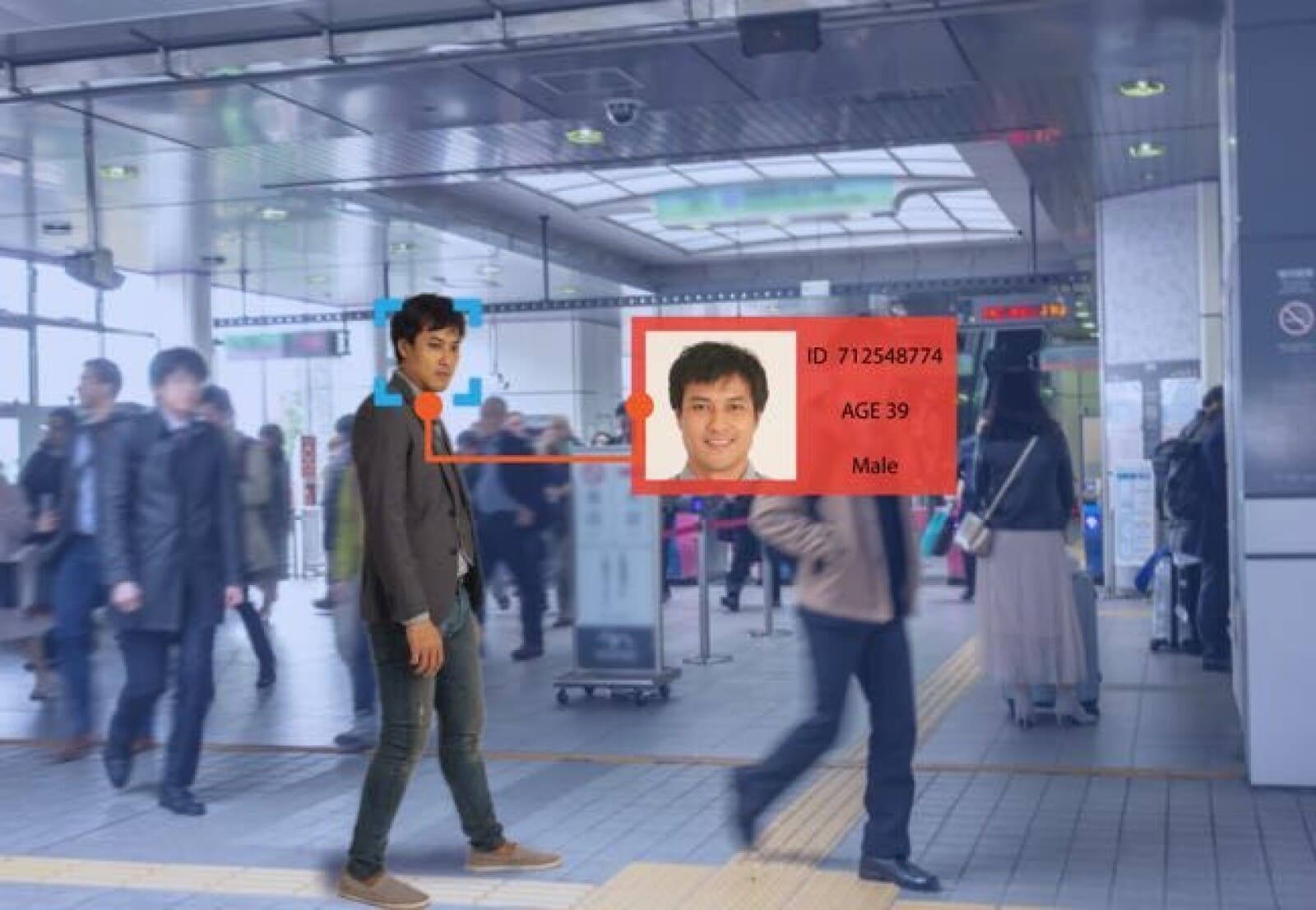
A Coalition Draws the Line
Sixty-two civil society organizations have urged the United Kingdom government to abandon its plan to deploy facial age estimation algorithms for asylum-seeking children, warning that the technology carries systemic bias, delivers unreliable results, and may violate data protection and equality law. The coalition - spanning Amnesty International, Human Rights Watch, Liberty, the Electronic Frontier Foundation, Foxglove, and the Open Rights Group - sent an open letter to border security and asylum minister Alex Norris demanding that the Home Office halt the 2027 rollout.
The intervention marks one of the largest coordinated challenges to algorithmic border enforcement in Europe and underscores a widening rift between governments seeking faster immigration processing and civil liberties advocates who see facial inference systems as fundamentally unsuited to high-stakes decisions about children.
At DailyTechWire, we have tracked the spread of age-estimation algorithms across immigration systems in Finland, Greece, and Austria over the past three years. The UK deployment would be among the largest, and the first to face such broad pre-emptive opposition before a single case is processed.
What the Home Office Intends to Do
The Home Office announced earlier this year that it would begin using AI-powered facial age estimation to help immigration officers determine whether an individual presenting as a minor is likely above or under eighteen years old. Officials frame the technology as a decision-support tool, not a determinative system; human caseworkers would retain final authority. The department has emphasized instances in which adults falsely claim to be children in order to access youth services and more favorable asylum pathways.
Yet the coalition's letter argues that the technology's design and performance data undermine that reassurance. The groups cite the Home Office's own guidance, which acknowledges that the systems perform differently depending on ethnicity and skin tone. Because most asylum-seeking children arriving in the UK are people of color, the organizations contend, the technology is being deployed on precisely the demographic for whom it is least reliable.
The Home Office has not published detailed testing results, methodologies, or impact assessments that would allow independent researchers to validate accuracy claims. No Equality Impact Assessment or Data Protection Impact Assessment has been made public, the coalition noted. The department declined to comment when contacted.
Precision Collapses at the Boundary That Matters
The most acute technical problem is also the most obvious: facial age estimation systems are least accurate in the narrow band the Home Office needs them to resolve. According to government figures cited in the letter, even the best-performing algorithms carry an error margin of approximately 2.5 years when assessing individuals between sixteen and eighteen. That is the precise threshold immigration officers must navigate when deciding whether someone qualifies for child protection services or adult asylum processing.
The coalition argues that margin of error alone should disqualify the technology from use in a context where misclassification can send a fifteen-year-old into adult detention or leave them without access to education, social workers, or legal guardians. The stakes are not symmetrical. While the Home Office has highlighted cases of adults posing as children, rights groups counter that the greater harm lies in treating vulnerable minors as adults - a mistake that can expose them to exploitation, trauma, and deportation without adequate safeguards.
The letter also notes that asylum-seeking children often arrive after months of travel, malnutrition, dehydration, sleep deprivation, and exposure to violence. Those conditions can accelerate visible aging, skewing facial morphology in ways that training datasets - typically drawn from stable, well-nourished populations - do not capture. The result is a model trained on one population and applied to another under radically different physiological stress.
Training Data, Consent, and Accountability Gaps
The coalition raised pointed questions about the provenance of the data used to develop and validate the systems. If asylum-seeking children were included in training or testing datasets, the groups argue, it is unclear how lawful consent could have been obtained. Minors in immigration detention or processing have limited autonomy, and the power imbalance between state authorities and asylum applicants makes meaningful consent nearly impossible.
The organizations have given the Home Office twenty-one days to answer a series of questions covering testing protocols, dataset composition, safeguards against bias, appeal mechanisms for individuals flagged as adults, and the weight that facial age estimates will carry in final asylum decisions. The letter also demands clarity on whether the technology will be used retrospectively on existing cases or confined to new arrivals.
The absence of published impact assessments is particularly striking given the UK's own data protection framework, which requires public authorities to conduct Data Protection Impact Assessments for high-risk processing involving special-category data. Biometric age inference falls squarely within that definition. The coalition's letter suggests that the Home Office may be proceeding without completing - or at least without disclosing - the legal groundwork that domestic and European precedent would ordinarily require.
A Broader Pattern Across Europe
The UK rollout fits within a broader European trend. Finland trialed age estimation in 2018 but paused deployment after backlash over accuracy. Greece has used similar systems sporadically at reception centers on the Aegean islands, though oversight remains opaque. Austria integrated facial age screening into asylum procedures in 2023, despite warnings from the country's data protection authority.
What distinguishes the UK case is the scale of organized opposition before deployment begins. The sixty-two signatories include not only established human rights organizations but also digital rights groups with deep technical expertise in algorithmic auditing. That combination of legal advocacy and technical scrutiny has the potential to force the Home Office into a level of transparency it has so far avoided.
The coalition's letter also reflects a strategic shift in how civil society engages with border technology. Rather than waiting for harm to materialize and then litigating, groups are now intervening at the procurement and testing stage, demanding accountability before systems go live. That approach has gained traction in the European Union, where the AI Act imposes pre-deployment obligations on high-risk systems, though the UK is no longer bound by that framework.
The Risk Calculation Governments Are Making
From the Home Office's perspective, the appeal of facial age estimation is straightforward: it promises to accelerate processing, reduce reliance on invasive medical examinations, and add a veneer of objectivity to decisions that have historically been subjective and inconsistent. Manual age assessments by social workers and immigration officers have long been criticized as arbitrary, with wide variation in outcomes depending on the assessor.
Yet the coalition's critique suggests that replacing one flawed system with another - especially one that embeds bias at scale - does not constitute progress. The letter argues that the Home Office has conflated speed with accuracy and mistaken algorithmic output for objectivity. In reality, the groups contend, facial age estimation imports all the biases present in its training data, then applies them uniformly and at volume, making discrimination both faster and harder to challenge.
The Home Office has not disclosed which vendors or systems it plans to deploy. Commercial facial age estimation tools are available from firms including Yoti, AgeCheckers, and several smaller European startups. Each uses convolutional neural networks trained on face datasets that vary widely in demographic composition, labeling quality, and consent provenance. Without knowing which system the UK intends to use - and without access to independent validation - it is impossible to assess whether the department's confidence in the technology is justified.
What Happens Next
The twenty-one-day deadline gives the Home Office until mid-July to respond. If the department declines to answer or dismisses the coalition's concerns, litigation is likely. Several signatories have track records of successful legal challenges to UK border and surveillance policies, and the combination of data protection, equality, and administrative law claims could create multiple avenues for judicial review.
Even if the Home Office proceeds, the controversy may influence how the technology is used in practice. Immigration officers who know that every age estimate may be scrutinized in court are less likely to treat algorithmic output as dispositive. That could reduce the system's practical impact, turning it into an expensive advisory tool that caseworkers learn to ignore.
The broader question is whether any facial inference system can be accurate enough, fair enough, and transparent enough to justify its use on children fleeing war, persecution, and poverty. The coalition's answer is unequivocal: no. The Home Office has yet to make a compelling case to the contrary.