Brazil Joins the Alternative App Store Era With a 5% Fee
Cupertino's compromise with CADE offers developers a gentler tax than the App Store - but Notarization and approval gates remain firmly in place
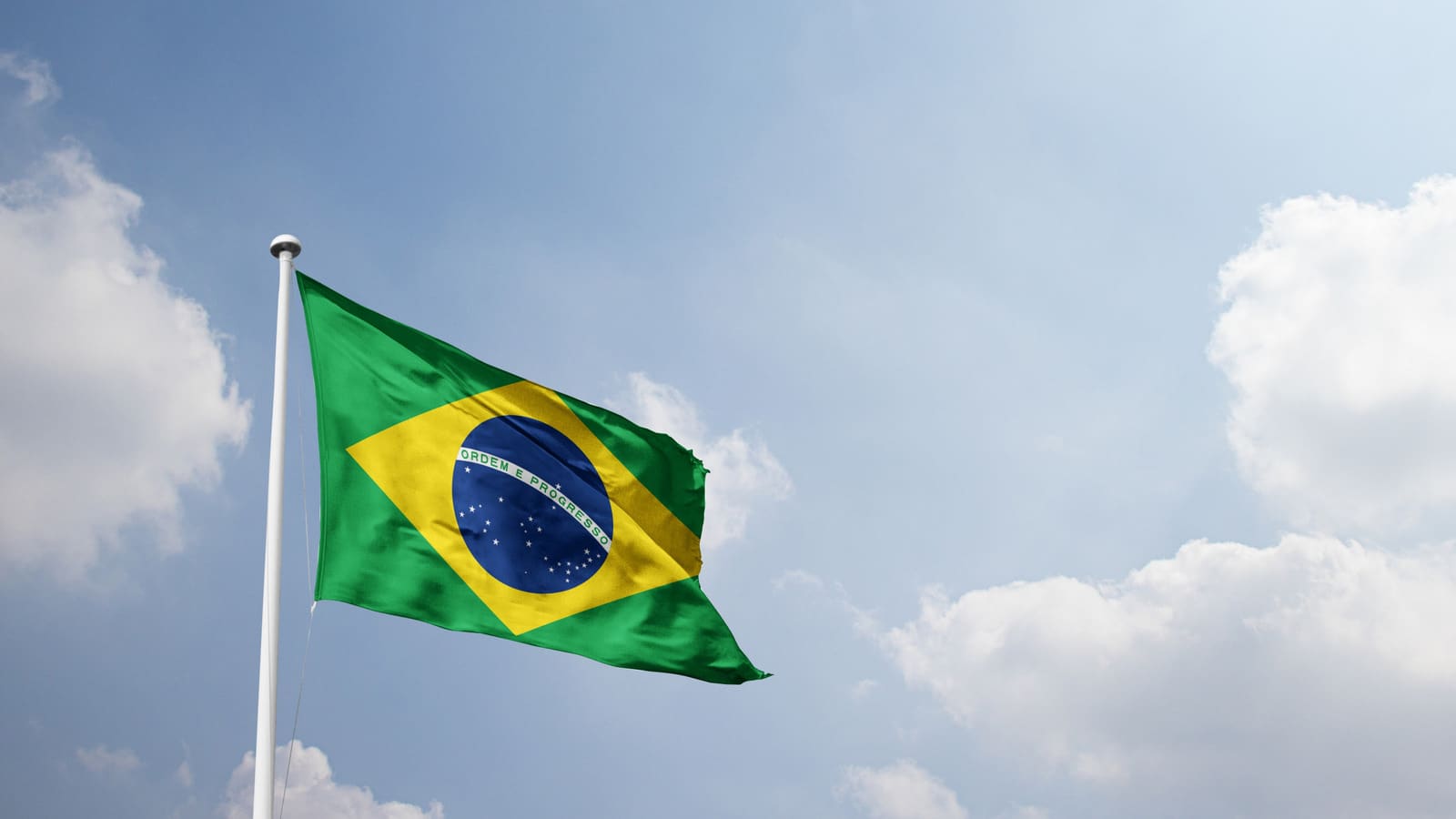
The Cupertino Playbook Travels South
Apple has begun permitting third-party app distribution on iOS in Brazil, marking the latest chapter in a global regulatory arc that began in Europe and is now spreading across mid-tier smartphone markets. The move follows a December settlement with CADE - the Conselho Administrativo de Defesa Econômica, Brazil's antitrust authority - that set domestic terms for alternative marketplaces. For developers eyeing Latin America's largest economy, the headline is a 5% Core Technology Fee on transactions conducted outside the official App Store, according to Apple.
That figure sits well below the company's longstanding 15-to-30% commission structure, and it mirrors the fee regime Apple adopted in the European Union under the Digital Markets Act. At DailyTechWire, we've tracked similar concessions across Korea, Japan and the Netherlands over the past three years; in each case, regulators forced open the walled garden, and Apple responded with a lighter levy paired with new procedural controls. Brazil is the first major Latin American jurisdiction to extract such a bargain, and the precedent will likely embolden competition watchdogs in Mexico, Colombia and Argentina.
Notarization: A Lighter Gate, Not an Open Door
Any store hoping to distribute iOS apps in Brazil must first secure Apple's approval - a requirement that preserves Cupertino's gatekeeper role even as it surrenders monopoly distribution. Once approved, every app submitted to a third-party marketplace will pass through a vetting layer called Notarization. Apple describes this as a streamlined security scan focused on malware, viruses and other acute threats, rather than the exhaustive policy review - covering content guidelines, business-model rules and interface standards - that governs App Store submissions.
In practice, Notarization tilts the cost-benefit calculus for certain developer segments. Studios shipping productivity tools, fintech apps or subscription services can sidestep Apple's in-app-purchase mandate and the associated revenue share, paying only the 5% technology fee. Yet they remain subject to Apple's binary yes-or-no on marketplace participation, and the company has historically wielded approval processes to enforce broader ecosystem norms. The European experience suggests that high-risk categories - gambling, adult content, unregulated financial instruments - will still face rejections, even under the lighter regime.
Why 5% Matters in an Emerging Market
Brazil's smartphone installed base exceeds 130 million devices, with iOS claiming roughly a quarter of the market. That share trails Android by a wide margin, but the iOS cohort skews urban, affluent and high-spending - precisely the demographic that fuels in-app revenue. A 5% fee materially changes unit economics for subscription apps, mobile games with direct payment flows, and any service that can bypass Apple's payment rails.
Consider a hypothetical fitness-coaching app charging 50 reais per month. Under the traditional App Store model, Apple would collect 7.50 to 15 reais per subscriber, depending on tenure and developer size. Under the new structure, the same transaction incurs a 2.50-real fee - a delta that can fund user acquisition, localize content or underwrite price cuts in a price-sensitive market. For venture-backed startups chasing scale in São Paulo, Brasília and Rio, that margin relief is non-trivial.
Yet the 5% levy is not a pure windfall. Developers must either build their own payment stack - incurring fraud-monitoring, compliance and chargeback costs - or integrate a third-party processor that will extract its own fee. Payment processors in Brazil typically charge 3% to 5% per transaction, which erodes much of the nominal saving. The real winners are likely to be larger players with existing billing infrastructure or those willing to accept cryptocurrency and other low-friction rails.
CADE's Regulatory Precedent and Regional Ripple
CADE's December settlement followed a multi-year investigation into Apple's dominance in mobile software distribution. The agency framed its intervention around Article 36 of Brazil's competition law, which prohibits practices that limit market access or impose unjustified conditions on business partners. By accepting third-party stores and a reduced fee, Apple avoided a protracted legal battle and the risk of a unilateral remedy that might have stripped fee collection altogether.
The Brazilian framework now serves as a template for neighboring regulators. Mexico's Federal Economic Competition Commission has an open docket on app-store practices, and Colombia's Superintendency of Industry and Commerce has signaled interest in similar guardrails. If those jurisdictions adopt CADE's model, Apple will face a patchwork of national regimes across Latin America - each with its own notarization rules, fee caps and approval criteria. That fragmentation raises compliance overhead but also creates arbitrage opportunities for developers willing to navigate multiple marketplaces.
The Approval Bottleneck and Ecosystem Lock-In
Apple's insistence on approving alternative stores before they can operate introduces a strategic chokepoint. In the EU, the company has approved a handful of storefronts - including AltStore PAL and a corporate-enterprise marketplace - but rejected others on security or policy grounds. Developers in Brazil will face the same uncertainty: an alternative store might invest months building infrastructure, only to be denied access if Apple deems its curation standards insufficient or its business model misaligned with platform rules.
This dynamic preserves Apple's ability to shape the competitive landscape. A store that specializes in emulators, modding tools or other grey-area software is unlikely to win approval, even if it technically complies with Notarization requirements. Conversely, Apple may greenlight stores operated by telcos, banks or large retailers - entities that pose minimal ecosystem threat and may even deepen iOS stickiness by offering carrier billing or loyalty integrations.
The approval gate also limits the disruptive potential of pure-play challenger stores. In theory, a well-funded competitor could undercut Apple by charging developers zero commission and monetizing through advertising or data partnerships. In practice, that competitor must first convince Apple that its security posture, privacy controls and content moderation meet an opaque and evolving standard. The result is a managed openness that defuses regulatory pressure without ceding meaningful control.
What Developers Should Watch
Three variables will determine whether Brazil's alternative-store regime delivers material change or becomes a symbolic concession. First, the speed and transparency of Apple's approval process for new marketplaces. If CADE perceives foot-dragging or arbitrary rejections, it can reopen enforcement proceedings. Second, the technical requirements for Notarization. If Apple sets the bar high enough that small studios cannot afford the engineering lift, adoption will remain confined to well-resourced publishers. Third, user friction. Apple has the latitude to require multi-step warnings or confirmations before a customer installs an alternative store, and even modest UX barriers can suppress uptake.
Early signals from Europe are mixed. AltStore PAL reported fewer than 50,000 downloads in its first six months, despite widespread press coverage and developer enthusiasm. User inertia, combined with Apple's default-app advantage and integrated marketing channels, has kept the vast majority of iOS transactions inside the official store. Brazil's market dynamics - lower average revenue per user, higher price sensitivity, stronger Android competition - may tilt the balance, but only if alternative stores can offer a genuinely superior value proposition.
A Managed Opening, Not a Free-for-All
Brazil's alternative-store regime represents a calibrated retreat by Apple in the face of regulatory pressure, not a wholesale abandonment of platform control. The 5% Core Technology Fee is low enough to satisfy competition authorities and attract developer interest, yet high enough to preserve a revenue stream that offsets Apple's infrastructure and security costs. Notarization and marketplace approval ensure that Cupertino retains veto power over who participates and what gets distributed.
For developers, the new rules create optionality without guaranteeing success. The economics are more favorable, but the operational complexity is higher, and the user base remains anchored to the App Store by habit and design. For regulators across Latin America and Asia, Brazil offers a reference model - one that demonstrates the limits of voluntary compliance and the importance of ongoing oversight. And for Apple, the Brazilian settlement is another datapoint in a global strategy of tactical concession, designed to preserve the profitable core of the App Store while yielding ground at the edges. The company has shown, once again, that it can adapt to regulatory pressure without relinquishing the architecture of control.