Beijing Turns AI Conference Into Platform for South-South Tech Alliance
Xi Jinping used his first in-person WAIC appearance to push a developing-world coalition on artificial intelligence, with Thai and Cambodian leaders in attendance.
A Rare Presidential Appearance
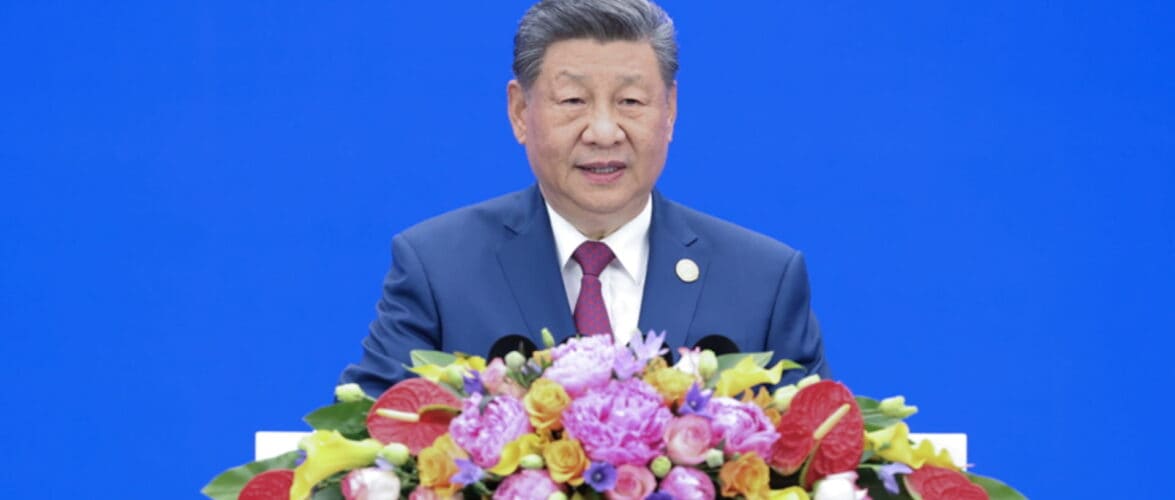
When Xi Jinping walked onto the stage at Shanghai's World Artificial Intelligence Conference on July 17, it marked the first time the Chinese president had attended the annual event in person. The choice to show up carried weight. WAIC, now in its seventh year, has evolved from a domestic showcase into a venue where Beijing frames its technological narrative for an international audience. This year's edition drew prime ministers from Thailand and Cambodia, turning what could have been a routine industry gathering into a diplomatic set piece.
Xi's message centered on a familiar theme: the need for developing countries to collaborate on artificial intelligence to narrow the technology gap with advanced economies. But the framing was deliberate. By positioning China as a partner rather than a patron, and by invoking the language of self-reliance and shared progress, Beijing is crafting an alternative model to the AI ecosystems dominated by the United States and its allies.
At DailyTechWire, we've tracked how AI has become a focal point of strategic competition across Asia. What stood out in Shanghai was not just the technology on display, but the diplomatic choreography around it. The presence of Southeast Asian leaders at a Chinese AI event signals that Beijing sees machine learning, large language models, and compute infrastructure as tools for building influence, not just building products.
Strategic Technology, Strategic Guests
The conference brought together government officials, researchers, and executives from across the region. Thai Prime Minister Srettha Thavisin and Cambodian Prime Minister Hun Manet both attended, a detail that underscores China's effort to position itself as the anchor for AI development in the Global South. For these nations, the appeal is straightforward: access to training resources, compute capacity, and partnerships that don't come with the regulatory strings or geopolitical baggage of Western alliances.
China has spent the past two years accelerating its push in generative AI, despite export controls that limit access to cutting-edge chips from Nvidia and other US suppliers. Domestic players like Baidu, Alibaba, and SenseTime have released large language models that, while not yet matching GPT-4 or Claude in benchmark performance, are closing the gap in Chinese-language tasks and vertical applications. Beijing's pitch to developing countries rests on the premise that these models, along with China's experience in deploying AI at scale, can be adapted to local contexts more easily than solutions built in Silicon Valley.
The funding rounds we've followed across the region suggest that Southeast Asian governments are receptive. Vietnam, Indonesia, and Thailand have all announced AI roadmaps in the past year, many of which include collaboration with Chinese research institutes and companies. Cambodia, meanwhile, has positioned itself as a testing ground for Chinese digital infrastructure, from smart city pilots to facial recognition systems. The WAIC appearance by Hun Manet reinforces that trajectory.
The Self-Reliance Narrative
Xi framed AI as a technology essential for self-reliance, a term that has taken on greater urgency in Beijing since the US tightened export controls on semiconductors and AI-related hardware in 2022 and 2023. The controls, which restrict sales of advanced chips and manufacturing equipment to China, have forced Chinese firms to optimize for efficiency rather than raw compute power. The result has been a wave of innovation in model compression, inference optimization, and edge deployment, areas where Chinese researchers are now competitive or, in some cases, ahead.
This technical pivot has a diplomatic corollary. By emphasizing efficiency and adaptability, China can offer AI tools that run on less expensive hardware, a selling point for countries that lack the budgets or infrastructure to deploy massive data centers. It's a pitch that resonates in Jakarta, Dhaka, and Nairobi, where the cost of compute and the availability of reliable power remain barriers to adoption.
Beijing's narrative also carries an implicit critique of the AI development model championed by the United States and Europe, which prioritizes frontier research, large-scale pre-training, and safety regulations that some developing countries view as obstacles to rapid deployment. China's model, by contrast, is pragmatic and permissive. The trade-off, of course, is governance. Chinese AI systems come with fewer transparency requirements and more room for state oversight, a feature that appeals to some governments and concerns others.
Regional Implications
The diplomatic push at WAIC is part of a broader pattern. Over the past year, China has signed AI cooperation agreements with countries in Africa, Latin America, and Southeast Asia, often as part of Belt and Road Initiative packages. These agreements typically include technology transfer, training programs, and joint research projects. In some cases, they also involve the sale or lease of Chinese-built data centers and cloud infrastructure.
For Southeast Asia, the stakes are particularly high. The region is home to some of the world's fastest-growing digital economies, and AI is seen as a lever for everything from e-commerce optimization to agricultural productivity. But it's also a region where geopolitical alignment is fluid, and where governments are wary of becoming too dependent on any single technology supplier. The presence of Thai and Cambodian leaders at WAIC suggests that, for now, the promise of access and affordability outweighs concerns about vendor lock-in or data sovereignty.
There are risks in this approach. Chinese AI systems, like those from any major power, reflect the priorities and biases of their creators. Models trained primarily on Chinese-language data may not generalize well to other languages or cultural contexts. Infrastructure built to Chinese standards may not interoperate easily with systems from other vendors. And partnerships that seem advantageous today may become liabilities if geopolitical winds shift.
What It Means for the AI Landscape
Beijing's use of WAIC as a diplomatic platform reflects a calculated bet: that AI cooperation can serve as a foundation for broader technological and economic alignment. The strategy is not without precedent. China has used infrastructure projects, telecommunications networks, and digital payments systems to build influence across the developing world. AI is the next frontier.
For Western policymakers, the Shanghai event is a reminder that export controls and alliance-building are only part of the story. If the United States and Europe want to remain competitive in shaping global AI norms, they will need to offer developing countries more than restrictions and warnings. That means investment, partnership, and a willingness to meet countries where they are, not where Washington or Brussels would like them to be.
For the tech industry, the takeaway is simpler: the AI race is no longer just about who builds the best model. It's about who builds the best ecosystem, and who can scale that ecosystem across the most markets. China's advantage is not technical superiority, but strategic patience and a willingness to engage with countries that Western firms often overlook. The funding, the partnerships, and the diplomatic energy on display in Shanghai all point in the same direction. AI diplomacy is here, and Beijing is playing the long game.