Apple's Spyware Alerts Surge to Record Levels Across 110 Countries
Digital rights investigators report unprecedented spike in mercenary spyware threat notifications, including targeting of Ukrainian soldiers
A Record Wave of Warnings
Apple's most recent batch of spyware threat notifications has reached a scale that even veteran investigators find remarkable. Organizations that counsel victims of state-sponsored surveillance report receiving help requests at levels never seen before, suggesting that government-linked cyber espionage may be far more widespread than public discourse acknowledges.
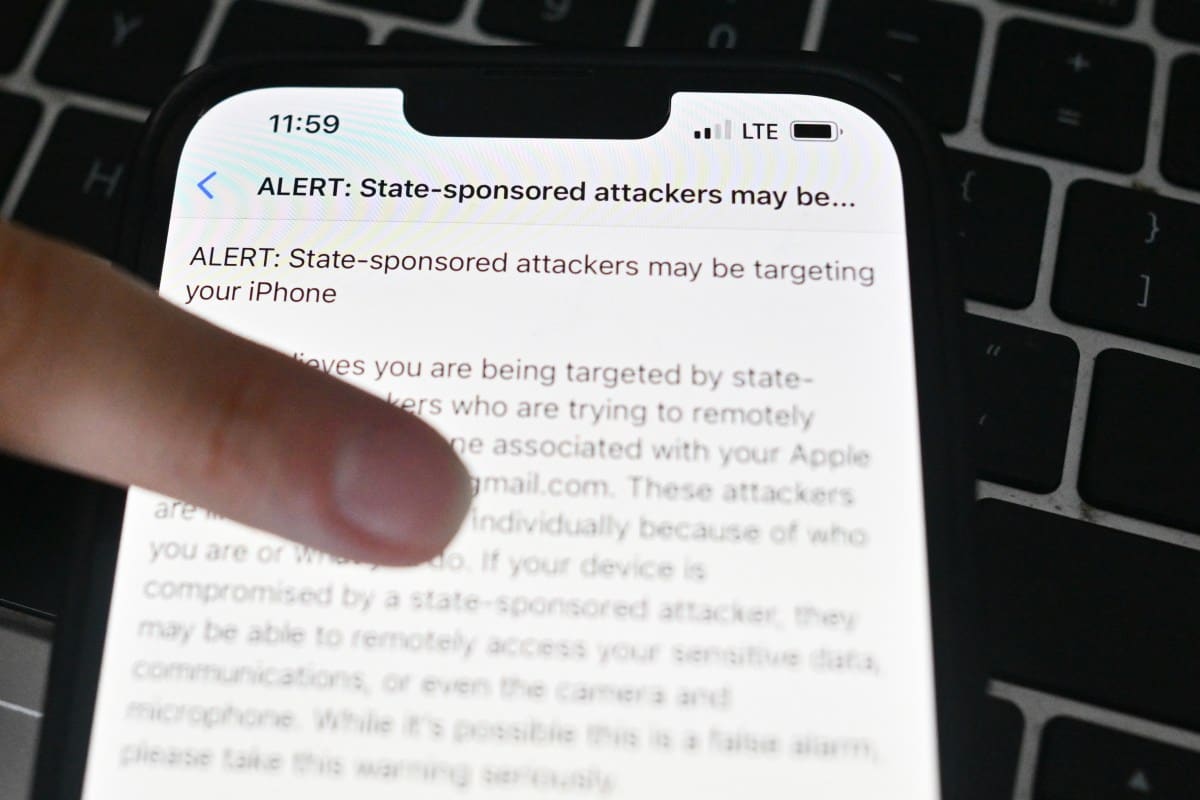
The notifications, dispatched on a Friday in mid-August, alerted users across 110 countries that their devices had likely been targeted by what Apple terms "mercenary spyware," sophisticated malware typically deployed by governments or entities working on their behalf. While the company has issued these warnings periodically over recent years, reaching users in more than 150 countries total, this particular wave stands apart in both volume and geographic spread.
Mohammed Al-Maskati, who leads the investigative team at Access Now's digital security helpline, observed a 30 to 40 percent increase in incoming requests compared to previous notification cycles. The nonprofit serves as one of several organizations Apple directs affected users toward for assistance. Cybersecurity firm iVerify independently confirmed an unusual influx of threat notification reports from its user base.
Soldiers in the Crosshairs
Among those who received alerts was a member of Ukraine's Armed Forces currently engaged in combat operations against Russian forces. Speaking on condition of anonymity, the soldier described initial skepticism, assuming the message might be fraudulent until Apple confirmed its legitimacy.
"I was a bit surprised to be honest. I wouldn't have thought I was important enough for them to target me like this. I am flattered though," the soldier said. He noted that other Ukrainian military personnel in his network had received identical warnings and expressed concern about the implications.
The targeting of active military personnel represents a stark illustration of how mercenary spyware capabilities have proliferated beyond traditional targets like journalists, dissidents, and human rights advocates. At DailyTechWire, we've tracked the evolution of commercial surveillance tools from niche intelligence applications to instruments deployed across a widening circle of targets, and this incident underscores that trajectory.
The Notification Iceberg
John Scott-Railton, a senior researcher at The Citizen Lab, a group with more than 15 years of experience investigating government spyware operations, characterized the public reports as revealing only a fraction of the actual scope. The organization has documented numerous spyware campaigns targeting civil society, opposition figures, and others deemed threats by authoritarian regimes.
"The scale and geographic diversity of public posts about receiving notifications are pretty unprecedented," Scott-Railton noted. He emphasized that for every person who shares their notification publicly, many more remain silent, creating what he described as a "huge notification iceberg" beneath the visible surface.
This hidden dimension matters for understanding the true reach of mercenary spyware. Victims may include individuals in sensitive positions who cannot afford public disclosure, people in countries where acknowledging surveillance carries risks, or those who simply don't realize the significance of what they've received.
Enhanced Alerting Methods
Part of the surge in reported notifications may stem from Apple's expanded alert delivery system, implemented earlier this year. The company now pushes warnings through multiple channels simultaneously: lock screen notifications, the Settings app, email messages sent to associated Apple accounts, and alerts displayed when users access their Apple Account via web browsers.
This multi-channel approach makes the notifications significantly harder to miss or dismiss, according to Al-Maskati. Previous iterations relied more heavily on email, which users might overlook or misidentify as spam. The new system's visibility has likely contributed to both higher awareness among victims and increased public discussion of the issue.
The shift reflects Apple's recognition that spyware threats demand urgent attention. Unlike conventional malware, mercenary spyware often exploits zero-day vulnerabilities, security flaws unknown to device manufacturers and therefore unpatched. These tools can extract messages, activate cameras and microphones, track location, and exfiltrate data with minimal traces.
The Mercenary Spyware Landscape
The term "mercenary spyware" encompasses a category of surveillance tools developed by private companies and sold to government clients. These firms occupy a contested space in the global security ecosystem, with some positioning themselves as legitimate providers of lawful intercept capabilities for counterterrorism and criminal investigations, while critics document extensive abuse against civil society.
Apple's notifications don't identify specific spyware vendors or tools, and the company hasn't disclosed technical indicators that triggered the alerts. This opacity frustrates some security researchers but reflects the sensitivity of detection methods. Revealing too much about how Apple identifies spyware attacks could help adversaries evade future detection.
The 110-country span of the latest alerts suggests either extremely broad targeting by one or more actors, or the involvement of multiple spyware operations running in parallel. Both scenarios point to a thriving market for surveillance capabilities and clients willing to deploy them at scale.
Lockdown Mode as Defense
For users who receive these threat notifications, Apple and independent security experts recommend activating Lockdown Mode, a hardened security configuration introduced to defend against sophisticated attacks. The mode disables certain features that could serve as attack vectors, including most message attachment types, link previews, JavaScript-based web technologies, and incoming FaceTime calls from unknown contacts.
According to Apple, no users with Lockdown Mode enabled have been successfully compromised by the types of attacks these notifications warn against. While the mode imposes usability trade-offs, including reduced functionality in some apps and websites, it represents the strongest consumer-grade protection currently available against state-level threats.
The recommendation carries particular weight for individuals in high-risk categories including journalists covering sensitive topics, human rights defenders, political opposition figures, and, as this latest wave demonstrates, military personnel in conflict zones.
Implications for the Region
The scale of this notification wave has implications for Asia's technology policy landscape. Several countries in the region have faced scrutiny over surveillance technology procurement and deployment, while others are developing domestic capabilities. The revelation that spyware targeting has reached this magnitude will likely inform ongoing debates about export controls, human rights due diligence in technology sales, and the need for stronger device security.
For device manufacturers beyond Apple, including major Asian brands, the incident highlights competitive pressure to implement comparable threat detection and notification systems. Users increasingly expect their devices to actively defend against sophisticated attacks rather than relying solely on reactive security patches.
The episode also underscores the challenge of attribution in modern cyber operations. Without public disclosure of technical indicators or suspected actors, affected governments and individuals must operate with incomplete information about who targeted them and why, complicating both diplomatic responses and individual security decisions.
As surveillance capabilities continue to proliferate through commercial channels, the gap between awareness and actual targeting will likely persist. This latest surge in Apple's notifications offers a rare glimpse into the scale of that hidden conflict.