The WWDC Keynote That Announced a Timeline, Not a Product
As Cupertino postpones its marquee voice assistant upgrade, the question shifts from 'what' to 'why now'—and whether Cook's tenure can survive another product-cycle misstep.
The Announcement That Wasn't
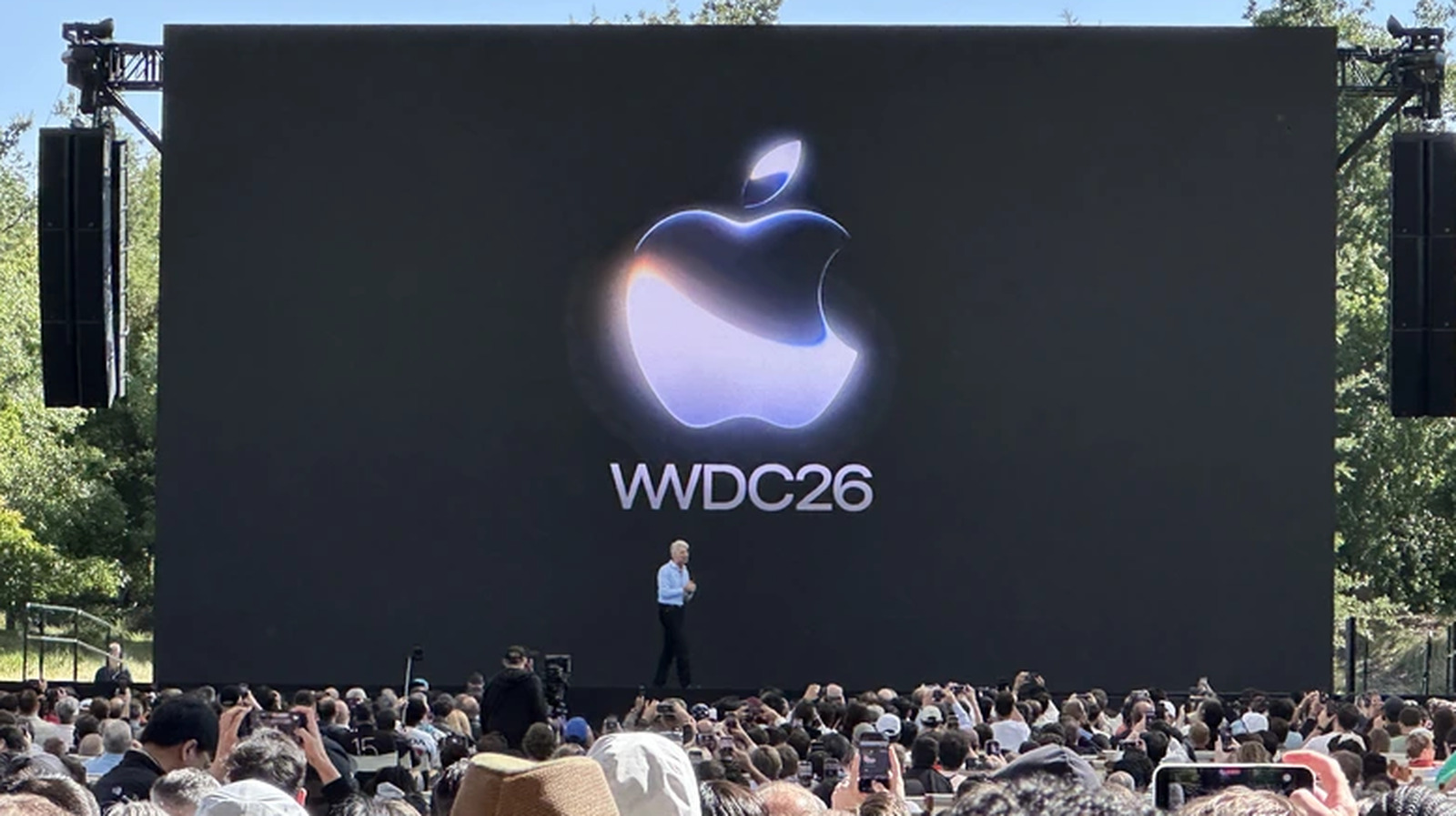
Apple's Worldwide Developers Conference on June 10, 2026, was supposed to mark the moment Siri finally caught up to the inference-first assistants shipping out of Seoul, Shenzhen, and Mountain View. Instead, attendees at Apple Park—and the millions streaming from Bengaluru to Jakarta—watched Tim Cook unveil a timeline for Siri AI, not a product. The company confirmed that its long-awaited voice assistant overhaul, rebuilt on transformer-based architecture and designed to handle multi-turn reasoning, would arrive "later this year," with no hard ship date and no demo of the core capabilities developers had been waiting to integrate since 2024.
At DailyTechWire, we've tracked the Asia-Pacific AI assistant race closely: Samsung's Bixby Neural shipped last quarter with on-device fine-tuning for Korean and Mandarin; Alibaba's Qwen Voice API went live in March with sub-200ms latency across 14 languages; even Reliance Jio demoed a Hindi-first assistant in April that runs entirely on-premise for enterprise customers. Apple's delay isn't just a product hiccup—it's a strategic concession in markets where voice-first computing is already the primary interface for hundreds of millions of users who never touched a desktop keyboard.
The WWDC keynote spent less than twelve minutes on Siri AI. The rest was iOS refinements, visionOS updates, and a new M4 Ultra chip that, while impressive on paper, doesn't solve the software lag. For a company that once defined the smartphone era by shipping polished experiences ahead of the feature race, the optics are uncomfortable. And for Cook, who has spent fifteen years defending Apple's "fast follower" playbook, the delay lands at a moment when investors and developers are asking whether deliberate is simply another word for late.
Why the Delay Matters Beyond Cupertino
Apple's Siri stumble isn't an isolated engineering problem—it's a signal about the company's capacity to compete in the inference economy, where model performance, edge deployment, and ecosystem lock-in are converging faster than any product cycle Apple has managed in the Cook era. The voice assistant wars of 2026 are fundamentally different from the smartphone wars of 2010: success requires not just hardware integration but continuous model updates, multilingual fine-tuning, and API ecosystems that let third-party developers build on top of the assistant without waiting for annual OS releases.
Across Asia, where Apple still commands premium pricing but faces surging competition from Xiaomi, Vivo, and Samsung in the mid-range, the Siri delay creates an opening. Xiaomi's HyperOS 2.0, announced in May, already supports on-device fine-tuning for user-specific voice commands—meaning a factory worker in Dongguan can train the assistant to recognize machine-specific jargon without sending audio to the cloud. Vivo's partnership with SenseTime brought real-time translation to its X200 series in March, with Mandarin-to-Tamil inference running locally on a 6nm chipset that costs a fraction of Apple's A18 Bionic. These aren't experimental features—they're shipping products, and they're being marketed explicitly as alternatives to the "wait-and-see" approach Apple is now asking developers to accept.
The delay also exposes a deeper tension in Apple's AI strategy: the company has historically relied on vertical integration—controlling the chip, the OS, and the cloud stack—to deliver experiences competitors can't match. But in the age of foundation models, that advantage is less clear. OpenAI, Anthropic, and Google ship model updates every few weeks; Apple ships OS updates once a year, with point releases for bugs. Siri AI's postponement suggests the company hasn't yet figured out how to reconcile its product cadence with the continuous-deployment rhythm that defines modern AI development. And that's a problem not just for Siri, but for every Apple service that will eventually depend on inference: Photos, Mail, Health, even Xcode autocomplete.
The Cook Calculus: Execution vs. Innovation
Tim Cook's legacy has always been a story of operational excellence—supply chain mastery, margin discipline, services revenue growth—rather than the product vision that defined Steve Jobs's tenure. Under Cook, Apple became the first $3 trillion company; it also became the company that launched a VR headset three years after Meta, a credit card two decades after everyone else had one, and a voice assistant that still can't reliably set two timers at once. The WWDC 2026 delay is the latest data point in a pattern: Apple executes flawlessly on what it chooses to do, but it's increasingly choosing to do things after the market has already moved.
The question investors and developers are now asking is whether that model still works in a world where inference speed—both literal and metaphorical—determines platform winners. Apple's $200 billion in annual R&D and services revenue gives it the resources to catch up, but catching up requires shipping, and shipping requires a tolerance for imperfection that has never been part of the Cook playbook. Siri AI's delay suggests the company is still optimizing for the "it just works" standard that defined the iPhone era, even as competitors in Seoul and Shenzhen ship "good enough, shipping now" products that improve every month via over-the-air model updates.
Cook's defenders will point to Apple's track record: the company was late to LTE, late to OLED, late to 5G, and still maintained its premium position. But those were hardware cycles, where Apple could win on build quality and ecosystem lock-in. AI is a software cycle, and software cycles reward speed over perfection. The risk for Apple isn't that Siri AI will be bad when it ships—it's that by the time it ships, the baseline will have moved so far that "good" won't be enough to justify the wait.
What Developers Heard (and Didn't Hear)
For the developers who flew to Cupertino or tuned in from Singapore, the WWDC keynote raised more questions than it answered. Apple confirmed that Siri AI would support third-party integrations via a new "Siri Intents API," but offered no documentation, no sandbox environment, and no clarity on whether the API would support on-device inference or require cloud round-trips for every query. The company also declined to specify which models would power Siri AI—whether it's building its own foundation model, licensing from a partner, or fine-tuning an open-source base like Llama or Qwen.
That ambiguity is unusual for Apple, which typically provides developers with detailed technical roadmaps at WWDC, even for features shipping months later. The vagueness suggests either that the architecture isn't finalized, or that Apple is deliberately withholding details to avoid tipping its hand to competitors. Either way, it leaves developers in a difficult position: do they build for Siri AI based on promises and speculation, or do they prioritize the Google Assistant, Alexa, and Bixby integrations that are already live and documented?
The funding rounds we've followed across the region suggest developers are hedging. A Bengaluru-based voice-commerce startup told us in May that it's building for Google and Alexa first, with Siri "on the roadmap pending API clarity." A Seoul fintech firm said it's waiting to see "actual latency benchmarks" before committing engineering resources to Siri integration. These aren't developers abandoning Apple—they're developers making rational resource-allocation decisions in the absence of hard information. And that's a problem for a platform that depends on third-party innovation to make its assistant useful beyond setting timers and checking the weather.
The Asia-Pacific Stakes: Market Share, Language Parity, and On-Device Inference
Apple's Siri delay has specific consequences in Asia-Pacific, where voice assistants are increasingly the primary computing interface for users who never owned a PC and whose first smartphone was a $150 Android device. In markets like India, Indonesia, and Vietnam, voice assistants aren't a convenience feature—they're the accessibility layer that makes smartphones usable for hundreds of millions of people with limited literacy, limited typing speed, or limited familiarity with Latin-script keyboards.
Apple's iPhone market share in India hovers around 6 percent; in Indonesia, it's closer to 3 percent. The company has positioned itself as the premium choice for urban professionals in Mumbai, Jakarta, and Manila, but that positioning depends on offering features that justify the price premium. If Siri AI ships six months after Samsung's Bixby Neural, and a year after Xiaomi's HyperOS assistant, Apple risks ceding the "best voice experience" narrative to competitors who are already undercutting it on price.
Language parity is another pressure point. Apple has historically lagged in supporting the region's linguistic diversity: Siri added Hindi support in 2018, five years after Google Assistant; it still doesn't support Bahasa Indonesia voice commands with the same fidelity as Google or Samsung. The WWDC keynote made no mention of language roadmaps for Siri AI, which suggests the initial release will prioritize English, Mandarin, and perhaps Spanish—leaving Southeast Asian and South Asian developers to wait even longer for localized inference.
On-device inference is the third variable. Apple has the silicon advantage—its A-series and M-series chips are industry-leading for on-device neural processing—but it hasn't yet demonstrated that it can deliver the same model performance locally that competitors achieve via hybrid architectures (light inference on-device, heavy lifting in the cloud). If Siri AI requires cloud round-trips for multi-turn reasoning, it will struggle in markets with inconsistent connectivity and high data costs. If it runs entirely on-device, it needs to match or exceed the latency and accuracy of models already shipping from Seoul and Shenzhen. The WWDC delay suggests Apple hasn't yet solved that equation.
##The Inference Economy and Platform Loyalty
The Siri AI delay is a test case for a broader question: can Apple maintain its premium-platform position in an era where the product cycle is measured in weeks, not years? The company built its empire on controlling the full stack—chip, OS, cloud, retail—and using that control to deliver experiences no one else could match. But the inference economy is different. Foundation models improve continuously; APIs evolve faster than OS releases; and users increasingly expect their devices to get smarter over time, not smarter once a year when iOS updates.
Apple's historical strength—deliberate, polished, annual product cycles—becomes a liability when competitors are shipping model updates every month and developers are building for platforms that support continuous deployment. The risk isn't that Apple will fail to ship Siri AI; it's that by the time Siri AI ships, the baseline for what constitutes a "good" voice assistant will have moved so far that Apple's product feels less like a leap forward and more like table stakes.
For Tim Cook, the stakes are reputational. He has spent fifteen years proving that operational excellence can sustain a platform even without the product vision that defined the Jobs era. But operational excellence in the inference economy requires speed, iteration, and a tolerance for shipping imperfect products that improve over time. WWDC 2026 will be remembered either as the moment Apple's deliberate approach finally caught up with the market's pace—or as the moment the market left Apple behind.
The Open Question: What Happens When 'Later This Year' Becomes Next Year?
Apple didn't provide a ship date for Siri AI. It didn't demo the core capabilities. It didn't release API documentation. What it did provide was a promise—and promises, in the inference economy, depreciate faster than hardware.
The developers we've spoken with across the region are waiting, but they're not waiting idly. They're building for the platforms that are live, documented, and improving every month. They're evaluating whether the Apple ecosystem still justifies the engineering investment when Samsung, Xiaomi, and Google are shipping features that Apple is still promising. And they're asking a question that would have been unthinkable five years ago: if Siri AI ships in December and it's only as good as Bixby was in June, why did we wait?
Tim Cook's legacy will ultimately be determined not by whether Apple ships Siri AI, but by whether Siri AI, when it ships, proves that deliberate still beats fast. WWDC 2026 didn't answer that question. It just made it more urgent.


