Anthropic Brings Back Opus With a Model That Aims for the Middle
The AI company's Opus 5 targets knowledge workers who found Fable's safeguards too restrictive, while keeping cyber-exploitation capabilities in check.

A Return to Form for the Neglected Tier
After months of relative silence around its Opus line, Anthropic has shipped Opus 5 into general availability. The timing is deliberate: the model slots into a gap that has opened between the company's flagship Fable 5 and the growing chorus of enterprise users who found that flagship's safety interventions too aggressive for daily work.
Anthropic positions Opus 5 as delivering approximately 85 to 90 percent of Fable 5's reasoning capability at half the API cost. For organizations running high-volume inference workloads, that cost-performance ratio matters. At $5 per million input tokens and $25 per million output tokens, Opus 5 maintains the same pricing structure as its predecessor while delivering what the company describes as substantial gains in knowledge-intensive and coding tasks.
Guardrails Loosened, Not Removed
The most significant shift lies not in raw performance but in intervention frequency. Fable 5's safety classifiers became a friction point for users working in cybersecurity research, bioinformatics, and other domains where legitimate professional queries would trigger content filters. Anthropic acknowledges this directly: the company expects Opus 5's classifiers to intervene roughly 85 percent less often than Fable's.
That recalibration reflects a deliberate training choice. Anthropic did not expose Opus 5 to the cyber-focused datasets that informed Mythos, the restricted-access model currently available only through Project Glasswing. As a result, Opus 5 can identify software vulnerabilities with improved accuracy over Opus 4.8, but it remains substantially weaker at generating exploits. The distinction is narrow but operationally important: penetration testers and security researchers gain utility without the model becoming a ready-made offensive tool.
Anthropic also highlights lower rates of what it terms "deceptive behavior" in internal evaluations, though the company has not published benchmark specifics. The claim aligns with broader industry efforts to measure model alignment beyond accuracy scores, but without reproducible test suites, it remains difficult to verify independently.
Scientific and Code Workloads in Focus
Opus 5 shows its clearest gains in domains that demand multi-step reasoning. Anthropic singles out protein sequence analysis as an area where the model excels, predicting functional changes from sequence variations with greater reliability than earlier versions. For computational biology teams, that capability can compress literature review and hypothesis generation cycles, though it does not replace wet-lab validation.
In software engineering contexts, Opus 5 handles complex refactoring, dependency resolution, and multi-file code generation with fewer hallucinated imports or broken references. The company has added an "effort" parameter to the API, allowing developers to trade thoroughness for speed depending on whether they are prototyping or preparing production code. That toggle mirrors similar features in competing models, but Anthropic's implementation ties effort level directly to token consumption, making cost optimization more transparent.
Competitive Pressure From Moonshot and Pricing Reality
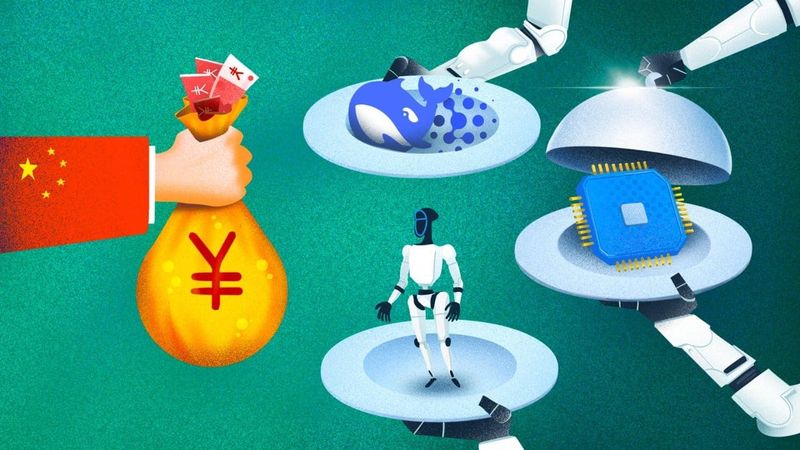
Anthropic's pricing announcement arrives in the shadow of Moonshot's Kimi K3 launch. The Chinese startup's model undercuts Opus 5 on output tokens by $10 per million while claiming performance parity with Fable 5 on select benchmarks. Kimi K3 is not yet widely available outside invitation-only tiers, but its pricing has already reset expectations in developer communities.
For Anthropic, the calculus is less about matching Moonshot dollar-for-dollar and more about justifying the premium through ecosystem stability and compliance guarantees. Opus 5 is included in all of Anthropic's paid subscription plans, and the model is excluded from the 30-day data retention policy that applies to Fable and Mythos. That opt-out matters for regulated industries where ephemeral data handling is a non-negotiable requirement.
Still, the absence of a lower-cost tier exposes Anthropic to margin pressure. Startups iterating on prototypes will gravitate toward the cheapest inference option that meets minimum quality bars. If Kimi K3 or similar entrants open general access with sustained low pricing, Anthropic may need to revisit its rate card sooner than planned.
What Opus 5 Signals About Anthropic's Model Portfolio
The release clarifies Anthropic's three-tier strategy. Mythos remains the high-security, high-capability option reserved for vetted partners. Fable 5 serves use cases where maximum reasoning depth justifies tighter safeguards and higher cost. Opus 5 is designed to absorb the bulk of enterprise query volume, balancing capability with lower intervention overhead.
That segmentation mirrors the broader market's shift away from one-size-fits-all foundation models. Organizations increasingly run multiple models in parallel, routing tasks based on complexity, latency requirements, and risk tolerance. Anthropic's decision to keep Opus 5 off the extended data retention policy suggests the company expects this model to handle the highest volume of sensitive enterprise prompts.
What remains unclear is how Anthropic will iterate Opus over time. If Fable 6 arrives with another leap in capability, will Opus 5 receive a corresponding update, or will Anthropic let the gap widen? The company has historically been conservative about release cadence, preferring thorough safety evaluations over rapid iteration. That posture has credibility benefits but risks ceding velocity to competitors willing to ship faster.
The Middle Ground Gets Crowded
Opus 5's positioning as a practical workhorse model reflects a maturing market. Early foundation model competition centered on leaderboard supremacy; today's competition increasingly hinges on cost efficiency, deployment flexibility, and guardrail transparency. Anthropic's bet is that enterprises will pay a premium for models that intervene less often while maintaining alignment on truly dangerous tasks.
That bet will be tested as more regional players enter with aggressive pricing and as open-weight models continue to close performance gaps. For now, Opus 5 gives Anthropic a credible answer to the "Fable is too locked down" critique. Whether it can hold that middle ground as the market compresses from above and below will depend on how quickly costs fall across the industry and whether Anthropic can maintain its edge in safety without sacrificing usability.
In the near term, expect Opus 5 to become the default Claude experience for most professional users. It is fast enough, capable enough, and permissive enough to handle the majority of knowledge work without triggering the kind of friction that made Fable feel like a guessing game. Whether that proves sufficient in a market where "good enough" is table stakes will become clear in the next funding cycle, when customers vote with term sheets and inference budgets.