American Robotics Faces Supply Chain Reckoning Over Chinese Hardware
Washington's latest export controls reveal how deeply US manufacturers and labs depend on components from across the Pacific - and why decoupling will cost more than policymakers expected

The Hardware Reality Check
When Washington announced fresh curbs on advanced robotics technology last week, the immediate pushback from American manufacturers and research institutions surprised no one who has been tracking the sector's supply dynamics. The rules, designed to push production back onto US soil, collided headfirst with a decade of offshoring decisions that left domestic robot makers reliant on Chinese components for everything from actuators to vision sensors.
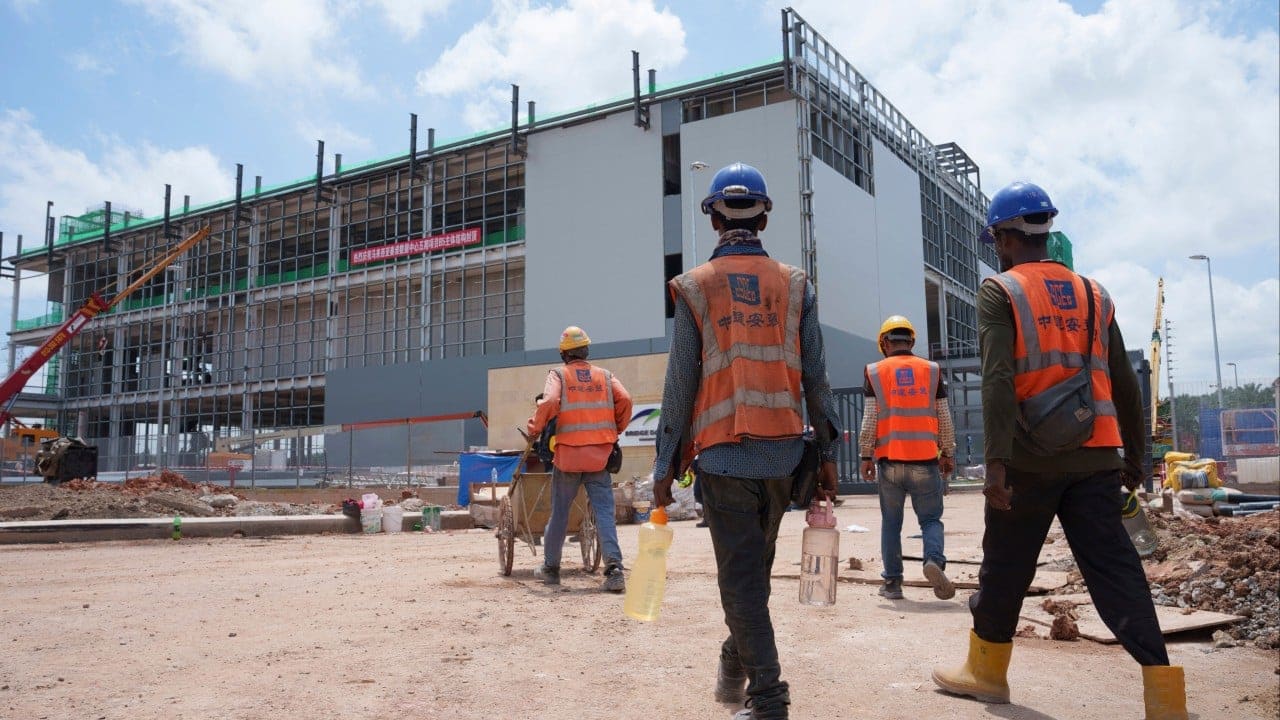
At DailyTechWire, we've tracked the robotics supply chain across Asia for three years, and the pattern has been consistent: even American-branded systems often contain subsystems fabricated in Shenzhen, Dongguan, and increasingly in specialized robotics hubs around Hangzhou. The new restrictions don't just ask companies to switch vendors - they ask them to rebuild supply relationships that took years to establish, often in markets where equivalent domestic capacity doesn't yet exist.
The timing is particularly awkward. Humanoid robotics - a category experiencing explosive growth - relies on high-precision servo motors, torque sensors, and lightweight composite frames, segments where Chinese manufacturers have achieved both cost advantages and, in some cases, technical leads. The August robotics exposition in Beijing showcased hardware that American labs are actively purchasing, not because of price alone, but because alternatives are scarce or deliver inferior performance.
Why Supply Chains Flowed East
The dependence didn't happen overnight. Over the past fifteen years, Chinese firms invested heavily in the building blocks of robotics: precision machining, motor winding, battery cell production, and the kind of high-volume contract manufacturing that allows rapid iteration. American companies, focused on software, AI planning algorithms, and system integration, outsourced the hardware layer to partners who could deliver at scale.
That division of labor worked well in an era of open trade. A Boston-based startup could design a warehouse picking robot, source arms and grippers from Guangdong, integrate vision systems from Shenzhen, and ship finished units globally within months. The model enabled speed and capital efficiency, two qualities venture investors prize.
But it also created fragility. When export controls target "advanced robots" - a category that remains loosely defined in the regulatory text - the entire supply web comes under scrutiny. Components that were once commodities now require compliance reviews, and manufacturers face a choice: accept delays and cost increases to reshore, or risk running afoul of rules that carry both civil and criminal penalties.
The Reshoring Challenge
Rebuilding domestic robotics hardware capacity is possible in theory. The United States has precision manufacturing expertise, a strong materials science base, and venture capital willing to fund hard-tech startups. But capacity doesn't materialize on demand. Factories require tooling, quality certification, and most critically, skilled labor - machinists, assembly technicians, and process engineers who understand the tight tolerances robotics hardware demands.
Several American manufacturers have already signaled that compliance will mean higher unit costs, often in the range of twenty to thirty-five percent, and delivery timelines that stretch from weeks to quarters. For research institutions operating on fixed grants, those increases can mean shelving projects or cutting headcount. For startups racing to reach product-market fit before their Series A capital runs dry, the delays can be existential.
There's also a technical dimension. Chinese robotics suppliers have iterated rapidly, producing components that meet specs American engineers wrote but couldn't source domestically. A humanoid robot's hip actuator, for example, must deliver high torque in a compact form factor, withstand repeated shock loads, and remain thermally stable under continuous operation. Domestic suppliers can build prototypes, but matching the reliability of a component that has seen five generations of field deployment takes time.
Regional Implications
The restrictions arrive as Southeast Asian nations position themselves as alternative manufacturing hubs. Vietnam, Thailand, and increasingly Indonesia are courting robotics hardware investment, offering incentives and streamlined permitting. But these countries face the same challenge as American reshoring efforts: building institutional knowledge and supply ecosystems takes years, not quarters.
At DailyTechWire, we've followed funding rounds across the region, and the capital flowing into robotics hardware remains concentrated in China, South Korea, and Japan. American venture investors, burned by previous hard-tech bets, have been slow to back domestic component makers, preferring software plays with faster paths to revenue. The new export controls may force a recalculation, but capital alone won't compress the learning curves required to achieve manufacturing excellence.
South Korea and Japan, both allied with Washington and home to advanced robotics industries, could emerge as bridge suppliers. Japanese precision motor manufacturers and Korean sensor makers already serve global markets, and their products carry none of the compliance risk that now shadows Chinese components. But capacity constraints are real - these suppliers already run near full utilization serving automotive and industrial automation customers, and scaling to absorb displaced robotics demand will require capital investment and time.
The Cost of Security
The underlying tension is familiar: Washington views advanced robotics as dual-use technology with national security implications, particularly as autonomous systems proliferate in military and surveillance applications. The concern is not hypothetical - robotics platforms can be repurposed, and supply chain dependencies create leverage that adversaries can exploit in a crisis.
But the cost of decoupling is unevenly distributed. Large defense contractors and established industrial robotics firms have the capital and timelines to absorb disruption. Startups, university labs, and mid-sized manufacturers - the very entities that drive innovation - operate on thinner margins and shorter runways. For them, a six-month delay or a thirty-percent cost increase can mean the difference between survival and shutdown.
There's also a competitiveness question. If American firms face higher costs and longer development cycles, they risk ceding market share to rivals in Europe and Asia who maintain access to Chinese components. The controls apply to US entities and products incorporating US technology, but they don't prevent a German or Singaporean competitor from integrating the same hardware and selling globally.
What Comes Next
The robotics industry is now in a period of adjustment, recalibrating supply chains and reassessing product roadmaps. Some manufacturers are pre-buying inventory to bridge the gap until domestic or allied sources come online. Others are redesigning systems to use components that fall outside the restricted categories, a strategy that risks performance trade-offs.
Policymakers, for their part, face pressure to clarify definitions and provide transition timelines. The current rules leave ambiguity around which subsystems and components fall under the advanced robotics label, and that uncertainty is itself a barrier to planning. Industry groups have called for a tiered approach that prioritizes the most sensitive applications - military, surveillance, critical infrastructure - while allowing greater flexibility for commercial and research use.
The long-term outcome will depend on whether domestic manufacturing capacity can scale fast enough to meet demand without crippling the industry's pace of innovation. If reshoring succeeds, the United States could build a more resilient and secure robotics supply chain, insulated from geopolitical shocks. If it fails, the restrictions may simply fragment the global market, with American firms operating at a disadvantage while rivals advance unencumbered.
For now, the robotics sector is learning a lesson that the semiconductor industry absorbed a decade earlier: supply chains are strategic assets, and dependence carries costs that only become visible when access is threatened. Whether that lesson translates into durable domestic capacity or a prolonged period of higher costs and slower innovation remains an open question.